 ultimate-guide
Strata Garden Maintenance: Sydney Requirements Guide
Table of Contents
- What Strata Garden Maintenance Involves
- Strata Garden Maintenance Checklist: Essential Tasks
- Strata Gardener Qualifications and Safety Standards
- Strata Garden Maintenance Schedule: Frequency and Planning
- Strata Gardening Service Agreement: What to Include
- Selecting and Managing Strata Garden Contractors
- Common Challenges in Strata Garden Maintenance
- Frequently Asked Questions
Last Updated: October 13, 2026
What Strata Garden Maintenance Involves
Strata garden maintenance is the care and upkeep of gardens, lawns, and landscaping in shared properties where multiple owners share responsibility for common areas.
Unlike private gardens, strata garden maintenance involves multiple stakeholders with different expectations.
The scope typically includes lawn mowing, edging, weeding, hedge and shrub trimming, mulching, seasonal adjustments, and pest management, all fitted into a rolling plan that keeps common property looking professional and protects property values.
Strata Garden Maintenance Checklist: Essential Tasks
A well-structured strata garden maintenance checklist ensures nothing falls through the cracks and that residents understand what work is done and when. It becomes the foundation of your service agreement.
Lawn mowing and edging
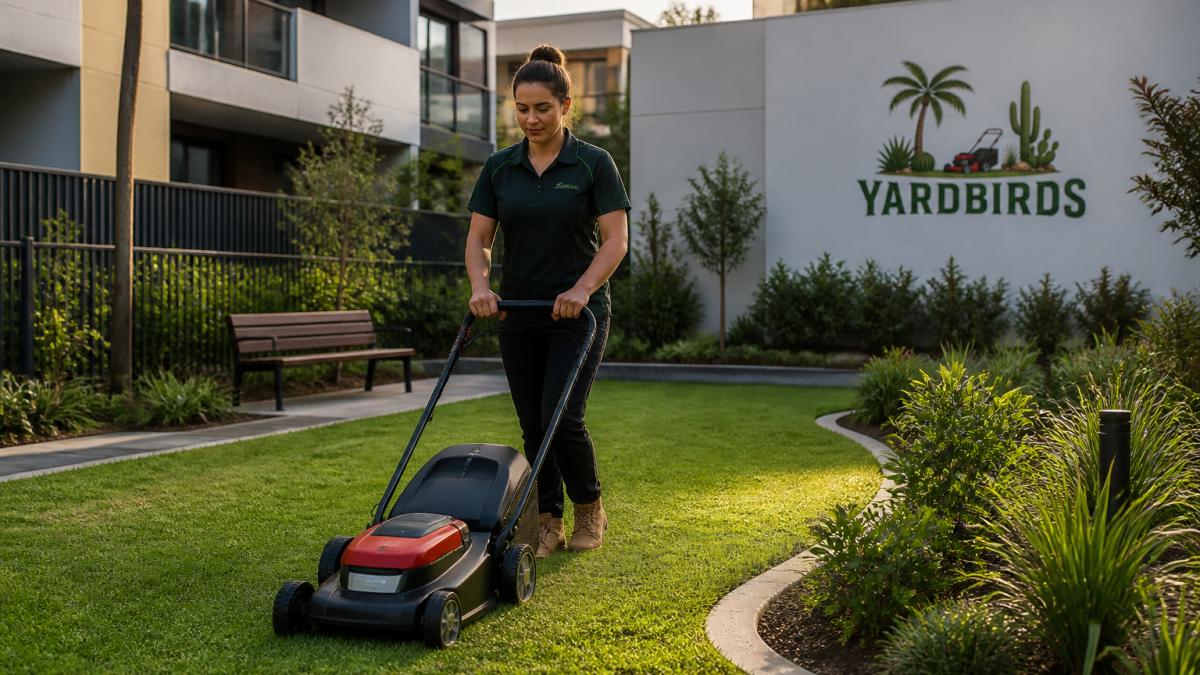
Lawn mowing is the most visible element of grounds maintenance. Grass should be mowed at a consistent height appropriate for the season, typically 30mm to 50mm depending on variety and time of year.
Regular mowing prevents thatch buildup and encourages healthy growth, while edging stops grass encroaching into beds. Most properties benefit from weekly or fortnightly mowing during the growing season.
Weeding and garden-bed care
Weeds compete with desirable plants for water and nutrients and signal neglect to residents and visitors.
Garden-bed care also includes soil health, plant spacing, and deadheading spent flowers. Beds need regular attention, particularly in spring and summer when weeds germinate rapidly, consistent attention prevents costly rehabilitation later.
Hedge and shrub trimming
Hedges and shrubs define boundaries, provide privacy, and give the landscape structure.
Overgrown hedges consume more water, shade desirable plantings, and can obstruct sightlines or windows, while proper pruning reduces pest and disease problems. For strata properties, well-maintained hedges protect curb appeal and property value.
Mulching and weed prevention
Mulch suppresses weeds, regulates soil temperature, conserves moisture, and improves soil structure as it breaks down.
Mulch should be refreshed annually or when it becomes thin or compacted. For strata properties with multiple garden beds, strategic mulching reduces long-term maintenance costs and improves plant health.
Seasonal maintenance and winter care
Seasonal adjustments keep grounds looking intentional year-round. Winter requires less frequent mowing but may include leaf cleanup, pruning for shape, and irrigation checks.
Autumn is ideal for hedge trimming, planting, and preparing beds for spring, while spring brings rapid growth and increased mowing, weed management, and mulch refreshing.
Strata Gardener Qualifications and Safety Standards
Most strata committees never see the paperwork behind a gardener's insurance certificate until something goes wrong. Here is what to verify before work starts.
Insurance and licensing checks
Before a contractor sets foot on common property, request and keep on file:
- Certificate of currency for public liability insurance. This cover responds if a contractor damages property or injures a resident, visitor or passer-by. Confirm it is current and diarise a renewal reminder.
- Certificate of currency for workers' compensation insurance. Required for any contractor who employs staff. If a worker is injured on site and the contractor is uninsured, the exposure can flow back to the scheme.
- Relevant licences for the work being performed. Some tasks, such as certain tree work or chemical application, may require specific competencies. Ask the contractor to identify which licences apply and provide evidence.
Work health and safety duties
Strata schemes are workplaces for the contractors who attend them, and the owners corporation has duties under work health and safety legislation. The committee should be able to show it has:
- Identified foreseeable hazards on common property (steep banks, uneven paving, low branches over walkways, shared power outlets, water features, playgrounds).
- Confirmed the contractor has its own safe work method statements, inductions and equipment maintenance records.
- Agreed site rules covering access, parking, noise windows, and where equipment and chemicals may be stored or mixed.
Chemical use and resident notification
Herbicides, pesticides and fertilisers used on common property are a common source of resident complaints. A contractor should be able to provide:
- Safety data sheets for every chemical product used.
- Evidence of competency for anyone applying chemicals.
- A notification process, signage at the point of application, and advance notice to residents where the product or the area warrants it.
Green waste and site housekeeping
Green waste from strata grounds is bulky and frequent. Confirm in writing where clippings, prunings and mulch are taken, whether the contractor removes them or leaves them in a designated area, and how this interacts with council green-waste services. A contractor who leaves piles of cuttings in visitor parking creates a complaint before the next visit.
Approval and communication expectations
A contractor who understands strata will know some tasks need approval first, removing a tree, changing a planting scheme, altering irrigation, or affecting a lot owner's outlook or access. Build in a simple rule: anything outside the agreed scope is quoted and approved by the strata committee (or managing agent under delegated authority) before work proceeds.
Safe Work Australia guidance on work health and safety duties
Strata Garden Maintenance Schedule: Frequency and Planning
Maintenance frequency depends on property type, garden size, climate, and resident expectations. A well-planned schedule balances cost, quality, and satisfaction.
Weekly and fortnightly visit options
Weekly visits suit large properties with extensive lawns and garden beds, or where residents expect an immaculate appearance.
Fortnightly visits work well for medium-sized properties or slower-growing seasons. Grass grows more noticeably between visits, but cost is reduced by approximately 50% compared to weekly service.
Seasonal adjustments and rolling maintenance plans
A rolling maintenance plan schedules different tasks across the year rather than attempting everything every visit. Spring might include hedge trimming and mulch refreshing.
This spreads costs more evenly, ensures each task is done at the optimal time, and manages resident expectations by showing when each type of work will occur.
Strata Gardening Service Agreement: What to Include
A service agreement decides whether the scheme gets consistent grounds care or a year of arguments. The strongest agreements are specific enough that a new committee, managing agent or contractor can pick them up and know exactly what is expected.
A workable scope of work
Instead of a single line like "general garden maintenance", break the scope into tasks with a frequency and a standard. A practical structure looks like this:
| Task | Frequency | Standard |
|---|---|---|
| Mow all lawn areas | Fortnightly in growing season, monthly in cooler months | Grass maintained at a consistent height appropriate to species and season; no scalping; clippings removed or dispersed |
| Edge lawn boundaries | Every mowing visit | Clean line between lawn and beds, paths and hard surfaces |
| Weed garden beds | Every visit, with a deeper bed clean each quarter | Visible weeds removed; beds free of weeds at handover; no damage to desirable plantings |
| Trim hedges and shrubs | Scheduled seasonal trims, plus reactive trimming as needed | Maintained to agreed shape and height; sightlines and windows kept clear |
| Mulch garden beds | Annually, or when depth falls below the agreed minimum | Consistent depth across beds; mulch kept clear of trunks and building lines |
| Green waste removal | Every visit | All clippings and prunings removed from site or placed in the designated area |
| Irrigation check | Seasonal | System inspected, leaks and blocked emitters reported |
Measurable service standards
Vague standards create disputes. Replace adjectives with numbers and timeframes wherever possible:
- Grass height, specify a target range rather than "short".
- Weed tolerance, for example, beds to be free of visible weeds at the completion of each visit, with a defined tolerance for seedlings between visits.
- Response times, for example, attendance within an agreed number of business days for non-urgent requests, and same-day or next-day attendance for safety hazards such as fallen limbs blocking a path.
Comparing quotes fairly
When the committee reviews quotes, compare them against the same scope, not against each other's marketing:
- Visit frequency, how many visits per year, and how does that change across seasons?
- Included tasks, which of the tasks in the scope are covered, and which are excluded or quoted separately?
- Exclusions, tree work, irrigation repairs, turf replacement, storm clean-up, hard landscaping. These are commonly excluded and should be identified up front.
- Green waste, removed from site, or left on site?
- Reporting, what records does the contractor provide, and how often?
- Insurance and compliance, certificates provided and current?
- Variations, how are additional works quoted and approved?
Budgeting and performance review
Grounds maintenance is a recurring line item, so plan it as one. Build an annual budget separating routine visits from seasonal works (hedge trimming, mulching, irrigation checks) and from contingency for storm damage, tree work or plant replacement. Review performance at least annually using simple indicators: missed visits, response times, complaint rates, and completion records.
Variations, by-laws and resident communication
The agreement should state how variations are approved, who the contractor reports to (managing agent, strata committee, or both), and how residents are notified of works affecting access, parking, noise or common areas. It should also confirm compliance with the scheme's by-laws and any landscaping or tree-preservation requirements, and reference any sustainability or water-use policy.
Term, termination and handover
Finally, set a clear term, notice period and handover process. On exit, the contractor should return keys, access cards and any scheme equipment, and provide records of recent visits.
Selecting and Managing Strata Garden Contractors
Choosing a contractor who understands strata properties is as important as choosing one with horticultural expertise. A contractor experienced in managing multiple stakeholders, following approval processes, and delivering consistent work on schedule will reduce friction and improve outcomes.
Scope of work and service standards
Request detailed quotes that break down tasks, frequency, and costs. Compare not just price but the depth of work included. A cheaper quote that excludes weeding or mulching may cost more in the long run if beds deteriorate.
Ask for references from other strata properties and visit sites they maintain to assess quality.
Insurance, compliance and worker safety
Verify the contractor holds current public liability and workers' compensation insurance, and request certificates of currency.
Ask how they manage chemical safety, waste disposal, and resident communication around hazardous work. Contractors who take safety seriously will have documented procedures and discuss them openly.
Common Challenges in Strata Garden Maintenance
The biggest challenge in strata garden maintenance is managing competing resident expectations while maintaining quality and controlling costs.
Communication breakdowns between contractors and strata managers lead to missed work, scope creep, and complaints.
Budget constraints force difficult choices between frequency and quality.
Seasonal variations in growth rates require flexibility.
Frequently Asked Questions
Who is responsible for maintaining gardens in a strata property?
The owners corporation, represented by the strata committee and strata manager, holds responsibility for maintaining common property gardens. Individual lot owners are responsible only for their own balconies or courtyards unless the by-laws state otherwise. The strata manager typically arranges and oversees contractors to perform strata garden maintenance on behalf of the owners corporation.
What should be included in a strata gardening service agreement?
A comprehensive strata gardening service agreement must specify scope of work (mowing, weeding, trimming, mulching), visit frequency, response times for complaints, insurance and workers' compensation requirements, safety procedures, maintenance records and reporting, pricing structure, and dispute resolution processes. The agreement should also detail how seasonal changes affect service levels and clarify approval processes for any garden improvements or landscaping changes.
How often should strata gardens be maintained?
Maintenance frequency depends on seasonal growth rates and property type. During spring and summer, weekly or fortnightly visits are typical for residential strata properties. Autumn and winter may require less frequent visits as growth slows. A rolling maintenance plan adjusts frequency seasonally and should be documented in the service agreement. The strata committee determines the schedule based on budget, resident preferences, and garden condition.
What qualifications should a professional strata gardener have?
Professional strata gardeners should hold relevant horticultural or landscaping qualifications and current first-aid certification. They must carry workers' compensation insurance and public liability insurance covering damage to property. Safety induction and knowledge of local council regulations regarding pesticide use, waste disposal, and noise restrictions are essential. References from other strata properties and demonstrated experience managing multi-unit residential gardens strengthen a contractor's credentials.
What does a strata garden maintenance checklist typically include?
A strata garden maintenance checklist covers lawn mowing and edging, weeding and garden-bed care, hedge and shrub trimming, mulching and weed prevention, seasonal adjustments, irrigation checks, green waste removal, and plant health inspections. The checklist should also include safety checks before work begins, documentation of work completed, and a section for resident feedback. Seasonal items like winter pruning or summer watering adjustments should be noted separately.
What are the main challenges in managing strata garden maintenance?
Common challenges include balancing diverse resident preferences, ensuring contractor reliability and consistency, managing budget constraints while maintaining quality, coordinating access to common areas, handling resident complaints promptly, and maintaining compliance with local council regulations. Strata properties also face complexity around approval processes for any landscaping improvements and ensuring contractors understand the multi-unit residential environment rather than treating it like a standard residential property.