 how-to
How to Find Insured Garden Maintenance for Strata
Table of Contents
- Why Insurance Matters for Strata Garden Maintenance
- Public Liability Insurance Requirements for Strata Contractors
- How to Vet Strata Service Providers: A Step-by-Step Process
- Strata Garden Maintenance Compliance Checklist
- Budgeting and Service Level Agreements for Common Property
- Common Mistakes to Avoid When Hiring Garden Contractors
- Frequently Asked Questions
Last Updated: September 23, 2026
Why Insurance Matters for Strata Garden Maintenance
Learning how to find insured garden maintenance for strata starts with one question when you hire a contractor: are they properly insured? A single incident, a damaged fence, an injury on site, a contractor's vehicle hitting a parked car, can cost thousands to fix. Without the right insurance verification, your body corporate could be left holding the bill.
Public Liability Insurance Requirements for Strata Contractors
Public liability and workers compensation insurance together protect your strata scheme from injury, property damage, and legal liability. When a branch falls on a parked car, public liability covers the repair. If a contractor is injured, their workers compensation policy covers medical costs and lost wages, not your body corporate.
Public Liability Insurance
Public liability insurance protects your strata scheme if a contractor's work causes injury or property damage. Most strata schemes require at least $10 million coverage for residential buildings with common gardens.
- Covers injury to third parties and property damage
- Protects your body corporate from being sued for the contractor's negligence
- The contractor's policy should list your body corporate as an interested party
- Must cover grounds maintenance, pruning, landscaping, and waste removal
- Some policies exclude high-risk work (tree removal over 5 metres, chemical spraying)
Workers Compensation Insurance
Workers compensation is a legal requirement in every state and territory if a contractor employs staff. Any business with employees must hold current workers compensation insurance.
- If an employee is injured and the contractor lacks workers compensation insurance, your body corporate may be liable for medical costs and lost wages
- The policy must be current and cover all employees on your site
- Request a Certificate of Currency listing workers compensation as a separate policy
- Sole traders with no employees don't need workers compensation, but public liability is always required
Coverage Limits and Scope
A Certificate of Currency tells you insurance exists. Call the insurer and verify the policy is active, covers grounds maintenance and garden work, covers strata common property work, and note any exclusions. Ask whether your body corporate can be added as an interested party to receive cancellation notices.
How to Vet Strata Service Providers: A Step-by-Step Process
Finding an insured garden contractor involves more than a quick phone call. A structured vetting process protects your strata scheme and ensures you're working with someone qualified and compliant.

Step 1: Request a Certificate of Currency
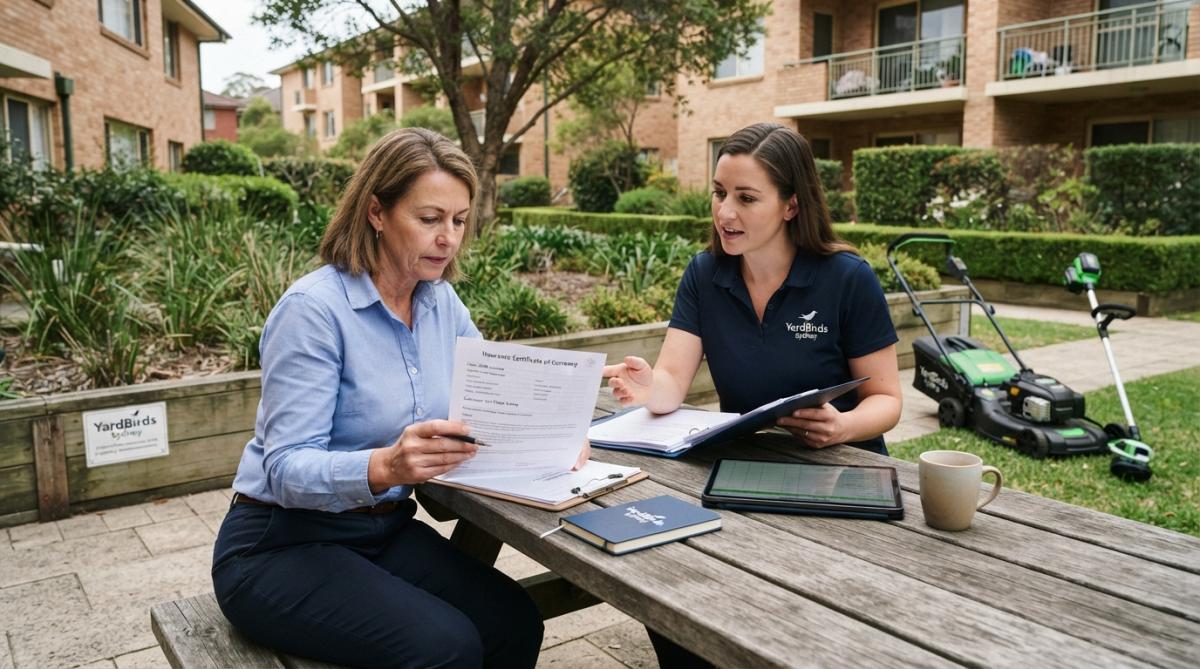
Ask the contractor for a current Certificate of Currency before discussing price or scope. This document proves insurance is active and lists the insurer, policy number, coverage limits, and expiry date. Request it directly from their insurer or broker. Check that the expiry date is at least 6 months away, the coverage limit matches your scheme's requirements, and the policy covers grounds maintenance. If a contractor hesitates, move on.
Step 2: Verify Coverage Limits and Scope
A Certificate of Currency tells you insurance exists. Now confirm it covers what you need.
Call the insurer listed on the certificate and verify:
- The policy is active and the details match the certificate
- Coverage includes public liability for grounds maintenance
- The policy covers contractors working on strata common property
- Any exclusions that might affect your work (e.g., tree removal, chemical spraying)
Step 3: Check Contractor Compliance and Credentials
Check whether the contractor is legitimate: verify their ABN and business registration, confirm workers compensation if they employ staff, request references from other strata schemes, and ask about their experience with multi-owner communication and approval processes.
Strata Garden Maintenance Compliance Checklist
Use this checklist to ensure your contractor meets all requirements before work begins.
| Requirement | Status | Notes |
|---|---|---|
| Certificate of Currency provided | ☐ | Check expiry date is 6+ months away |
| Public liability insurance verified with insurer | ☐ | Confirm coverage limits and scope |
| Workers compensation insurance (if applicable) | ☐ | Required if contractor employs staff |
| ABN and business registration confirmed | ☐ | Verify legitimacy with ASIC |
| References from other strata schemes | ☐ | Contact at least two previous clients |
| Service agreement in writing | ☐ | Includes scope, schedule, and contact protocols |
| Body corporate added as interested party | ☐ | Ensures notification of policy changes |
| Site safety plan provided (if required) | ☐ | For high-risk work like tree removal |
Budgeting and Service Level Agreements for Common Property
Once you've vetted a contractor, lock down expectations and costs in a service level agreement (SLA). This is critical for strata properties because multiple owners have different expectations and your body corporate bears the legal and financial risk if the contractor is uninsured.
Core Elements of a Service Level Agreement
Your SLA should include:
- Scope of work: Mowing, pruning, edging, waste removal, seasonal cleanup
- Frequency: Weekly, fortnightly, or monthly with seasonal adjustments
- Service standards: Lawn height, weed control, debris removal timeline
- Response time for urgent issues: 24-48 hours for storm damage or safety hazards
- Communication protocol: Single point of contact and complaint escalation process
- Insurance and compliance: Contractor must maintain current public liability and workers compensation; provide Certificates of Currency annually
- Liability clause: Contractor indemnifies the body corporate against claims from negligence
- Non-performance remedies: Payment withholding, service credits, or termination rights
- Approval processes: Committee approval for scope changes and major works
Budgeting for Garden Maintenance
Uninsured or underinsured contractors may quote 10-20% lower than fully compliant operators. This is a false saving. If an uninsured contractor damages property or an employee is injured, your body corporate becomes liable for costs that should have been covered by insurance. Fully insured contractors build insurance premiums and compliance into their pricing, this is the correct cost baseline.
Pricing Models and Payment Terms
Common pricing structures include fixed monthly fees, seasonal adjustments (20-30% increases during peak seasons), time and materials, or per-visit pricing. For strata schemes, a fixed monthly fee with seasonal adjustments is most common, it provides budget certainty while reflecting seasonal demand.
Payment terms should be specified in the SLA:
- Monthly invoicing in arrears (after work is completed) is standard
- Payment due within 14-30 days
- Withhold payment if work doesn't meet agreed standards (document the deficiency in writing first)
- Include a dispute resolution clause: if the contractor disputes a payment withhold, what is the process for resolution?
Insurance and Cost Allocation
"The contractor must maintain current public liability insurance with a minimum limit of [amount] and workers compensation insurance (if applicable). The contractor must provide a Certificate of Currency to the body corporate by [date] each year. Failure to maintain or provide proof of insurance is grounds for immediate termination of this agreement."
Common Mistakes to Avoid When Hiring Garden Contractors
Learning from others' mistakes saves time and money.
Mistake 1: Assuming verbal assurance is enough. A contractor says they're insured. You don't ask for proof. Six months later, they damage property and you discover their insurance expired. Get it in writing.
Frequently Asked Questions
How do I verify a contractor's public liability insurance?
Request a Certificate of Currency directly from the contractor or their insurer. This document shows the policy number, coverage amount, effective dates, and what's covered. Check that the contractor's name matches the policy, the coverage limits are adequate for strata work (typically minimum $10 million), and the policy is current. Ask your strata manager or body corporate if they have minimum requirements. Never accept verbal assurances, always get written proof before work begins.
What are the risks of hiring uninsured garden contractors for strata?
If an uninsured contractor damages property, injures themselves, or causes injury to residents, the body corporate and owners are liable for costs. Damage to common areas, landscaping, or neighbouring properties becomes your financial responsibility. Legal disputes over liability can be lengthy and expensive. Uninsured contractors may also lack proper training, safety protocols, and professional accountability. This exposure puts the strata scheme at serious financial and legal risk, which is why insurance verification is non-negotiable.
What should a strata garden maintenance service agreement include?
A service agreement should specify the scope of works (mowing frequency, pruning, waste disposal), scheduling and communication protocols, insurance requirements and verification dates, payment terms and budget allocation, liability and dispute resolution procedures, and cancellation or variation terms. It should also clarify who approves changes and how seasonal adjustments are handled. A clear agreement prevents misunderstandings, protects the body corporate, and ensures consistent service quality across the common property.
Who is responsible for approving garden maintenance contractors in a strata scheme?
The Owners Corporation, typically through its committee or strata manager, is responsible for approving contractors for common property maintenance. The body corporate has a legal duty of care to ensure contractors meet compliance standards, including insurance and safety requirements. Before engaging any contractor, the committee should review insurance documentation, check references, and ensure the service agreement protects the scheme. This process protects all owners and residents from liability and ensures professional standards are maintained.