 ultimate-guide
Residential Lawn Mowing: A 2026 Pricing & Care Guide
Table of Contents
- Residential Lawn Mowing: What You Are Actually Paying For
- Lawn Mowing Frequency: How Often Your Lawn Really Needs a Cut
- The Seasonal Lawn Care Schedule for a Year-Round Lawn
- Eco-Friendly Garden Maintenance: What It Looks Like in Practice
- DIY or Hire a Professional? A Cost-Benefit Breakdown
- How to Find and Vet a Reliable Local Lawn Care Provider
- Conclusion: Getting Residential Lawn Mowing Right
- Frequently Asked Questions
Last Updated: October 4, 2026
Residential Lawn Mowing: What You Are Actually Paying For
Residential lawn mowing is the scheduled cutting and finishing of a private property's lawn, including edging, trimming and green waste removal, carried out by a professional or the owner. Most homeowners assume the price reflects the size of the block. It rarely does.
At YardBirds Sydney, we quote on access, growth rate and finish level, because those are the variables that actually change how long a job takes.
Below, we break down what a standard visit includes, how often your lawn genuinely needs a cut, and how to vet a local provider so you are not left chasing someone who has stopped turning up.
What a Standard Visit Includes
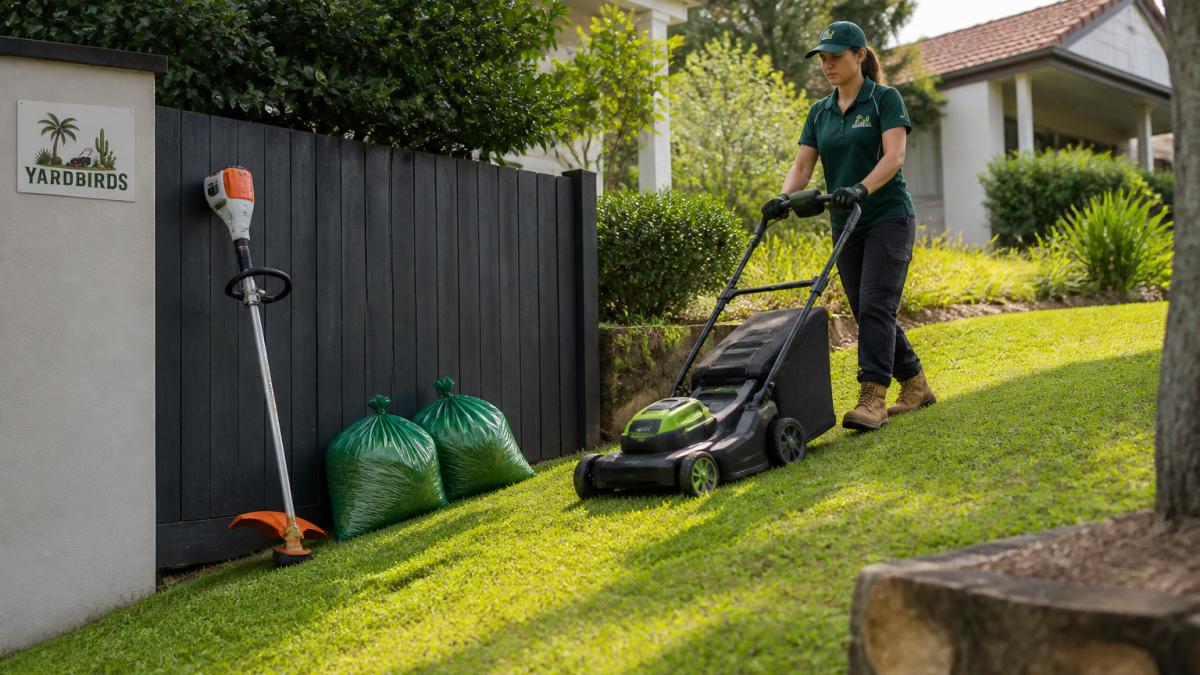
A standard residential lawn mowing visit covers mowing, edging along hard surfaces, trimming around obstacles, blowing clippings off paths and driveways, and removing green waste.
The detail most quotes gloss over is the finish work. Mowing is the fast part. Edging, whipper-snippeting around fence lines, and cleaning clippings off paving is what separates a lawn that looks maintained from one that looks half-done. Ask specifically whether green waste removal is included or charged separately, because it changes the real cost of the visit.
The Pricing Factors That Move the Number
Pricing depends on several variables, and any provider quoting a flat rate before seeing the property is guessing.
- Block size and mowable area (excluding house footprint, garden beds and paving)
- Access - narrow side gates, stairs and locked courtyards slow the job down
- Growth rate and condition - an overgrown lawn may need scalping across two visits
- Frequency - scheduled maintenance costs less per visit than a one-off rescue job
- Terrain - slopes and uneven ground may require a walk-behind mower rather than a ride-on
- Extras - hedging, pruning, weeding and garden cleanup sit outside a standard mow
We do not publish a flat rate because it would be inaccurate for most properties. Get a free quote based on your actual yard.
Lawn Mowing Frequency: How Often Your Lawn Really Needs a Cut
Most lawns in this climate need mowing every two weeks through the growing season and every four to six weeks over the cooler months. Cutting too low or too infrequently does more damage than most people realise.
The one-third rule is the standard to work to: never remove more than a third of the leaf blade in a single cut. Strip more than that and you stress the turf, which invites weeds and bare patches.
Lawn mowing frequency also shifts with the season. Warm-season grasses slow down noticeably in winter, so a fortnightly schedule is often wasted effort and money.
| Season | Typical Frequency | Mower Height | Watch For |
|---|---|---|---|
| Spring | Fortnightly | Medium | Rapid growth after rain |
| Summer | Fortnightly | Higher | Turf stress, weeds |
| Autumn | Fortnightly to monthly | Medium | Leaf drop, compaction |
| Winter | Monthly to six-weekly | Higher | Waterlogging, fungal issues |
The Seasonal Lawn Care Schedule for a Year-Round Lawn
A seasonal lawn care schedule is a planned set of tasks across the year, not just mowing. It is the difference between a lawn that survives and one that looks good in every month. Most mowing providers only cut grass; a proper schedule addresses soil, weeds, and growth cycles so you are not constantly fighting problems.
Spring (September-November)
- Aerate compacted areas, especially high-traffic zones and clay soils, using a core aerator or garden fork. This improves water and nutrient penetration before the growth spurt.
- Feed with a slow-release fertiliser balanced for your grass type. Avoid high-nitrogen quick-release products that push soft, disease-prone growth.
- Weed before weeds seed. Hand-pull or spot-treat with a selective herbicide, and apply a pre-emergent if you have a history of summer grass weeds.
- Mow regularly, lowering the cutting height gradually to remove winter growth without shocking the turf. Aim to remove no more than one-third of the leaf blade per cut.
Summer (December-February)
- Raise the cutting height to shade the soil and reduce water loss. A taller lawn develops deeper roots and tolerates heat better.
- Water deeply and infrequently, once or twice a week, applying about 10-15mm per session, ideally early morning. Shallow daily watering encourages weak roots.
- Monitor for turf stress along hot edges near paving or driveways. These areas dry out first and may need extra hand watering.
- Watch for weeds like bindii and summer grass, which thrive in warm, moist conditions. Remove them before they set seed.
Autumn (March-May)
- Overseed thin or bare patches while the soil is still warm. Keep the seed moist until germination, usually 7-14 days depending on the species.
- Clear fallen leaves regularly. A thick layer smothers grass and creates fungal problems. Compost them or use them as mulch in garden beds.
- Apply a balanced fertiliser to support root development before winter. This is the most important feed of the year for cool-season grasses.
- Reduce mowing frequency as growth slows, but do not stop completely. Continue edging and trimming to keep the lawn tidy.
Winter (June-August)
- Cut less, every four to six weeks is often enough for warm-season grasses. Never scalp; leave the lawn slightly longer to protect the crowns.
- Avoid walking on waterlogged ground to prevent soil compaction. If drainage is poor, address it now with aeration or a French drain before the next wet season.
- Deal with fungal issues like dollar spot by improving airflow and avoiding evening watering. Remove dew from shaded areas if possible.
- Service your equipment, sharpen blades, replace spark plugs, and check batteries so you are ready for spring.
Eco-Friendly Garden Maintenance: What It Looks Like in Practice
Eco-friendly garden maintenance means reducing emissions, noise and chemical reliance without compromising the finish. In practice, that comes down to equipment and method, not marketing.
All-electric equipment is the biggest single change. Battery-powered mowers, trimmers and blowers produce zero exhaust emissions at the point of use and run far quieter than petrol equivalents, which matters on smaller blocks where neighbours are close. The honest caveat: electric gear needs the right tool for the job.
Beyond equipment, eco-friendly practice means mulching clippings back into the lawn where appropriate, composting or correctly disposing of green waste, choosing slower-release fertilisers, and managing weeds by hand or with targeted treatment rather than blanket spraying.
DIY or Hire a Professional? A Cost-Benefit Breakdown
DIY makes sense if you have the time, the storage, and a simple, flat lawn. Hire a professional when any of those three are missing.
Start with the honest maths on equipment.
Then value your time. If you earn $40 an hour after tax, a two-hour mowing session costs you $80 in lost leisure or work time.
| Factor | DIY | Professional |
|---|---|---|
| Upfront cost | Equipment purchase and storage | No equipment outlay |
| Ongoing cost | Fuel, servicing, blades, your time | Per-visit rate |
| Consistency | Slips when you are busy | Scheduled maintenance |
| Finish quality | Variable | Edged, trimmed, blown clean |
| Green waste | Your problem | Usually removed |
| Best for | Simple, flat, small lawns | Sloped, complex or busy households |
There is also the question of results. A professional brings a trained eye: they adjust cutting height for the season, spot weeds early, and notice drainage issues before they become expensive.
That said, DIY can be rewarding if you enjoy gardening and have the time. The tipping point is usually complexity.
How to Find and Vet a Reliable Local Lawn Care Provider
The best way to find a reliable local provider is to check insurance, ask for a fixed scope in writing, and test their responsiveness before you commit.
Start with proof of insurance. Ask for a certificate of currency before any work begins. If someone damages a fence, a window or a neighbour's car and there is no cover, that becomes your problem.
Next, ask what is included in the quoted visit and what costs extra. Get it in writing.
For strata and body corporate properties, ask directly whether they have experience with multiple owners holding different opinions on the garden. It is a different job to a single household, and not every crew wants it.
The Contractor Vetting Checklist
Work through this before you hand over a key or a gate code:
- Certificate of currency for public liability insurance provided
- Written quote listing what is included and what is charged extra
- Confirmation of whether green waste removal is included
- Clear answer on how frequency changes across seasons
- Evidence they can work around your schedule or access constraints
- Experience with strata or multi-owner properties, if relevant
- A named contact, not just a mobile number that goes unanswered
- Agreement on how you will be notified of each scheduled visit
Conclusion: Getting Residential Lawn Mowing Right
The hard part of residential lawn mowing is not the cutting. It is finding someone who turns up, understands your garden, and adjusts the schedule to what the lawn actually needs rather than what suits their run sheet.
YardBirds Sydney was built around that gap. We are fully insured, we run all-electric equipment, and we work with residential, strata and commercial properties across the Inner West. With 12+ years of experience and a 97% satisfaction rate across 500+ customers, our approach is simple: consistent scheduling, clear scope, and a team that treats your yard like it matters.
Get a free quote from YardBirds Sydney and get a lawn that looks after itself.
Frequently Asked Questions
How often should residential lawns be mowed during the growing season?
During the warmer months, most lawns need mowing every one to two weeks depending on growth rate, grass type and rainfall. The 1/3 rule is the reliable guide: never remove more than a third of the blade height in a single cut, as this reduces turf stress. In cooler months, frequency can drop to every three to four weeks or less. A scheduled maintenance plan adjusts to the season so your lawn stays even without scalping.
What should I look for when hiring a lawn maintenance provider?
Ask for proof of insurance, a written scope of work and a clear mowing frequency. Check whether green waste removal and edging are included or charged separately. Confirm how they handle overgrown lawns and whether they use their own equipment. A short trial visit is the best test: it shows whether the team turns up when they say they will and whether they treat your garden as yours rather than a standard job.
Is electric lawn mowing equipment powerful enough for thick, overgrown grass?
Modern battery-powered mowers handle routine residential lawns and most overgrown patches well, though very tall or wet grass may need a first pass at a higher cutting height before a second, lower cut. Electric equipment produces zero tailpipe emissions, runs quieter than petrol models and needs less maintenance. For heavy or persistently overgrown sections, ask the provider how they stage the cut rather than assuming one pass will do it.
How do I prepare my property for a professional lawn mowing service?
Clear the lawn of toys, hoses, pet waste and fallen branches before the visit. Unlock gates and secure pets indoors. Let the provider know about sprinklers, garden beds, delicate plants or any areas you want left alone. If you have a strata or shared property, confirm access arrangements in advance. A brief note about your preferences, such as edging style or clippings disposal, saves time and avoids rework on the day.