 how-to
How to Find Reliable Garden Maintenance: A 2026 Guide
Table of Contents
- Why Finding Reliable Garden Maintenance Matters
- What Is Included in Professional Garden Maintenance
- Key Questions to Ask a Gardener Before Hiring
- How to Verify Public Liability Insurance for Gardeners
- Red Flags to Watch for When Hiring
- Contract vs. Ad-Hoc Garden Services
- Eco-Friendly Garden Maintenance Practices
- How to Evaluate Reliability and Track Record
- Frequently Asked Questions
Last Updated: September 18, 2026
Why Finding Reliable Garden Maintenance Matters
Finding reliable garden maintenance means you stop chasing gardeners and start enjoying your outdoor space. A gardener who shows up consistently is worth their weight in gold, unlike those who ghost when the weather shifts or they get busy.
A garden left unattended for even a few weeks can slip into overgrown hedges, weeds, and patchy lawn, a state that takes months to recover from. Vetting for reliability upfront saves you headaches later.
The difference between a one-off job and a long-term partnership is consistency. You need someone who treats your garden like it matters, shows up when promised, and understands what you're trying to achieve.
What Is Included in Professional Garden Maintenance
Professional garden maintenance covers more than just mowing. Understanding what's involved helps you know what to expect across seasons and how scope changes by garden type.
Core services typically include:
- Regular lawn mowing and edging
- Hedge and shrub trimming
- Weeding and mulching
- Plant health monitoring
- Seasonal cleanup and green waste removal
- Basic pruning of trees and shrubs
How frequency and scope change by season:
Spring (September-November) is the busiest period. Growth accelerates, weeds emerge, and plants need shaping. Expect weekly visits for heavy pruning, mulch renewal, and pest prevention. Ask whether your gardener recommends stepping up from fortnightly to weekly.
Summer (December-February) shifts focus to heat stress: proper watering, mulch depth, and monitoring drought-stressed plants. Mowing stays frequent; pruning slows.
Autumn (March-May) sees slower growth and fortnightly mowing. Leaf cleanup becomes major work, especially with deciduous trees. Professionals prepare gardens for winter dormancy.
Winter (June-August) is lightest. Mowing may pause; pruning of dormant plants happens now. Many homeowners reduce frequency, which flexible gardeners accommodate.
Scope varies by garden type:
Strata gardens add complexity: coordinating multiple residents, managing common areas separately, and handling formal landscaping. Expect higher costs and longer service times.
What separates professional from DIY:
Professionals know when to trim for growth versus containment, manage pests naturally, understand local climate patterns, and have equipment, hedge trimmers, blowers, spreaders, that ensure faster, consistent results.
Ask how they adjust service across seasons. A rigid fortnightly schedule doesn't match garden reality. The best offer flexibility: lighter winter visits, heavier spring work, and one-off projects without disrupting regular service.
Key Questions to Ask a Gardener Before Hiring
Asking the right questions upfront filters out unreliable operators before you commit. These questions reveal whether someone takes their work seriously.
Reliability and scheduling
Ask directly: "How do you handle scheduling and what happens if you need to reschedule?"
A reliable gardener confirms appointments in advance, gives notice for rescheduling, and has a backup plan if unwell.
If they're vague or overly flexible, that's a red flag. You want someone who treats your garden as a regular responsibility.
Ask about their cancellation policy and whether they reschedule automatically or require you to chase them.
Experience with your garden type
Ask: "What's your experience with gardens like mine?"
A native-plant specialist may not suit a formal hedge garden. A courtyard expert might struggle with sprawling suburban blocks.
Ask for examples of similar properties and whether they've handled your garden type's specific challenges.
Experience means fewer mistakes and faster problem-solving.
Service scope and flexibility
Ask: "Can you adjust the service based on seasonal needs?"
A good gardener adapts to seasonal needs, lighter winter visits, heavier summer attention, rather than rigid schedules.
Ask whether they offer one-off services like heavy cleanups without disrupting regular maintenance.
How to Verify Public Liability Insurance for Gardeners
If a gardener damages your property and isn't insured, you're liable. Asking for proof protects you.
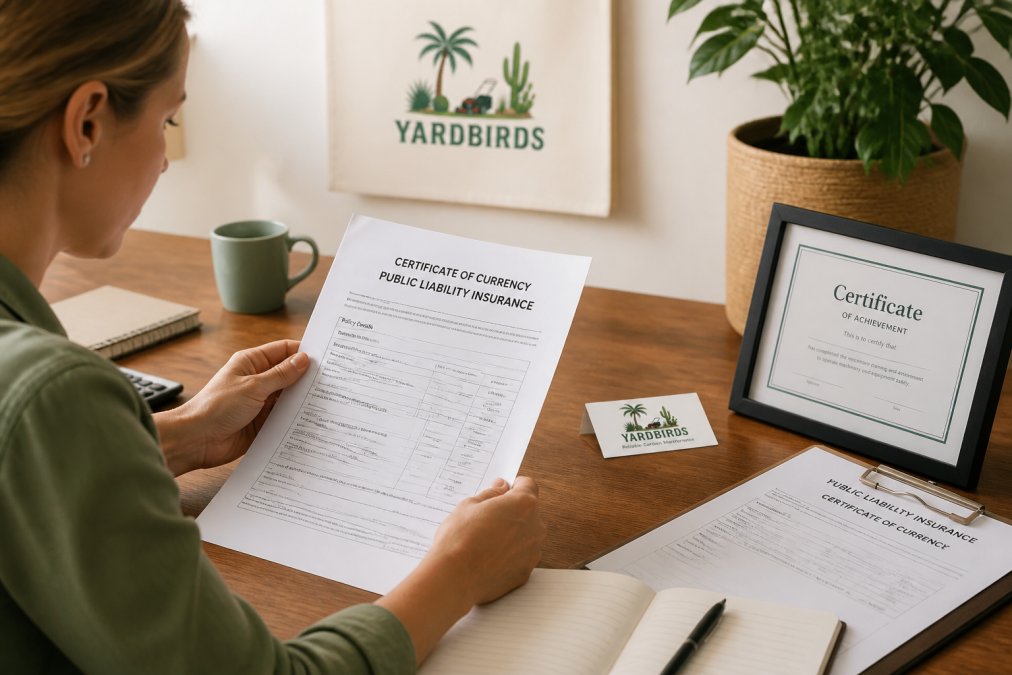
Public liability insurance covers damage or injuries during work. It's standard in the industry.
Ask for a current certificate of currency, proof their insurance is active, not expired. Don't accept verbal assurance.
Check the coverage amount and what's covered versus excluded.
Verify the insurer is legitimate. A genuine gardener won't hesitate to provide this information.
If they can't produce insurance, walk away. No certificate, no job. It's that simple.
Red Flags to Watch for When Hiring
Skip these operators:
- No insurance or won't provide proof
- Demands cash only with no receipt
- Won't give you a written agreement or quote
- Vague about what they'll actually do
- No references or reviews available
- Pressures you to commit to long-term contracts immediately
- Doesn't show up on time or cancels frequently
- Quotes wildly different from other professionals
If someone seems evasive or defensive about questions, they're not professional enough. A solid gardener welcomes scrutiny.
Be wary of extremely low quotes. Garden work requires equipment, fuel, expertise, and insurance. Bargains often mean cut corners.
Contract vs. Ad-Hoc Garden Services
Understanding the difference helps you choose what fits your situation.
Regular maintenance contracts lock in a schedule. Your gardener knows your garden and builds expertise, but you're committed even during slower seasons.
Ad-hoc services mean you call when needed. It's cheaper short-term but less reliable for consistent garden health.
Most homeowners find regular maintenance works better: gardens stay healthy, gardeners build familiarity, and you don't chase bookings.
Ask about flexibility: reducing winter frequency or adding one-off projects without breaking the arrangement.
Eco-Friendly Garden Maintenance Practices
More homeowners want sustainable gardeners. It's better for your garden long-term.
Look for these practices:
- Electric or battery-powered equipment instead of petrol
- Mulching clippings back into soil rather than removing all green waste
- Organic weed management instead of chemical sprays
- Native plant selection suited to Sydney's climate
- Water-efficient practices and proper drainage
- Composting and soil health focus
Sustainable practices produce healthier, more resilient gardens. Soil built through mulching and composting retains moisture better.
Ask about their approach to chemicals and whether they manage weeds mechanically or through mulching.
YardBirds Sydney uses all-electric equipment for zero emissions and quieter operation.
How to Evaluate Reliability and Track Record
Past performance predicts future behaviour. But checking references and reviews requires knowing what to look for.
How to assess online reviews strategically:
Read the text, not just stars. Specific details ("on time every visit for two years") signal genuine reviews; vague praise often signals fake ones.
Watch for patterns. One complaint is an outlier; three about the same issue (cancellations, poor communication) is a real problem. Multiple mentions of the same strength signal reliability.
Check review dates. Recent reviews (last 6-12 months) matter more than old ones.
Be sceptical of five-star reviews with no text. Genuine customers explain why; perfect ratings with no detail suggest self-posting.
Check the reviewer's profile. Established reviewers with other reviews are more credible than blank accounts.
How to ask references the right questions:
Request at least three current clients (not past ones). When you contact them, ask:
- "Has he missed or rescheduled appointments? How often, and how much notice did he give?"
- "Does he communicate before arriving, text, call, or email confirmation?"
- "Have there been any damage to your property, and how was it handled?"
- "Does he adapt the service to seasonal needs, or is it always the same?"
- "What would you change about his service if you could?"
The last question reveals whether the reference is genuine. Real customers mention something they'd improve; zero criticism suggests scripted responses.
If a reference hesitates or gives vague answers, that's a warning. Satisfied customers speak clearly and confidently.
How to verify how long they've actually been reliable:
"How long in business?" isn't enough. Ask instead:
- "Can you give me the names of clients you've worked with for at least three years continuously?"
- "Have you had any complaints or disputes with clients? How were they resolved?"
- "What's your client retention rate?" (A professional who keeps 80%+ of clients year-on-year is doing something right.)
- "Have you had any insurance claims? What happened?"
Red flags in references and reviews:
- References who are friends or family
- Refusal to provide references
- References who seem coached or use identical language
- Reviews in clusters (five five-star reviews in one week)
- No reviews or references available
- Dismissing negative reviews as "one difficult customer" without acknowledging fault
Track record with your specific garden type:
Ask for references from properties similar to yours. If you have a strata garden, ask about managing multiple stakeholders. If you have native plantings, ask about local species knowledge.
Request before-and-after photos of past work. This shows pride in results and documentation, signs of reliability.
Frequently Asked Questions
What questions should I ask before hiring garden maintenance?
Ask about their experience with your garden type, how they handle scheduling changes, what equipment they use, whether they're fully insured, and how they approach problem areas. Request references from other clients with similar properties. Clarify what services are included, whether they offer seasonal adjustments, and how they communicate about work completed. Understanding their approach to plant care and any eco-friendly practices they follow helps ensure they align with your garden's needs.
How do I verify if a gardening business is insured?
Ask the gardener directly for proof of public liability insurance before they begin work. Request a copy of their Certificate of Currency, which shows current coverage. Check the insurer's name and policy number, then contact the insurance company to confirm the policy is active. For strata or commercial properties, ensure the coverage amount meets your body corporate or business requirements. Never assume a business is insured, always verify independently.
What is included in professional garden maintenance?
Standard professional garden maintenance typically includes lawn mowing, hedge trimming, pruning, weeding, mulching, and removal of green waste. Some services also offer plant care, seasonal cleanup, and advice on garden health. The scope varies by provider, clarify exactly what's covered in your agreement, including frequency of visits, whether they handle problem areas like overgrown patches, and if seasonal adjustments are included. Discuss any special requirements upfront.
How can I tell if a garden maintenance service is reliable?
Look for consistent customer reviews and ratings from multiple sources. Ask for references and contact previous clients directly about punctuality and quality. Check how long they've been operating and whether they have a clear service agreement in writing. A reliable service communicates proactively about scheduling, responds promptly to questions, and handles complex situations like strata gardens with multiple stakeholders. Fully insured businesses with established systems tend to be more dependable.