 how-to
Eco Friendly Garden Maintenance Sydney: A How-To Guide
Table of Contents
- What You'll Need Before You Start
- Step 1: Assess Your Soil and Garden Conditions
- Step 2: Apply Organic Lawn Care Tips for a Healthier Yard
- Step 3: Control Weeds and Pests Without Chemicals
- Step 4: Adopt Water-Wise Gardening Practices
- Step 5: The Benefits of Electric Lawn Mowers for Eco Friendly Garden Maintenance Sydney
- Step 6: Manage Green Waste and Build Compost
- Common Mistakes to Avoid in Eco Friendly Garden Maintenance Sydney
- Frequently Asked Questions
Last Updated: September 14, 2026
What You'll Need Before You Start
Eco friendly garden maintenance in Sydney starts with a few good basics and a plan, not a shed full of synthetic products.
Here is what to gather before you begin:
- A soil pH test kit (available at most nurseries)
- A hand trowel and weeding fork
- Secateurs and pruning shears for hedge maintenance
- A mulching fork
- An all-electric mower or a push reel mower
- A compost bin or worm farm
- A drip irrigation line or soaker hose
- Gloves and a bucket for green waste
This guide from YardBirds Sydney walks through each step to a garden that thrives without chemical inputs.
Step 1: Assess Your Soil and Garden Conditions
Healthy soil is the foundation of any eco friendly garden. Before you plant or feed anything, find out what you are working with.
Walk your garden and note where water pools after rain, where the soil cracks in summer, and where plants struggle. These clues tell you more than any product label.
Testing Soil Structure and pH
Push a trowel into the soil: resistance means compaction, easy crumbling means decent structure.
For pH, use a test kit or a vinegar-and-baking-soda check. Most vegetables and many natives prefer slightly acidic to neutral soil, and Sydney's clay soils often run alkaline, locking up nutrients like iron and zinc (dpi.nsw.gov.au).
Soil structure is how soil particles bind into crumbs and pores; good structure lets air, water, and roots move freely.
Aerate compacted areas with a garden fork, then work in compost or aged manure, this does more for plant vitality than any synthetic fertiliser.
Step 2: Apply Organic Lawn Care Tips for a Healthier Yard
Organic lawn care tips always come back to three things: mow high, aerate often, and feed the soil rather than the grass.
Mowing, Aerating and Feeding Without Synthetics
Set your mower blade higher in summer: taller grass shades the soil, reduces water loss, and crowds out weeds.
Aerate once or twice a year, ideally in spring and autumn. Core aeration relieves compaction and lets water and nutrients reach the roots.
For feeding, spread a thin layer of compost or certified organic lawn fertiliser in early spring, and avoid high-nitrogen synthetics that push fast growth at the expense of root depth.
- Mow weekly in growing season, fortnightly in cooler months
- Leave grass clippings on the lawn as free nitrogen
- Water deeply but less often to encourage deep roots
Step 3: Control Weeds and Pests Without Chemicals
Chemical-free weed and pest control works by changing conditions, not attacking symptoms. Weeds thrive in bare, compacted, or nutrient-poor ground; fix those and they lose their advantage.
Start with hand removal for small infestations. Pull weeds before they set seed, and get the root where possible.
Mulching and Hand Removal Techniques
Mulch is your best weed management tool: 5-7 centimetres of organic mulch suppresses weeds, retains moisture, and feeds soil life as it breaks down.
For pests, encourage predators: ladybirds, lacewings, and parasitic wasps handle most aphid and caterpillar problems if you plant flowering herbs like dill, fennel, and marigold for habitat.
For tougher pests, a diluted soap or neem spray works on soft-bodied insects. Apply in the cool of the evening to avoid harming beneficial insects.
Step 4: Adopt Water-Wise Gardening Practices
Water-wise gardening practices make every drop count in Sydney's hot, unpredictable climate. Most guides stop at "water deeply and mulch", the real gains come from how you deliver and control the water.
Smart Irrigation Controllers and Zoning
A smart irrigation controller adjusts watering based on local weather data, soil moisture, and plant type. Brands like Hunter, Rain Bird, and Holman offer Wi-Fi-enabled controllers that skip watering when rain is forecast. Pair one with soil moisture sensors buried at root depth and you water only when needed, typically cutting outdoor water use by 30-50% versus a fixed timer.
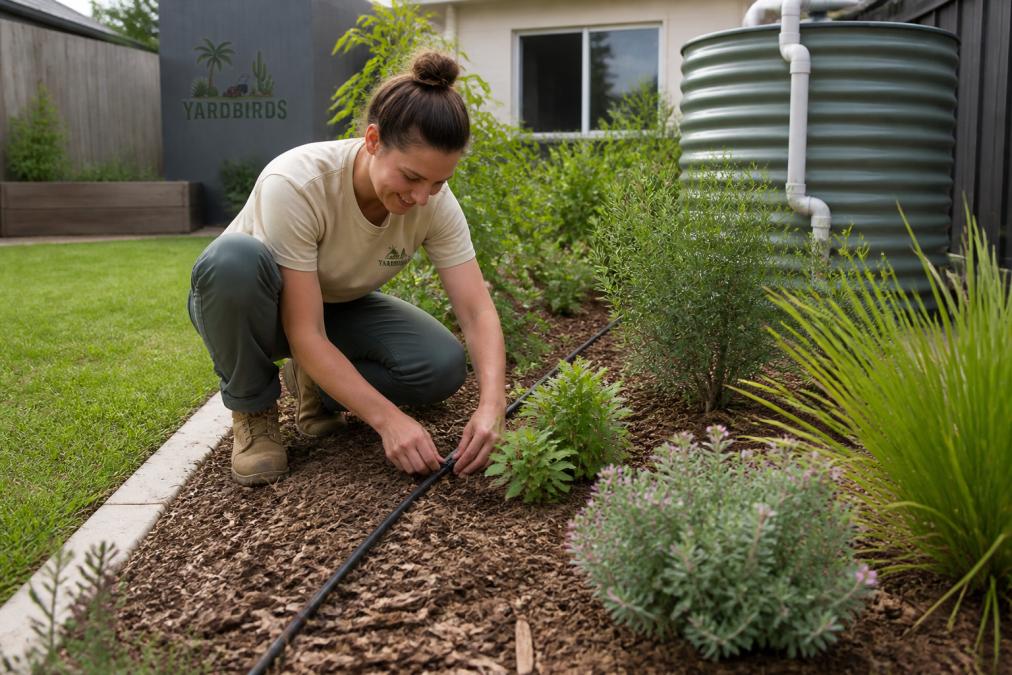
Zone by hydrozone: group plants with similar water needs on the same station, since natives, succulents, and established trees need far less than vegetables or new plantings. Drip lines and soaker hoses under mulch deliver water straight to roots with minimal evaporation, so run them on a separate zone from sprinklers.
Greywater and Rainwater Systems
Greywater, gently used water from showers, baths, and laundry, can be diverted to garden beds via a simple diverter or a treatment system. Most councils allow it on ornamental gardens, but check local rules before using it on edible crops, and have a licensed plumber install any permanent diversion.
Rainwater tanks are another high-return investment: a 2,000-5,000 litre tank connected to your downpipes captures free water for dry spells and eases pressure on the mains. Choose one with a first-flush diverter to keep roof debris out, and fit a pump if you want to run drip irrigation from it. Many councils offer rebates, check your local council's website.
Sydney-Specific Watering Rules and Timing
Sydney Water operates under strict water efficiency rules. During drought, Level 1 or 2 restrictions may limit outdoor watering, typically before 10am and after 4pm to reduce evaporation (Water Wise Guidelines). Even without restrictions, water early morning or late evening, and water deep and infrequent to push roots down rather than across the surface.
A simple test: push a trowel into the soil after watering. Easy to 10cm means you have watered enough; resistance means water longer, not more often.
Improving irrigation efficiency is one of the highest-return changes you can make. It saves water, saves money, and keeps plants healthier through heatwaves. And while you are tuning your irrigation, remember our Spring Special: 10% off Weed and Feed, a gentle, eco-friendly boost that works with your water-wise setup, not against it.
Step 5: The Benefits of Electric Lawn Mowers for Eco Friendly Garden Maintenance Sydney
The benefits of electric lawn mowers go well beyond cutting emissions: they are quieter, lighter, and need less maintenance than petrol models, making regular care easier to keep up.
Modern all-electric equipment has the torque for thick, overgrown patches and tough summer weeds; the old concern that battery gear lacks power no longer holds for quality machines.
For eco friendly garden maintenance Sydney homeowners can rely on, electric mowers pair well with the rest of this approach. No fuel spills, no exhaust fumes, no oil changes. Just charge, mow, and go.
At YardBirds Sydney, the team runs fully electric equipment across every job, from residential lawns to strata common areas. That means zero emissions on site and a quieter visit for you and your neighbours.
Step 6: Manage Green Waste and Build Compost
Composting turns garden clippings and kitchen scraps into free soil conditioner, closing the loop on green waste and keeping organic matter out of landfill. Most guides stop at "build a compost bin", the real opportunity is cycling waste on-site so nothing leaves your property.
Composting Systems for Every Space
A traditional compost bin works if you have space and a mix of green and brown materials. Layer green material (grass clippings, vegetable scraps) with brown (dry leaves, cardboard, straw) at roughly two parts brown to one part green, turn it every week or two, and keep it as damp as a wrung-out sponge. In Sydney's humid summers, turn more often to prevent anaerobic smells.
For smaller spaces, a worm farm handles kitchen scraps and produces liquid fertiliser you can dilute for potted plants. Bokashi bins ferment all food waste, including meat and dairy, in a sealed bucket; the pre-compost can be buried in garden beds or added to a compost pile, making bokashi ideal for apartments or limited outdoor space.
Mulching and On-Site Chipping
Instead of sending prunings to the tip, chip them: a small electric chipper shredder turns branches up to 40mm into mulch you can use immediately, saving money on bought mulch and reducing green waste transport. For larger branches, a manual pruning saw and mulching fork break them down over time.
Grass clippings can be left on the lawn as free nitrogen or added to compost in thin layers; avoid thick layers, which mat down and go anaerobic.
Council Green Waste Services and Local Rules
If you have more green waste than you can compost, check your local council's green waste collection service. Many Sydney councils accept garden clippings for composting or mulching, but rules vary, some take food waste, others only garden organics, and some offer discounted compost bins or worm farms. Check your council's waste page.
Never compost weeds with seeds or invasive rhizomes unless your pile reliably reaches high temperatures; most home bins do not get hot enough to kill weed seeds, so those weeds spread when you use the compost (epa.nsw.gov.au).
And if you would like a hand keeping that loop running smoothly, our Spring Special gives you 10% off Weed and Feed, a natural way to keep your garden thriving while you build healthy soil.
Common Mistakes to Avoid in Eco Friendly Garden Maintenance Sydney
Most eco friendly garden problems trace back to a handful of avoidable mistakes.
- Overwatering. More plants die from too much water than too little. Check soil moisture before reaching for the hose.
- Bare soil. Leaving ground uncovered invites weeds and dries out your soil. Mulch everything.
- Mowing too short. Scalping weakens grass and lets weeds in. Keep the blade high.
- Ignoring soil health. Feeding plants without fixing soil structure is a short-term fix. Build the soil first.
- Wrong plant, wrong spot. A sun-loving plant in shade will always struggle. Match species to conditions.
- Skipping green waste management. Letting clippings pile up wastes a free resource. Compost or mulch them.
| Mistake | Fix | Why It Matters |
|---|---|---|
| Overwatering | Check soil moisture first | Prevents root rot and disease |
| Bare soil | Mulch 5-7cm deep | Suppresses weeds, holds moisture |
| Scalping lawn | Mow high, cut a third max | Stronger roots, fewer weeds |
| Poor soil | Add compost, aerate | Better nutrient uptake |
| Wrong plant placement | Match species to light | Healthier, lower-maintenance plants |
Getting these right keeps your garden low-maintenance and chemical-free. A common mistake is chasing quick fixes instead of building the conditions plants need to thrive on their own.
If you would rather hand the whole thing to someone who does this daily, YardBirds Sydney brings fully insured, all-electric care to homes, strata, and commercial properties across the Inner West, with flexible scheduling for people who travel or work long hours. Every visit is tailored to your garden rather than treated like a standard job.
Maintaining a genuinely eco friendly garden takes consistency, and consistency is the hard part when life gets busy. YardBirds Sydney handles the ongoing work with all-electric equipment, tailored lawn shaping for local conditions, and a personal approach that keeps your outdoor space thriving. The team is fully insured, backed by 500+ customers and a 97% satisfaction rate, and ready to work around your schedule. Get a Free Quote and let YardBirds Sydney turn your yard into a balanced, beautiful retreat.
Frequently Asked Questions
What are the benefits of using electric gardening equipment?
Electric mowers and tools produce zero exhaust emissions at the point of use, run quieter than petrol models, and need less maintenance since there is no oil, spark plug or fuel system to service. Modern battery-powered equipment handles thick grass and tough summer weeds when you match the blade and battery to the job. For an eco friendly garden, electric tools also remove the risk of fuel spills on soil and lawns.
How can I manage garden waste sustainably?
Start by separating green waste into soft material for composting and woody prunings for council green waste collection or a mulching service. Grass clippings can stay on the lawn as a natural feed when you mow regularly and remove no more than one third of the blade at a time. Leaves make excellent compost or leaf mould. Check your local council's green bin rules, since accepted material varies between areas.
What are the best organic methods for weed control?
Hand removal works best for isolated weeds, especially before they set seed. Mulching garden beds to a depth of about 75mm smothers weed seedlings and holds soil moisture. For lawn weeds, keep the grass dense and healthy through regular mowing, aeration and organic feeding, because bare patches invite invasion.
Why is it important to use native plants in local garden design?
Native species are adapted to local rainfall, soil and temperature patterns, so they typically need less watering and fewer inputs once established. They also support local birds, bees and insects, which improves biodiversity and natural pest control in your garden. In an eco friendly garden maintenance routine, planting natives reduces the ongoing work of replacing struggling exotic plants and lowers water use over the long term.