 ultimate-guide
Professional Garden Care for Strata Properties: 2026 Guide
Table of Contents
- What Professional Garden Care for Strata Properties Covers
- Owners Corporation Landscaping Responsibilities Explained
- Your Strata Garden Maintenance Compliance Checklist
- What Belongs in a Strata Property Garden Maintenance Contract
- Core Services: Lawn Mowing, Hedge Trimming, Weeding and More
- Budgeting and Cost-Benefit Analysis for Strata Gardens
- Sustainability and Water-Wise Landscaping for Common Property
- Conclusion
- Frequently Asked Questions
Last Updated: September 15, 2026
What Professional Garden Care for Strata Properties Covers
Professional garden care for strata properties is the scheduled maintenance of shared outdoor areas on behalf of an owners corporation, covering lawns, hedges, garden beds, trees, irrigation and green waste. At YardBirds Sydney, we handle this work for residential buildings across the Inner West, where common property often includes courtyards, entry gardens, verges and rooftop planters.
The scope is broader than mowing: a proper program protects asset value, keeps shared spaces usable and reduces complaints landing on the strata committee's desk.
Most buildings run routine visits for tidiness plus seasonal work for the heavy jobs: pruning, mulching, clean-ups and irrigation checks.
Below, we break down who is responsible, what belongs in a contract, and how to budget for it.
Owners Corporation Landscaping Responsibilities Explained
The owners corporation is responsible for maintaining common property, typically including gardens, lawns and landscaping in shared areas (Strata repairs and maintenance). Under strata schemes legislation, that duty sits with the owners corporation as a whole, funded through the administrative fund.
In practice, the committee (or strata manager acting on its behalf) must arrange and pay for upkeep of shared gardens. Lot owners look after anything inside their own lot boundaries, such as a private courtyard, unless by-laws say otherwise.
"Maintenance" has a legal edge: if a common-property tree drops a limb on a parked car, or a path becomes a trip hazard because beds have overgrown onto it, the owners corporation can be exposed. Documented inspections and maintenance are your defence.
The NSW strata schemes legislation and resources set out the general framework, though specific obligations vary by scheme and by-laws. Check your own scheme's by-laws and management statement before assuming anything.
Your Strata Garden Maintenance Compliance Checklist
A strata garden maintenance compliance checklist is a documented record showing shared gardens are inspected, maintained and safe. It is not a legal document itself, but it is what you produce if a resident, insurer or tribunal asks what the building has been doing.
Under strata schemes legislation, the owners corporation's duty to maintain common property is ongoing (Strata repairs and maintenance). The defence against a negligence claim is not a verbal assurance that "the gardener comes fortnightly", it is a dated paper trail showing inspections happened, hazards were identified, and action was taken.
Treat each item as evidence you may one day need to produce:
- Site assessment completed and updated annually, covering all common garden zones
- Maintenance schedule agreed and shared with the committee
- Contractor insurance certificates (public liability and workers compensation) on file
- Site-specific risk assessment for steep banks, retaining walls and play areas
- Chemical use records for any herbicide or pesticide application
- Green waste disposal receipts or service records
- Irrigation and drainage checks logged seasonally
- Tree inspection records for mature trees near buildings or paths
- Incident and near-miss log for garden-related safety issues
- Resident communication log for garden notices and access arrangements
How to Build the Paper Trail Without Adding Admin Hours
The checklist only works if it is completed. A few mechanisms keep it live:
- One page per visit. The contractor ticks zones serviced, notes new hazards and photographs anything needing a follow-up quote. That page becomes your inspection record.
- A shared folder, not a filing cabinet. Committee members and the strata manager should open the current year's logs in seconds. Records kept only in a contractor's van are not accessible when a claim lands.
- A hazard escalation rule. Anything that could injure someone, a cracked paver, a low branch over a path, a retaining wall showing movement, gets reported the same day.
- An annual review date. Diarise a review of the site assessment each year, or whenever the garden layout changes. An outdated assessment is almost as weak as none.
Where Compliance and Cost Meet
Compliance is also a budgeting tool. Documented inspections catch small problems, a failing irrigation valve, a weed outbreak, a hedge encroaching on a path, while they are cheap to fix. Undocumented neglect turns those into reactive repairs, tribunal complaints or insurance excesses. The buildings that budget best usually have the cleanest logs.
If your contractor does not provide visit records, ask for them. If they cannot, the program is not built for strata accountability.
What Belongs in a Strata Property Garden Maintenance Contract
A strata property garden maintenance contract should spell out scope, frequency, response times, insurance, waste disposal and how variations are handled. Vague contracts create disputes; specific ones prevent them.
The essentials to lock down:
- Scope of works: named zones, not "the gardens". List front entry, courtyards, verges, rooftop planters separately.
- Visit frequency: weekly, fortnightly or monthly, with seasonal adjustments written in.
- Service inclusions and exclusions: is tree work in or out? Are repairs to irrigation in or out?
- Response times: how fast does the contractor attend for urgent safety issues?
- Insurance and compliance: proof of cover, and confirmation of correct licensing where required.
- Waste disposal: who removes green waste, and where it goes.
- Variation process: how extra work gets quoted and approved.
- Term and termination: notice periods and renewal terms.
- Reporting: what the contractor provides after each visit.
| Contract Element | What to Specify | Why It Matters |
|---|---|---|
| Scope | Named garden zones | Prevents "that wasn't included" disputes |
| Frequency | Visits per month, seasonal changes | Sets resident expectations |
| Insurance | Public liability and workers comp | Protects the owners corporation |
| Waste | Removal and disposal method | Avoids rubbish piling up on site |
| Variations | Quote and approval process | Controls unbudgeted spend |
| Reporting | Visit logs and photo records | Creates your compliance trail |
Core Services: Lawn Mowing, Hedge Trimming, Weeding and More
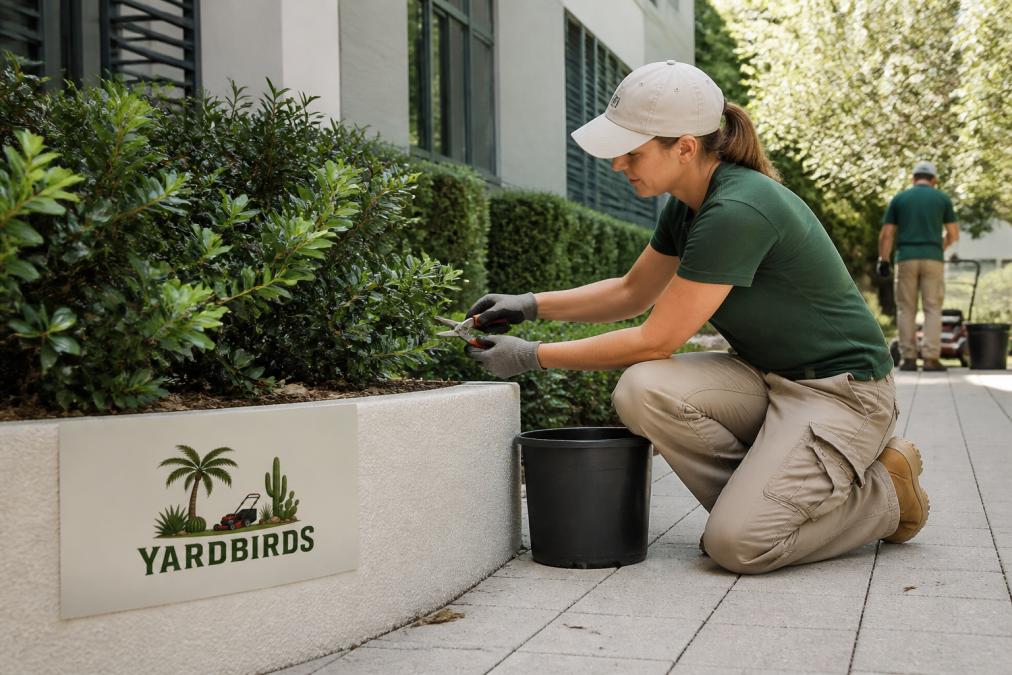
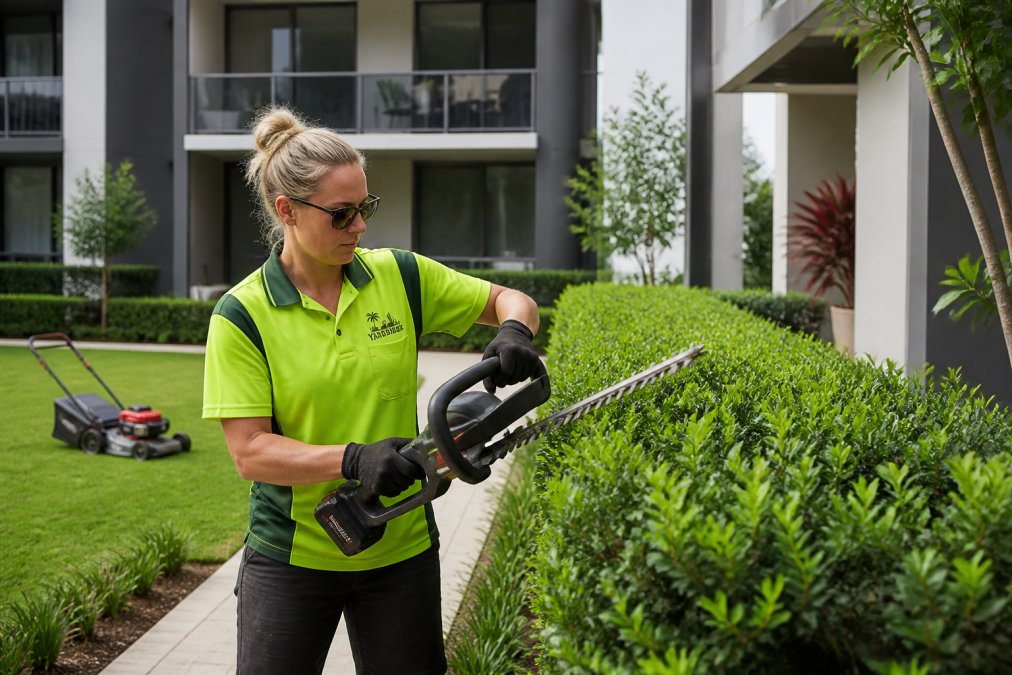
Core services cover lawn mowing and edging, hedge trimming, pruning, weeding, mulching, fertilising, pest and disease management, irrigation maintenance, seasonal clean-ups and green waste removal.
Budgeting and Cost-Benefit Analysis for Strata Gardens
How to Build a Full-Year Cost Picture
The Cost of Reactive Maintenance
Setting the Annual Line Item
Sustainability and Water-Wise Landscaping for Common Property
Practical moves that work well in shared gardens:
Conclusion
Frequently Asked Questions
What are the responsibilities of an owners corporation regarding garden maintenance?
An owners corporation is responsible for maintaining common property in good repair, which typically includes shared gardens, lawns, hedges and irrigation systems. This duty comes from state strata legislation, so the exact wording depends on where the scheme is located. In practice, most owners corporations engage a professional garden care provider to handle routine upkeep, and they should keep records of scheduled visits, works completed and any safety inspections. Confirm your scheme's specific obligations with the relevant state regulator or a strata lawyer, because by-laws and management agreements can shift some responsibilities.
How do you ensure strata garden maintenance compliance in New South Wales?
Compliance starts with a written scope of works and a maintenance schedule that matches your scheme's by-laws and safety obligations. Keep a strata garden maintenance compliance checklist covering site inspections, hazard reporting, chemical storage, waste disposal and insurance currency. Any contractor working on common property should hold public liability cover and provide certificates of currency. For scheme-specific legal duties, check the NSW strata legislation and guidance from NSW Fair Trading rather than relying on generic advice, since requirements can change and vary between schemes.
What should be included in a professional strata garden maintenance contract?
A strata property garden maintenance contract should spell out the scope of works, visit frequency, seasonal tasks, green waste removal, irrigation checks and who supplies materials. Include insurance requirements, response times for urgent issues, reporting obligations to the strata manager, and a clear process for approving extra works. Pricing structure matters too, so ask whether it is a fixed monthly fee or charged per visit. Get the contract reviewed against your scheme's by-laws before signing, and keep a copy with the owners corporation records.
Why is eco-friendly garden maintenance important for strata properties?
Battery-powered equipment produces no exhaust emissions at the point of use, which reduces noise and air pollution in shared outdoor spaces. That matters in denser residential complexes where mowing and trimming happen close to windows and balconies. Eco-friendly practices also extend to mulching, composting green waste and choosing water-wise plants that suit the local climate. For strata committees, these choices can lower long-term water and replacement costs while supporting sustainability goals that many owners now expect from their building's management.
How often should professional gardeners visit a strata complex?
Most strata complexes need visits every two to four weeks during peak growing season, dropping to monthly or six-weekly in cooler months when growth slows. The right frequency depends on lawn area, plant types, irrigation and how visible the gardens are to residents and visitors. High-traffic entrance gardens usually need more attention than back-of-block buffer planting. A site assessment before the first visit helps set a realistic schedule, and it should be reviewed seasonally rather than locked in for the whole year.
Can a strata garden maintenance provider handle conflicting owner opinions?
Yes, but it works best when the committee agrees on a single scope of works before the contract starts. A provider can document the agreed schedule, report on completed tasks and flag issues through the strata manager rather than dealing with individual owners directly. That keeps communication consistent and avoids one resident's preferences overriding the committee's decision. If owners disagree on plant choices or garden style, ask the provider for a written maintenance standard that the committee can approve and update at each annual general meeting.