 how-to
7 Steps to Transition Your Lawn to Organic Care
Last Updated: October 24, 2026
Quick Summary
Transition to organic lawn care by assessing your current soil and lawn condition, then gradually phasing out synthetic inputs over two to three seasons while building soil health through compost, aeration, and leaving grass clippings. Most lawns show significant improvement within 12 to 24 months as soil biology improves and organic methods take effect.
- Test your soil pH and nutrient levels before buying any fertiliser to avoid wasting money on inputs you don't need.
- Apply a quarter-inch layer of compost once or twice yearly to feed soil microbes and improve structure.
- Leave grass clippings on the lawn when you mow to return nitrogen naturally and reduce fertiliser needs.
- Expect the first season to show slower growth and more weeds as the lawn adjusts, but improvement compounds each year.
- Aerate in autumn or spring to break up compacted soil and let air, water, and nutrients reach grass roots.
Table of Contents
- Assess Your Current Lawn and Soil
- How to Improve Lawn Soil Naturally
- Selecting Organic Lawn Fertiliser for Your Climate
- Compost Top Dressing for Lawns: Building Organic Matter
- Organic Weed Control for Lawns Without Chemicals
- Managing the Transition Period and Setting Realistic Expectations
- Getting Professional Support for Your Transition to Organic Lawn Care
- Frequently Asked Questions
Assess Your Current Lawn and Soil
Before you transition to organic lawn care, understand what you're working with.
Test your soil to learn its pH and nutrient levels, this tells you which organic inputs will actually help.
Check thatch (dead grass buildup).
Document the current state with photos. This helps you track progress and decide when to move to the next step.
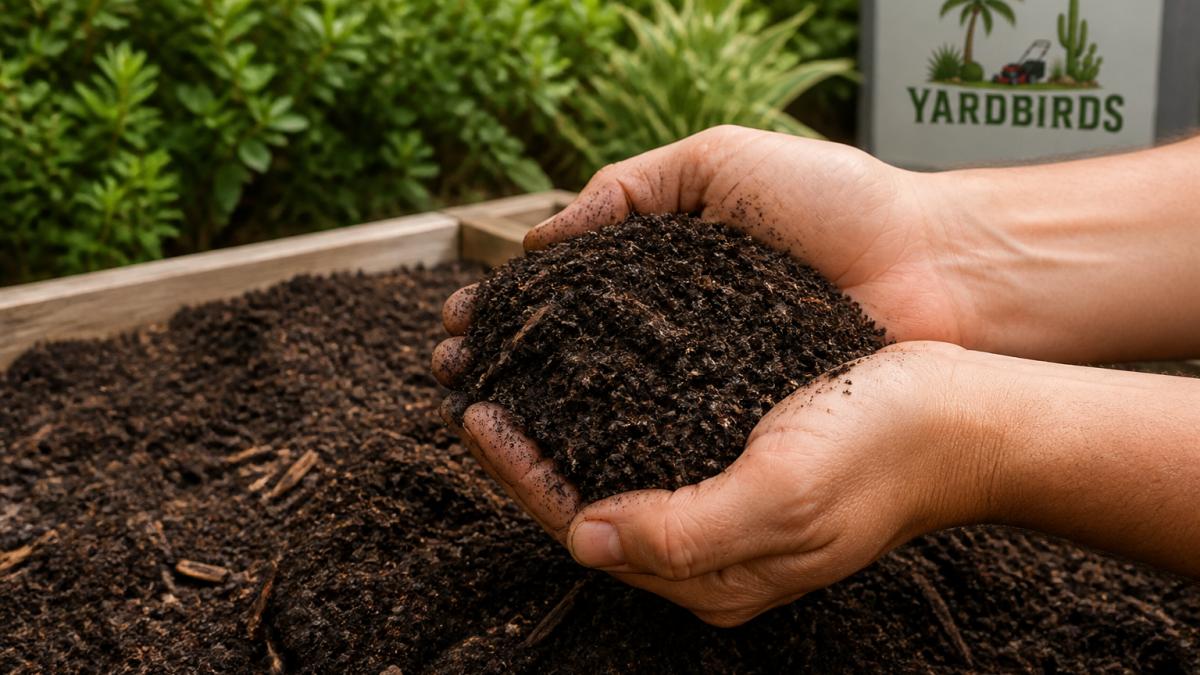
Understanding your starting point prevents costly mistakes, many people buy fertilisers without knowing what their soil actually needs.
How to Improve Lawn Soil Naturally
Healthy soil is the foundation of organic lawn care. Without it, no fertiliser will work properly.
Start by adding compost: spread a quarter-inch layer across your lawn each year.
Aeration is crucial. Compacted soil blocks roots from going deep, leaving shallow roots that can't access water during drought.
Stop removing grass clippings. Leave them on the lawn when you mow, they break down and return nitrogen to the soil.
Build organic matter by adding leaf mulch in autumn. Shred fallen leaves and spread them lightly across the lawn.
University of Maryland's organic land care training programme documents how organic methods rebuild soil structure over time. The transition takes patience, but the results compound each year.
Selecting Organic Lawn Fertiliser for Your Climate
Organic fertilisers are not one-size-fits-all, the right choice depends on your soil test, local climate, and season.
Start with your soil test. If your pH is too low (acidic), add lime before applying fertiliser; if too high (alkaline), elemental sulphur helps.
Climate matters.
Here are common organic fertiliser options and when to use them:
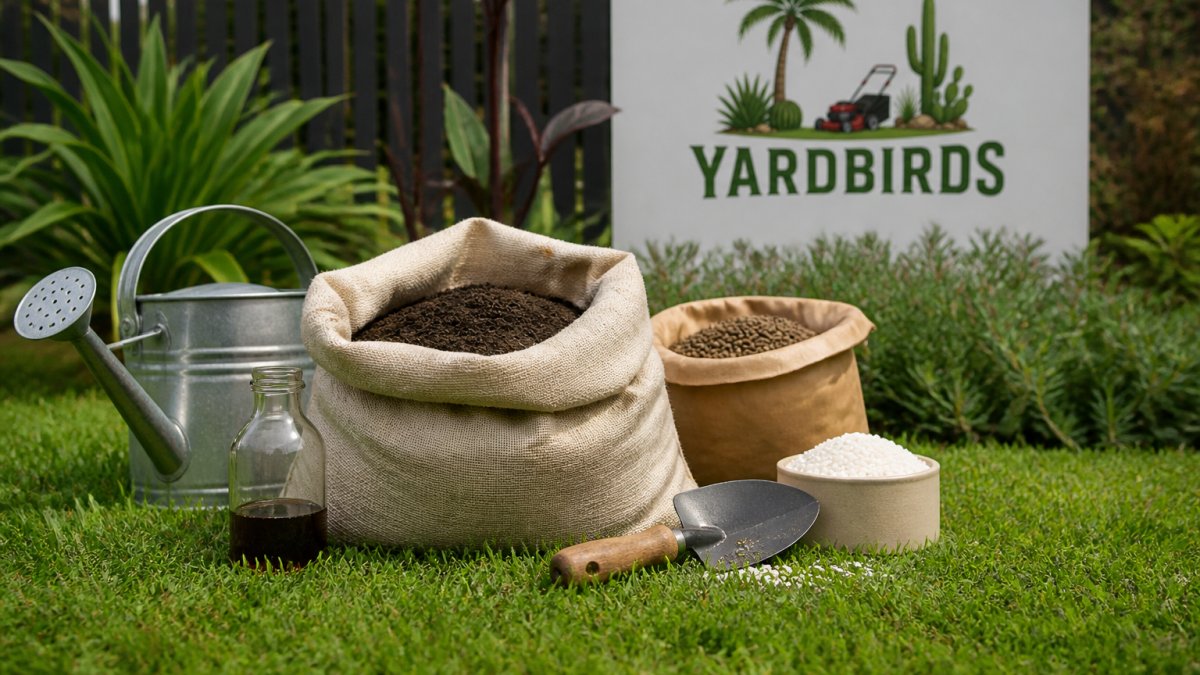
- Compost - A balanced, slow-release source of all nutrients. Apply a quarter-inch layer in autumn or early spring. It also improves soil structure.
- Blood meal - High in nitrogen (around 12-15%), fast-acting. Use in early spring to kick-start growth. Avoid over-application; it can burn plants if used excessively.
- Fish emulsion - Liquid nitrogen source (around 5% nitrogen), quick uptake. Good for mid-season boosts. Dilute according to label and water in well.
- Bone meal - High in phosphorus (around 15-20%), slow-release. Apply in autumn to support root development.
- Kelp or seaweed meal - Rich in potassium and trace minerals. Use in summer to improve drought tolerance and disease resistance.
- Poultry manure pellets - Balanced NPK (often around 4-3-2), slow-release. Apply in spring or autumn. Ensure it is composted to avoid pathogens.
Always follow label application rates.
Certification matters. Look for products certified by organisations such as the Organic Retailers Association of Australia or those approved for organic gardening.
Timing is critical. Apply fertiliser when grass is actively growing: early spring for cool-season grasses, late spring for warm-season grasses. Avoid applying before heavy rain to prevent runoff.
Finally, consider making your own fertiliser from compost, worm castings, or comfrey tea. These are cost-effective and reduce waste.
By matching organic fertilisers to your soil and climate, you build a resilient lawn that needs fewer inputs over time.
Compost Top Dressing for Lawns: Building Organic Matter
Compost top dressing, spreading a thin layer of finished compost across the lawn, feeds the soil, improves structure, and gradually raises organic matter.
Apply a quarter-inch layer once or twice a year. Too much smothers the grass. Too little has minimal effect. Spread it evenly in autumn or early spring.
The compost should be fully finished, dark, and crumbly. Fresh compost can introduce weed seeds or harbour pathogens.
Compost top dressing works best on lawns that are already reasonably healthy.
You'll notice the difference within two seasons: grass becomes denser, weeds decline as strong grass outcompetes them, and the soil becomes darker and more alive. More earthworms signal the soil is improving.
Combine top dressing with other organic methods, aerate in spring, apply compost in autumn, and leave clippings year-round, to build soil faster than any single method.
Organic Weed Control for Lawns Without Chemicals
Weeds thrive in weak lawns. The best weed control is a healthy lawn that crowds them out.
Pull weeds by hand when the soil is moist, free and effective for isolated weeds.
Mow at the right height. Taller grass (7-10 centimetres) shades the soil and prevents weed seeds germinating.
Mulch heavily with compost or leaf matter. Discover specific strategies for managing Sydney summer weeds organically to suppress weed seeds during your transition.
Boiling water kills weeds in driveways and paths without chemicals. It's labour-intensive but effective for small areas.
Sustainable lawn care practices outline natural weed suppression through soil health and proper mowing.
Corn gluten meal is an organic pre-emergent that stops weed seeds from germinating.
Patience is key: weeds decline as the lawn strengthens. They're most visible during the transition, but each season gets better.
Managing the Transition Period and Setting Realistic Expectations
The switch to organic lawn care is a marathon, not a sprint.
What to expect in the first year
- Slower growth - Without synthetic nitrogen, grass grows more slowly at first. You may mow less often, but the grass will gradually thicken as soil biology improves.
- More weeds - Weed seeds that were dormant may germinate as you stop using herbicides. Hand-pull or smother them, and remember that a dense lawn will eventually outcompete weeds.
- Discolouration - Grass may yellow slightly as it adjusts to slower nutrient release. This is temporary; deep-root development is happening underground.
- Thatch buildup - If you were previously removing clippings, thatch may increase initially. Aerate and top-dress with compost to speed decomposition.
A phased transition plan
Rather than stopping all synthetic inputs at once, phase them out over two to three seasons. This gives the soil time to adapt and reduces stress on the lawn.
- Season 1 - Stop the worst offenders - Eliminate synthetic herbicides and insecticides first. Continue using synthetic fertiliser at reduced rates (half the recommended dose) while you build soil with compost and aeration. Begin leaving clippings on the lawn.
- Season 2 - Switch to organic fertilisers - Replace synthetic fertiliser entirely with organic alternatives. Apply compost top dressing in autumn. Introduce overseeding with appropriate grass species for your climate.
- Season 3 - Fine-tune - Rely fully on organic methods. Monitor soil test results annually and adjust inputs. Address any persistent problems with targeted organic treatments.
Measuring progress
Don't rely on appearance alone. Track these indicators every three months:
- Soil compaction - Push a screwdriver into the soil; it should penetrate easily. If not, aerate again.
- Earthworm activity - Count earthworms in a spade-sized soil sample. More than five is a good sign.
- Thatch depth - Should be less than 1 cm. If thicker, aerate and top-dress.
- Water infiltration - After watering, check how quickly water soaks in. Faster infiltration means better soil structure.
- Weed pressure - Note the percentage of weeds versus grass. It should decline each season.
When to intervene
If after two full seasons you see no improvement in soil condition or turf density, reassess. Common issues include:
- Persistent compaction - May need deeper aeration or mechanical coring.
- Nutrient lock-up - Soil pH may be off; retest and adjust.
- Wrong grass species - If your lawn is the wrong type for your climate, consider overseeding with a better-adapted variety.
Budgeting time and money
Organic lawn care can be as cheap or expensive as you make it. DIY compost and homemade fertilisers cost little but require labour; purchased fertilisers and professional services add up. Plan for:
- Equipment - A mulching mower, aerator, and spreader are one-off costs.
- Inputs - Compost, organic fertilisers, and overseeding seed.
- Services - Professional aeration, soil testing, or lawn care consultations.
Set a realistic budget and prioritise soil-building steps first. Many practitioners find that investing in aeration and compost in the first year pays off in reduced inputs later.
Tracking with photos
Take photos from the same spot every three months and compare them side by side to catch changes you'd miss day-to-day. Note the date and any treatments applied, this visual record keeps you motivated and informed.
Remember, a healthy organic lawn is resilient, not perfect. It may never look like a manicured golf course, but it will withstand drought, resist pests, and need fewer inputs over time.
Here's what to expect as your lawn transitions from synthetic to organic care over the first three seasons.
| Season | Focus | Key Actions | Timeline |
|---|---|---|---|
| Season 1 | Stop worst offenders | Eliminate herbicides and insecticides; reduce synthetic fertiliser by half; start leaving clippings | Year 1 |
| Season 2 | Switch to organic | Replace all synthetic fertiliser with organic alternatives; apply compost top dressing; overseed | Year 2 |
| Season 3 | Fine-tune | Rely fully on organic methods; monitor soil annually; adjust inputs as needed | Year 3 |
| Overall | Build resilience | Most lawns show significant improvement within 12 to 24 months | 12-24 months |
Getting Professional Support for Your Transition to Organic Lawn Care
Professional help can accelerate your transition and prevent costly mistakes. A lawn care specialist can assess your soil, recommend the right organic inputs, and manage the heavy work.
Sustainable Lawn Care Tips 2026: Greener Grass Guide explores broader organic practices that complement your transition. Many homeowners find professional guidance invaluable during the first year.
YardBirds Sydney offers professional, eco-friendly lawn mowing and garden maintenance across Sydney’s Inner West.
A specialist can also set up a maintenance schedule that matches your lawn's needs through each season.
Let's Talk About Your Yard to discuss your lawn's transition goals. YardBirds Sydney can help you plan the move to organic care, manage the transition period, and maintain results once established.
Frequently Asked Questions
How long does it take to transition to organic lawn care?
The transition typically takes 6-12 months for visible improvement, depending on your lawn's current condition and soil health. Initial changes occur within weeks as you stop applying synthetic chemicals, but deep root development and turf density improvements take longer. Patience during this period is crucial, many homeowners see the best results after the first full growing season.
What is the best organic fertiliser for my lawn?
The best organic lawn fertiliser depends on your soil's nutrient profile and grass type. Compost, seaweed-based products, and slow-release organic fertilisers work well in most situations. A soil test reveals which nutrients your lawn needs most, allowing you to choose a fertiliser that addresses specific deficiencies rather than guessing. Apply organic fertiliser in spring and autumn for consistent nutrition.
Can I put topsoil over existing grass when transitioning to organic care?
Yes, adding compost or quality topsoil directly over existing grass is an effective way to build soil structure and introduce organic matter. Apply a 25-50 mm layer in spring or autumn, allowing grass to grow through it. This method improves soil compaction, increases water retention, and supports beneficial microorganisms without disrupting the existing turf.
How do you manage weeds when switching to organic lawn care?
Organic weed control relies on cultural practices: maintain proper mowing height (60-75 mm), improve soil density through aeration and organic matter, and hand-pull persistent weeds. Dense, healthy turf naturally outcompetes weeds. Spot treatments with vinegar or boiling water work for isolated problem areas. Consistency matters more than speed, weed populations decline as soil health improves over time.
Transitioning to organic lawn care is an investment in your outdoor space's long-term health. The process requires patience, but the payoff is a stronger, greener lawn that thrives with less chemical input. Start by assessing your soil, build organic matter gradually, and adjust your maintenance habits. Within two years, most lawns show dramatic improvement. Get support from professionals who understand organic methods and your local climate, and you'll reach your goals faster.