 how-to
How to Manage Lawn Clippings in Small Courtyards
Table of Contents
- Why Lawn Clippings Are a Bigger Job in a Small Courtyard
- Step 1: Decide Whether to Catch or Leave Lawn Clippings
- Step 2: Using Grass Clippings as Mulch in Garden Beds
- Step 3: Composting Lawn Clippings in a Small Space
- Step 4: Choosing a Mulching Lawn Mower for Small Gardens
- Step 5: How to Dispose of Lawn Clippings Responsibly
- Step 6: Keeping Paving, Drains and Shared Boundaries Clear
- Common Mistakes to Avoid With Courtyard Clippings
- Frequently Asked Questions
Last Updated: October 20, 2026
Why Lawn Clippings Are a Bigger Job in a Small Courtyard
A small courtyard has nowhere to hide a mess. In a big backyard you can dump a catcher load behind a shed and forget it. In a courtyard, every clipping ends up on the paving, in the drain, or against a shared fence. (Source: Australian Government's Department of Climate Change, Energy, the Environment and Water)
That is the core tension here. The mowing is quick. Managing what comes off the mower is the slow part.
At YardBirds Sydney, we mow a lot of compact Inner West courtyards, and the same pattern shows up again and again: people are fine with the cutting, but they get stuck on the clippings. Too much to leave, not enough space to compost it, and a green bin that fills up fast.
Below, we'll show you exactly how to decide what to do with every load, from mulching to composting to disposal, so your courtyard stays clean and your lawn stays healthy.
Step 1: Decide Whether to Catch or Leave Lawn Clippings
The fastest call is this: leave the clippings on the lawn as mulch when the grass is dry and you are cutting light growth. Catch them when the grass is wet, overgrown, or full of weeds.
That single rule solves most courtyard clipping problems. Grass clippings are mostly water and nutrients, so returning a thin layer feeds the soil. But a thick clump smothers the grass underneath and turns into a slimy mat.
When to Mulch Clippings Back Into the Lawn
Mulch clippings back when you mow often and take off only a little each time. Aim to remove no more than about a third of the leaf height per cut. Fine, dry clippings break down quickly and feed the lawn.
This works best when:
- The grass is dry
- You mow weekly in spring growth
- The clippings are short and fine
- You spread them evenly, not in piles
When to Collect Clippings Instead
Catch them when the grass is long, wet, or weedy. A courtyard lawn that has gone from knee-length to tidy in one cut will produce far too much material to leave behind.
Collect when:
- The lawn is overgrown or wet
- Weeds are going to seed
- The grass looks diseased or patchy
- Clippings would blow onto paving or a neighbour's space
Step 2: Using Grass Clippings as Mulch in Garden Beds
Grass clippings make a free mulch for garden beds, but only if you apply them thin. Spread them in layers a couple of centimetres deep and let each layer dry before adding more.
Pile them thick and they mat down, smell, and go slimy. Thin and dry, they suppress weeds and hold moisture in the soil.
A few practical rules:
- Let clippings dry for a day before spreading
- Keep mulch a few centimetres back from stems and trunks
- Never use clippings from a lawn you have just treated with weed killer on veggie beds
- Mix with leaves or straw to stop matting
Step 3: Composting Lawn Clippings in a Small Space
Composting lawn clippings in a courtyard is less about the science and more about managing volume and smell in a tight space. Clippings are a wet, nitrogen-rich 'green', and in a small pile they can turn anaerobic within days, producing a sour odour that drifts into the house or over the fence.
The practical fix is to treat your compost as a system with a capacity limit. A lidded tumbler or a small enclosed bin of around 100-200 litres suits most courtyards, but even a full tumbler will struggle if you add clippings faster than they break down.
If the bin starts to smell, it is almost always too wet or too green. Add more browns, turn it, and leave the lid off for a few hours on a dry day. If fruit flies or vinegar flies appear, bury fresh clippings in the centre of the pile rather than leaving them on top.
Courtyard composting also has a neighbour dimension. Keep the bin away from shared fences and bedroom windows, and never add meat, dairy, or pet waste, which attract pests and create stronger odours. In hot weather, locate the bin in shade to slow evaporation and reduce smell. (Source: Australian Government's Department of Agriculture, Fisheries and Forestry)
When the bin is full and clippings keep coming, you need a pressure-release plan. Options include:
- Storing excess clippings in a lidded bucket for the next green bin collection
- Taking them to a council green waste drop-off
- Spreading a thin layer as mulch in garden beds instead of adding to the bin
- Reducing mowing frequency or using a mulching mower to leave clippings on the lawn
A simple seasonal rhythm helps: in peak spring growth, collect clippings for the green bin or drop-off and reserve the compost bin for smaller batches mixed with browns. In slower autumn growth, the compost bin can handle most clippings. This keeps the system working without overwhelming it.
Step 4: Choosing a Mulching Lawn Mower for Small Gardens
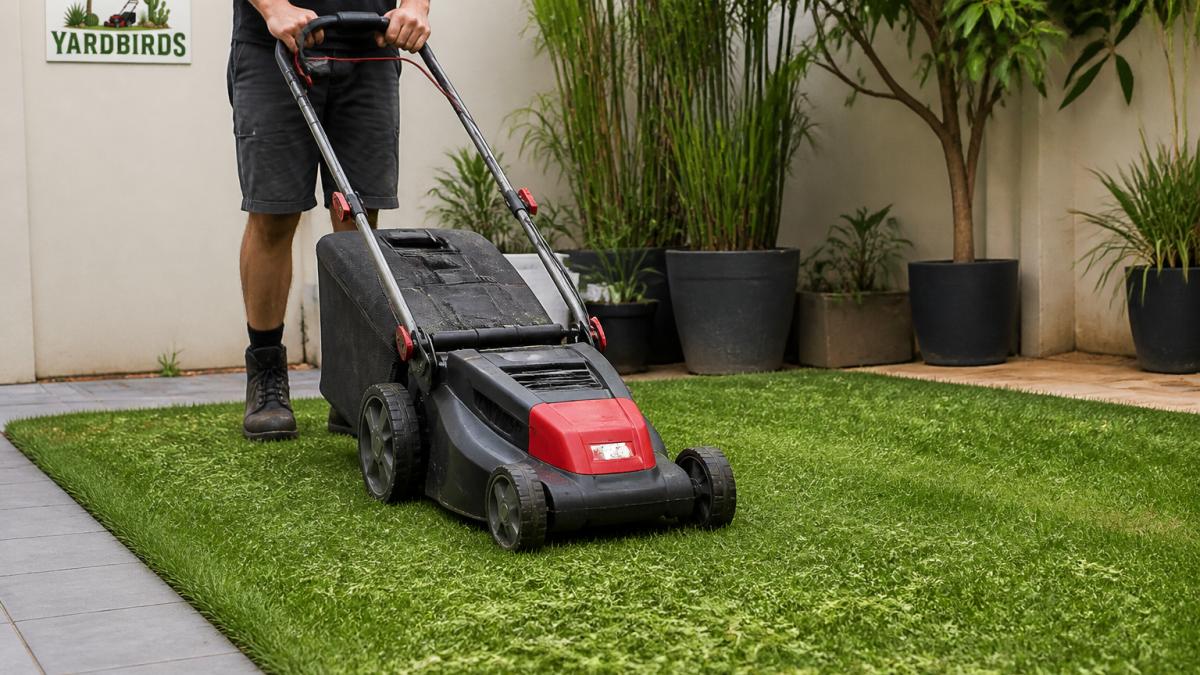
A mulching lawn mower for small gardens is worth it if you plan to leave clippings on the lawn most of the time. A mulching mower cuts the clippings finer and blows them back down into the grass, so they break down faster.
For a courtyard, look for:
- A compact deck that fits through gates and around pots
- A mulching plug or setting
- A catcher you can attach when you need to collect
- Battery power for quiet, low-fume mowing near the house
Electric mowers handle most courtyard lawns comfortably. For thick, overgrown patches, take it in stages rather than forcing one deep cut. At YardBirds Sydney, our all-electric equipment is utilised for residential work.
Step 5: How to Dispose of Lawn Clippings Responsibly
Disposal is where courtyard gardeners get stuck, because the green bin fills fast and the rules are not always obvious. The key is to match the disposal route to the volume and condition of the clippings, rather than defaulting to the bin every time.
Start with your council's green bin service. Most urban councils accept grass clippings in the green bin, but the details matter: some require clippings to be loose, others accept them in certified compostable liners, and many have weight or volume limits. Overfilled bins, where the lid will not close, are commonly left behind, so store excess clippings in a lidded bucket or tub until the next collection.
If your bin is regularly overflowing, a council green waste drop-off or transfer station is the next option. These accept larger loads, often for a fee, and are useful after a major cleanup or when a lawn has gone from overgrown to tidy in one cut. Check your council's waste guide for locations, opening hours, and what is accepted, contamination with plastic bags or pots can lead to rejection.
Home composting is the third route, but it has a capacity limit in a courtyard. Use it for smaller, regular batches mixed with dry browns, and switch to the bin or drop-off during peak growth.
A simple decision guide:
- Light, dry clippings and a healthy lawn: mulch back into the lawn
- Moderate clippings and space for a bin: compost with browns
- Heavy clippings, wet grass, or weeds: green bin or drop-off
- Overgrown lawn cut in one session: drop-off or multiple bin cycles
Never put clippings in the general waste bin if your council offers green waste, and never hose them into a stormwater drain. Clippings rot, block drains, and can cause local flooding. Sweep paving and bin the sweepings instead.
Step 6: Keeping Paving, Drains and Shared Boundaries Clear
Clippings on paving are a slip hazard when wet and a nuisance on shared boundaries. Blow or sweep them off hard surfaces straight after mowing, before they dry and stick.
For drains, keep a clear zone around grates and check them after each mow. In courtyards with shared walls or fences, keep clippings off the neighbour's side, since a pile against a fence stains and rots.
A quick routine:
- Sweep paving into a pile and bin it
- Check and clear drain grates
- Keep clippings away from shared fences
- Store collected clippings in a lidded container
Common Mistakes to Avoid With Courtyard Clippings
The biggest mistake is leaving a thick layer of clippings on the lawn and expecting it to vanish. It won't. It mats, smothers the grass, and smells.
Other common slip-ups:
- Mowing wet grass, which clumps and clogs
- Composting clippings without enough dry browns
- Using herbicide-treated clippings as mulch
- Overfilling the green bin so it gets left behind
- Letting clippings wash into drains
| Problem | Fix | Why It Matters |
|---|---|---|
| Thick clipping clumps | Mow more often, cut less | Prevents smothering and smell |
| Smelly compost | Add dry browns, turn weekly | Balances moisture and air |
| Clippings on paving | Sweep straight after mowing | Stops slips and stains |
| Blocked drains | Clear grates after each mow | Avoids local flooding |
| Overfilled green bin | Store in a lidded bucket | Keeps bin collections reliable |
Frequently Asked Questions
Should you leave grass clippings on a small lawn?
You can leave lawn clippings on a small lawn if you mow often enough that the clippings are short and fine. Light, scattered clippings break down quickly and return nutrients to the soil. On a small courtyard lawn, the risk is clumping: if clippings sit in piles, they smother the grass underneath and can turn slimy. Mow when the grass is dry and no more than about a third longer than your target height, and spread any clumps by hand or with a rake.
Can lawn clippings go in a compost bin?
Yes, composting lawn clippings works well as long as you balance them with brown material such as dry leaves, shredded cardboard or straw. Clippings are nitrogen-rich, so a bin packed with nothing but grass turns wet and smelly. Add thin layers of clippings, mix them through, and keep the pile aerated. In a small courtyard, a lidded tumbler or worm farm keeps things tidy and avoids attracting pests or complaints from neighbours.
How do you collect clippings in a small courtyard without a grass catcher?
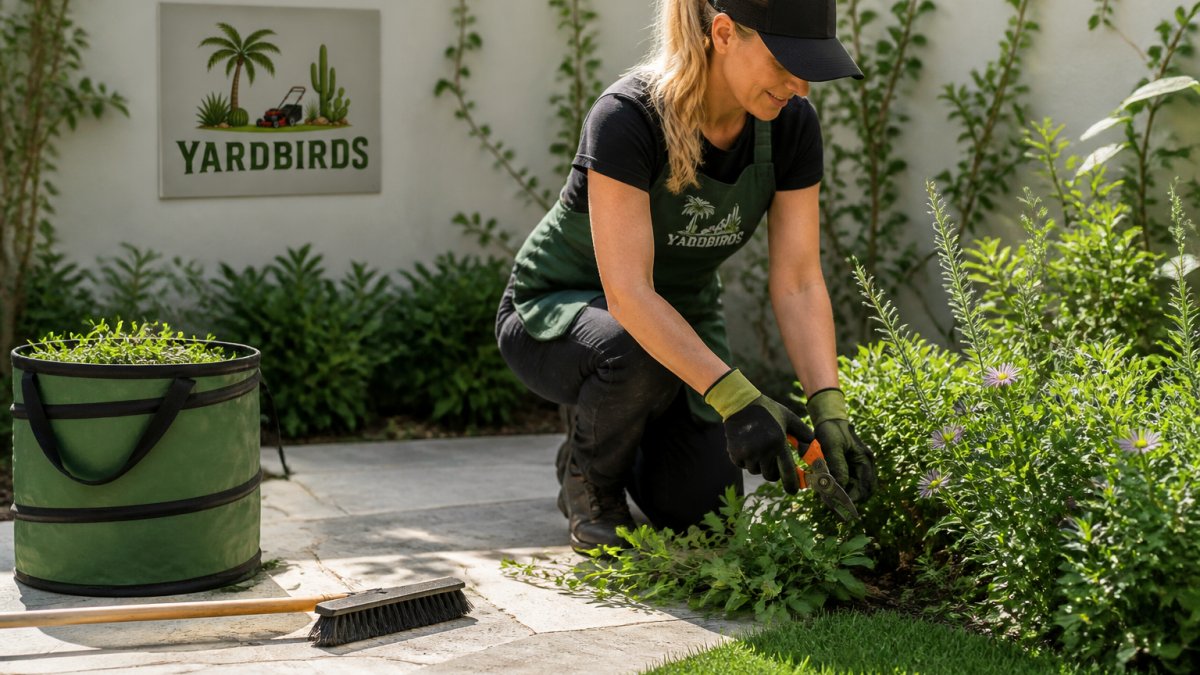
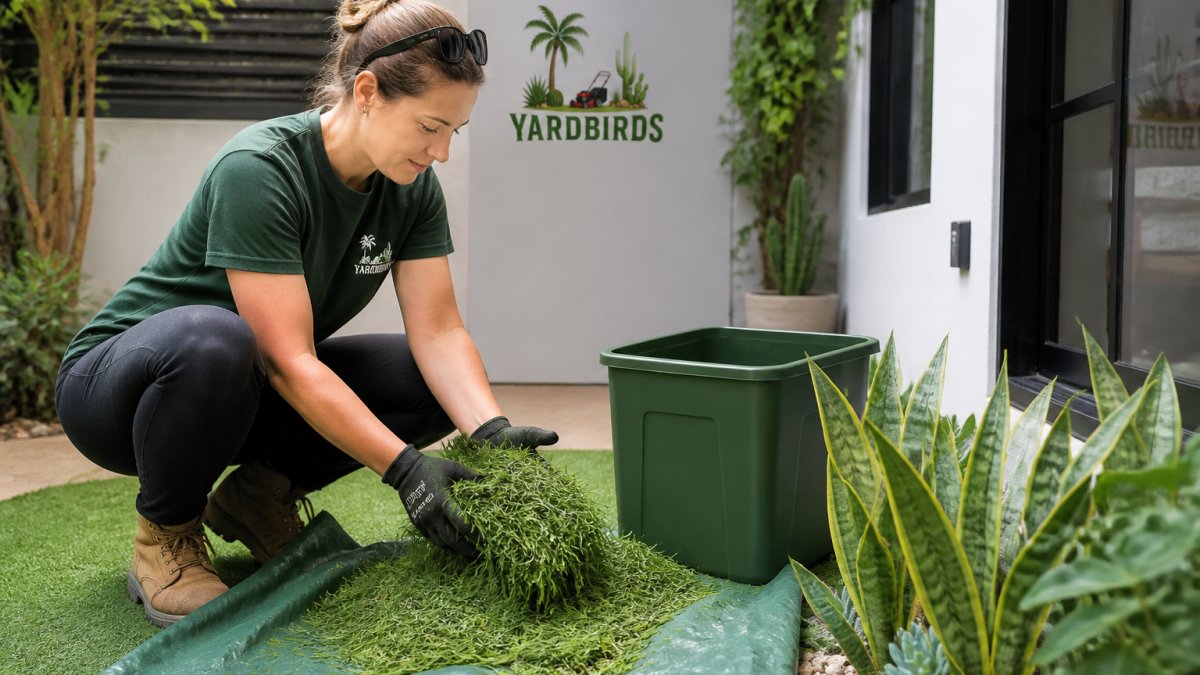
If your mower has no catcher, mow in strips and rake the clippings into a pile with a plastic leaf rake, then scoop them into a bucket or bag. A tarpaulin laid over the lawn first lets you gather clippings quickly by folding the corners together. For paved edges, a stiff broom and dustpan work better than a blower, which just pushes clippings into drains and neighbouring properties.
Where can you dispose of lawn clippings?
Most councils accept lawn clippings through kerbside green waste bins or bundled green waste collections, though rules on bag types, bundle sizes and accepted material vary by council, so check your local council's waste guide first. Clippings can also go to a commercial green waste facility, a neighbour's compost, or your own bin. Never tip clippings into stormwater drains or reserve land, and avoid putting weed-seed-heavy clippings into compost you plan to spread back on beds.
Managing courtyard clippings is really about matching your approach to the conditions, and that takes time most busy homeowners don't have. If you'd rather hand it over, YardBirds Sydney can help: fully insured, all-electric equipment, and a team that knows how to keep a small lawn and its clippings under control. We're female-founded, with 500+ customers and a 97% satisfaction rate built on showing up when we say we will. Get a free quote and let us take the clippings off your hands.