 how-to
How to Verify Gardener Insurance: A Step-by-Step Guide
Table of Contents
- Why Verifying Gardener Insurance Matters
- What to Look for in a Gardener's Insurance Policy
- How to Check a Contractor's Insurance: Step-by-Step Process
- Understanding the Certificate of Currency for Gardeners
- Gardener Insurance Checklist: What to Verify Before Hiring
- Red Flags: When Insurance Evidence Is Missing or Incomplete
- Frequently Asked Questions
Last Updated: October 21, 2026
Why Verifying Gardener Insurance Matters
Before you hire any gardener or landscaper, you must verify gardener insurance, it's non-negotiable. If they damage your garden, injure themselves, or hurt a third party on your property, you could face liability claims. Verifying gardener insurance protects both you and the contractor.
What to Look for in a Gardener's Insurance Policy
Not all policies are created equal. Some cover only basic liability, while others include equipment protection and workers' compensation.
Public Liability Insurance and Third-Party Injury Coverage
Public liability insurance protects you if the gardener injures someone else on your property. It's the most critical component of any policy, covering medical costs, legal fees, and compensation if a third party is harmed.
Look for a clear cover amount, the maximum the insurer will pay for any single claim. Most gardeners carry between AUD $5 million and AUD $20 million, depending on the scope of their work.
Third-party injury can happen in unexpected ways:
- A neighbour's child is struck by flying debris
- A pedestrian slips on the contractor's equipment
- A passer-by is injured by a falling branch during tree work
The policy should explicitly state that it covers these scenarios. Ask the gardener for their certificate of currency to confirm the cover is active.
Tools and Equipment Cover
Tools and equipment cover protects the gardener's own gear, and indirectly protects you. If equipment is stolen or damaged, they're less likely to ask you to compensate them.
This coverage typically includes:
- Lawn mowers, hedge trimmers, and hand tools
- Vehicles used for work
- Scaffolding and ladders
- Chainsaws and power equipment
Property Damage Claims Protection
Property damage cover protects your home, garden structures, and landscaping if the gardener causes accidental damage. Without it, a damaged fence, patio, or garden bed becomes an argument over who pays.
Property damage cover should include:
- Accidental damage to existing structures
- Damage to your plants, trees, and lawn
- Damage to irrigation systems or outdoor furniture
- Damage caused by the contractor's vehicle
Check the policy wording to confirm what counts as "accidental", some policies exclude damage from negligence or poor workmanship.
How to Check a Contractor's Insurance: Step-by-Step Process
To verify gardener insurance properly, you must confirm the policy is real, current, and covers the work you're hiring for, not just collect a document.
Step 1: Request the certificate of currency in writing
Ask by email so you have a timestamped record. A legitimate gardener will send it within a business day:
"Before we proceed, could you please email your current certificate of currency showing public liability cover, and confirm which insurer we can contact to verify the policy?"
Step 2: Authenticate the certificate itself
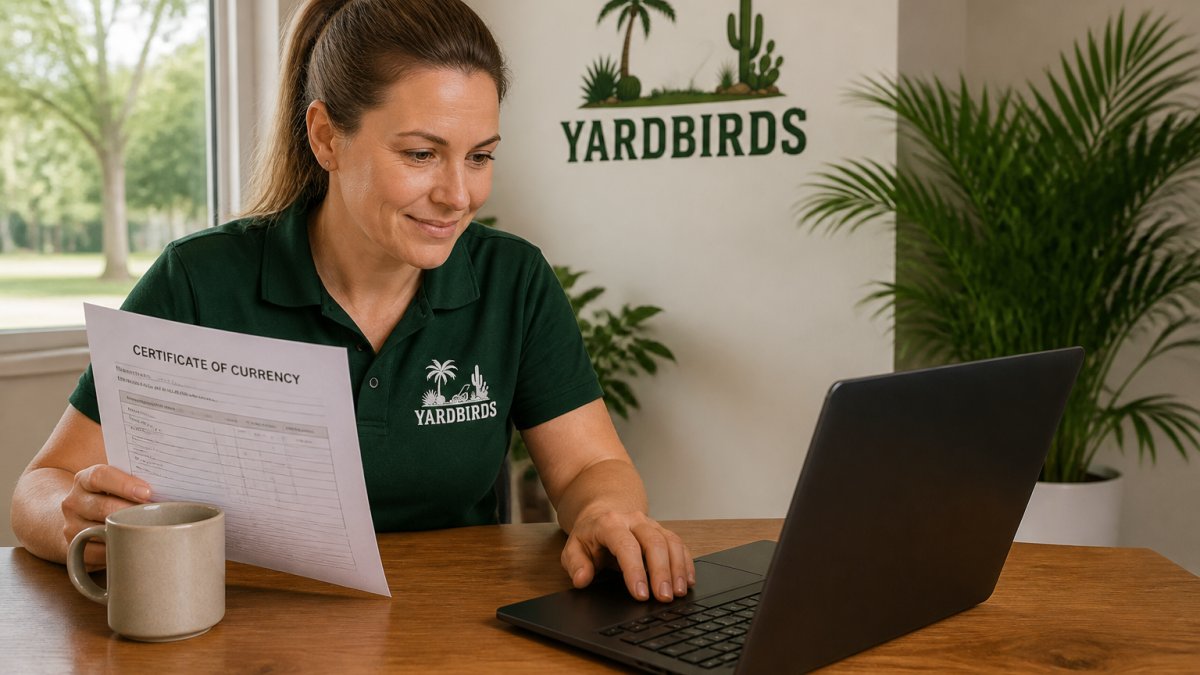
A certificate of currency is a one-page insurer-issued summary that's easy to forge, so cross-check these details:
- Policyholder name and ABN, the business name on the certificate must match the name on the quote or invoice. If the gardener trades under a different name, ask for the link (e.g. a trading name registered to the same ABN).
- Policy number and policy period, confirm the start and end dates cover the entire time the gardener will be on your property. A policy that expires mid-job leaves you exposed.
- Insurer name and contact details, the certificate should show the insurer's official phone number or website. Do not rely on a phone number the gardener has added separately.
- Issue date, a certificate issued more than a few months ago may not reflect the current policy. Ask for a recently issued copy.
Any inconsistency, a misspelt business name, an odd policy number format, or a generic insurer email, is a red flag.
Step 3: Confirm the policy directly with the insurer
Don't rely on the certificate alone. Call the insurer using contact details from their official website (not the certificate, in case it's forged) and ask for the policy verification team.
Provide the policy number and the gardener's business name, and ask them to confirm:
- The policy is active and paid up to date.
- The policyholder name matches the business you are dealing with.
- The public liability limit and any other cover listed on the certificate.
- Whether the policy covers the specific activities you need (see Step 4).
If the insurer can't confirm the policy or says it has lapsed, don't proceed until the gardener provides a current, verifiable certificate.
Step 4: Match the policy to the actual gardening work
A policy can be active but still exclude the work you need. Check each activity in the scope against the policy wording or the insurer's confirmation:
- Mowing, pruning, weeding, and general maintenance, usually covered under standard gardening public liability, but confirm.
- Tree work, including climbing, chainsaw use, or removal of large branches, often excluded or requires a separate arborist endorsement. Ask specifically: "Does this policy cover tree work up to [height/diameter]?"
- Use of chemicals, herbicides, or pesticides, some policies exclude pollution or chemical-related claims. If the gardener will apply weed killer or feed, confirm cover.
- Subcontracting, if the gardener brings in another worker, check whether the policy covers subcontractors. If not, that worker may be uninsured.
- Work at your property type, strata, commercial, or rental properties may have specific requirements. Confirm the policy covers work at your address or property type.
Many gardeners hold policies covering domestic maintenance but excluding tree work or chemical application. If your job includes those, get written confirmation from the insurer.
Step 5: Check the policy period against your job timeline
For work running weeks or months, confirm the policy stays active for the duration and ask whether they'll provide an updated certificate if it renews mid-job. For ongoing maintenance, set an annual reminder to request a fresh certificate.
Step 6: Document your verification
Save the certificate, your insurer-call notes, and any written confirmation in one place. If a dispute arises, this record shows you took reasonable steps to verify cover.
Understanding the Certificate of Currency for Gardeners
The certificate of currency is the most important document in the verification process, and the easiest to fake. Knowing what it should contain, and how to test its authenticity, separates a real check from a box-ticking exercise.
What a valid certificate must show
A certificate issued by an Australian insurer should include:
- Policyholder name and ABN, the legal entity insured, which should match the business you are hiring.
- Policy number, a unique identifier you can quote to the insurer.
- Policy period, start and end dates of cover.
- Insurer name and contact details, the licensed insurer's official details.
- Types of cover and limits, for example, public liability of AUD $5 million or AUD $10 million, and any tools or property cover.
If any of these are missing, the certificate is incomplete. Ask for a full version.
How to authenticate a certificate of currency
Authentication means confirming the document is genuine and current, not just professional-looking:
- Cross-match the business details. The name on the certificate must match the name on the gardener's quote, invoice, or ABN lookup. If the certificate is in a different name (e.g. a former business name), ask for the connection.
- Check the policy number format. Most insurers use a consistent format. If the number looks unusual, verify it directly with the insurer.
- Verify the insurer's contact details independently. Look up the insurer's official website and phone number yourself. Do not call a number that appears only on the certificate.
- Confirm the policy directly with the insurer. Call the insurer's verification line, quote the policy number, and ask them to confirm the policyholder name, policy period, cover types, and limits. This is the only way to be certain the certificate is not forged or outdated.
- Check the issue date against the policy period. A certificate issued months ago may not reflect the current policy status. Ask for a recently issued certificate.
Common certificate problems and what they mean
- Expired certificate, the policy period has ended. Do not proceed until you receive a current certificate.
- Certificate in a different name, the insured entity may not be the business you are hiring. Ask for an explanation and confirm with the insurer.
- Cover limits too low, a public liability limit below AUD $5 million is unusual for professional gardeners and may be inadequate for larger properties.
- Excluded activities, the certificate may show public liability but the policy wording excludes tree work, chemical use, or subcontracting. Ask the insurer to confirm the specific activities are covered.
- Multiple certificates, some gardeners hold separate policies for different activities. Check that every activity in your job is covered by at least one active policy.
What to do if the certificate is missing or insufficient
If the gardener can't provide a certificate, or the insurer can't confirm it, don't start work. Ask for an updated certificate or written insurer confirmation, and document your request and their response.
Australian Securities and Investments Commission (ASIC) professional registers, use the professional registers to check that the insurer is licensed to offer insurance in Australia.
Gardener Insurance Checklist: What to Verify Before Hiring
Use this checklist before you book a gardener. It takes ten minutes and protects your property.
- Request a current certificate of currency
- Check the certificate hasn't expired
- Verify the gardener's business name matches the policy
- Call the insurer to confirm the policy is active
- Confirm public liability cover is included
Red Flags: When Insurance Evidence Is Missing or Incomplete
Some gardeners operate without insurance or with inadequate cover. Recognise these warning signs.
They can't produce a certificate. A legitimate gardener can email it within hours.
The policy excludes common activities. Some cheap policies exclude tree work, strata properties, or commercial work.
They offer a cash discount for skipping the insurance check. This is a major warning sign.
When insurance evidence is missing or incomplete, don't hire the gardener.
Frequently Asked Questions
What should I check on a gardener's certificate of currency?
A certificate of currency for gardeners should show the gardener's name or business name, the issuing insurer's details, the policy number, the cover amount (typically AUD$10 million or more for public liability), the policy period with start and expiry dates, and the specific insured activities (lawn mowing, tree work, hedge trimming, etc.). Confirm the expiry date is current and the coverage limits match the scope of work you need done.
How can I confirm a gardener's public liability insurance is current?
Request a current certificate of currency directly from the gardener or their insurance broker. Check that the expiry date is today or later. Contact the issuing insurer listed on the certificate to verify the policy exists and is active. Ask for the policy wording or Product Disclosure Statement to confirm public liability coverage is included and covers third-party injury and property damage claims related to gardening work.
What do I do if a gardener cannot provide proof of insurance?
Do not hire them. Insurance protects you if the gardener damages your property or injures someone on your premises. Without proof of coverage, you could be liable for costs. Ask the gardener to obtain a quote from an insurance broker or contact their current insurer for a certificate. If they refuse or cannot provide one within a reasonable timeframe, find a gardener who is properly insured and can demonstrate it.
How often should I re-verify a gardener's insurance?
Check insurance before your first engagement and again before each new contract or significant change in scope of work. If a gardener works for you regularly, request an updated certificate of currency at least annually or whenever the policy period changes. This ensures continuous protection and confirms the gardener has maintained their coverage obligations.