 how-to
Residential Garden Care: A 2026 Seasonal Guide
Table of Contents
- Residential Garden Care: What a Complete Routine Actually Covers
- A Season-by-Season Residential Garden Care Calendar
- Your Home Garden Maintenance Checklist for the Month Ahead
- Lawn Edging and Trimming: The Detail Work That Lifts a Whole Yard
- Weed Control That Holds, Not Just Looks Good for a Week
- Garden Maintenance Checklist: How to Brief and Manage a Service
- Conclusion: Matching the Routine to the Property
- Frequently Asked Questions
Last Updated: October 6, 2026
Residential Garden Care: What a Complete Routine Actually Covers
Residential garden care is the ongoing set of tasks that keep a home garden healthy, tidy and safe across all four seasons, rather than a one-off tidy-up. The properties that look best year-round aren't always the ones with the biggest budgets. They're often the ones with a routine that matches the block.
That's the core argument here: a small garden on a busy street needs a different rhythm to a large corner block with mature trees. Most guides hand you a generic list and call it done.
Below, we'll break down what a full routine actually includes, how it shifts through the year, and how to brief a service so you get consistency instead of a fortnightly scramble.
A Season-by-Season Residential Garden Care Calendar
A residential garden care calendar splits the year into two working halves: a growth phase where you're managing volume, and a rest phase where you're setting up the next one. Get the timing right and half the work disappears.
Spring and Summer: Growth, Watering and Weed Pressure
Everything grows at once, including the things you didn't plant. Warm-season lawns need mowing more often, hedges put on a flush of new growth, and weeds germinate in every gap you leave bare.
Watering matters most here. Deep, less frequent watering pushes roots down; a daily light sprinkle encourages shallow roots that struggle in a hot spell. Early morning is the better window, since less moisture is lost before the plant takes it up.
Mulch earns its keep in these months. A decent layer over garden beds slows evaporation and suppresses weed seed germination at the same time.
Autumn and Winter: Pruning Windows, Soil and Storm Prep
Growth slows, and the jobs change character. This is the window for structural pruning on many deciduous trees and shrubs, while they're dormant and the shape is visible without leaves in the way.
It's also the time to feed the soil rather than the plant. Compost and soil conditioners worked into beds over autumn have the cooler months to break down before spring demand hits.
Storm prep is the job most homeowners skip. Check stakes, ties and anything that could become a projectile, and clear gutters and drains before the first big front.
Bureau of Meteorology seasonal outlooks
Your Home Garden Maintenance Checklist for the Month Ahead
Home garden maintenance works best as a short, repeatable list rather than a giant annual project. Run this every month and you'll rarely face a job that's gotten away from you.
- Mow at the right height for the season, not the shortest setting
- Edge along paths, driveways and bed lines
- Trim hedges that have lost their line
- Pull or spot-treat weeds before they set seed
- Check watering coverage and adjust timers
- Clear green waste and anything blocking drains
- Look up: overhanging branches near roofs and powerlines
- Note anything that needs a specialist rather than a tidy-up
Two minutes with a checklist beats an afternoon of guesswork. It also gives you a written record if you're briefing someone else.
Lawn Edging and Trimming: The Detail Work That Lifts a Whole Yard
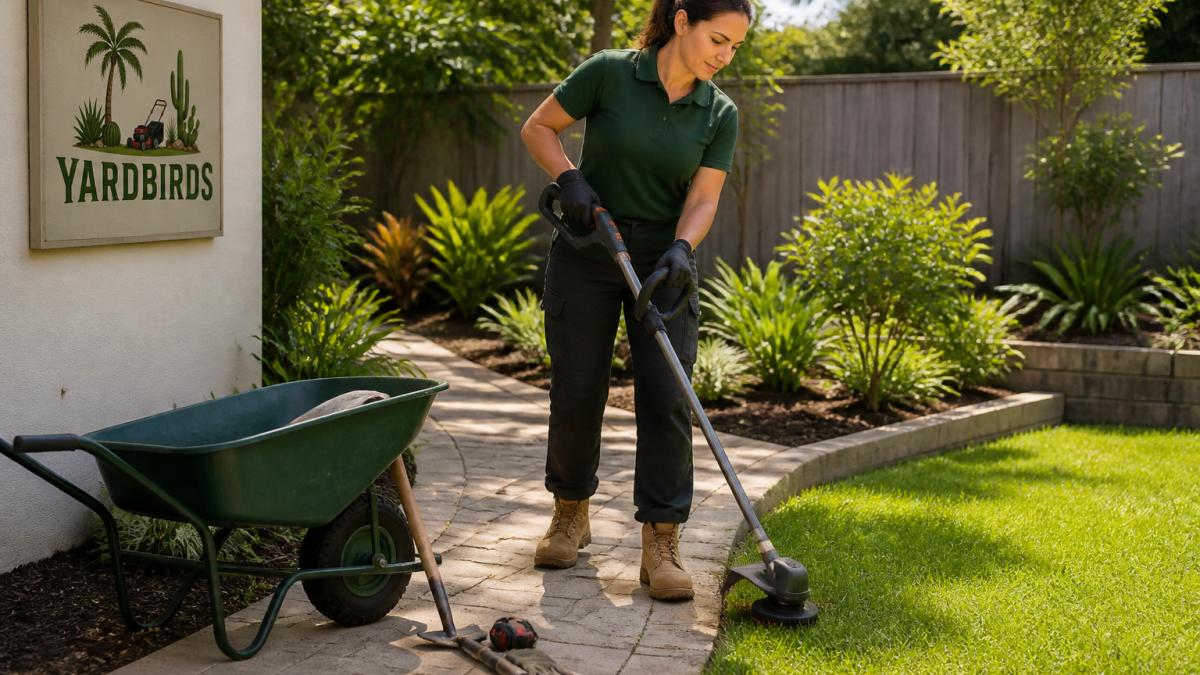
Lawn edging and trimming is the single cheapest upgrade to how a garden reads from the street. A crisp line between lawn and path does more visual work than an extra mow ever will.
The Order That Saves You Work
Edge first, then mow, so the mower catches the clippings you've just cut loose. Trim around posts, trees and fence lines last, and blow or sweep the hard surfaces clean. Doing it in that sequence means you handle the clippings once instead of chasing them around the yard.
Cut Height and Timing by Grass Type
Most people cut lawns too short. Scalping stresses the grass, opens bare patches for weeds, and leaves the surface looking tired within days. Raising the cut height slightly through summer does more for lawn health than any fertiliser.
The right height depends on the grass. Warm-season lawns such as couch, kikuyu and buffalo generally cope with a shorter cut through the growing months but still need the deck raised in the heat. Cool-season lawns such as fescue and ryegrass prefer a taller cut year-round, because the extra leaf blade shades the soil and reduces moisture loss. A common pattern is to raise the deck by one setting as the weather warms and lower it again as growth slows.
Safe Tool Use and When to Call a Professional
Line trimmers and edgers throw debris, so eye protection and closed shoes are non-negotiable. Keep the cord or battery lead behind you, never across the cut line. Check for stones, toys and irrigation heads before you start, because a trimmer will fling them. Never trim toward your body or toward anyone standing nearby.
Some jobs are worth handing over. Anything near powerlines, a tree that's grown into overhead wires, or a hedge that's become too tall to reach safely from the ground is a professional job, not because the task is hard, but because the risk isn't worth it. The same goes for removing a stump or grinding one down, which needs equipment most households don't own.
Safe Work Australia guidance on outdoor work and equipment safety
Weed Control That Holds, Not Just Looks Good for a Week
Weed control fails for one reason: it treats the symptom and leaves the cause. Pulling weeds from bare soil guarantees they return, because bare soil is exactly where weed seed germinates. The fix is to close the gaps, but which gaps, and how you close them, depends on what you're growing and what's underneath it.
Match the Method to the Plant and the Soil
Different beds fail in different ways. A native garden bed with dense ground cover crowds weeds out on its own once established, so hand-removal of the odd seedling is usually enough. A rose bed or vegetable patch has open soil between plants, which is where weed seed gets its opening, mulch and regular hand-weeding do the work there.
Soil type changes the timing too. Sandy soils drain fast and dry out, so weed seed sitting on the surface germinates after any light shower. Clay soils hold moisture longer, which means weeds keep germinating for days after rain. Knowing which you have tells you when to be on top of it.
Water-Efficient and Lower-Impact Control
Deep, less frequent watering does double duty: it pushes lawn roots down and dries the surface between cycles, which reduces the constant germination you get from a daily light sprinkle.
Mulch is the workhorse. A layer deep enough to block light, most practitioners find around 50-75 mm settled depth works for garden beds, suppresses germination and slows evaporation at the same time. Keep it clear of stems and trunks so you don't create rot.
For anything you spray, read the label and follow it. Timing matters as much as product, and a weed treated at the wrong growth stage often just shrugs it off.
- Mulch beds to a sensible depth to block light
- Fix bare patches in lawn rather than leaving them open
- Remove weeds before seed heads form
- Keep edging lines clean, since that's a favourite entry point
- Replant gaps with something you actually want
- Water deeply and less often to dry the surface between cycles
Australian Pesticides and Veterinary Medicines Authority guidance on safe use
Garden Maintenance Checklist: How to Brief and Manage a Service
A garden maintenance checklist is only useful if the person doing the work knows what's on it. The brief matters more than the schedule.
Spell out the scope in plain terms: what gets mowed, what gets edged, how often hedges are cut, and who removes the green waste. Ambiguity here is where most service relationships fall apart.
Questions to Ask Before You Sign On
- Is the business insured, and can they show you the certificate?
- Who actually attends, and will it be the same crew each visit?
- What's included in a standard visit versus charged as extra?
- How do they handle green waste and rubbish removal?
- What happens if it rains on your scheduled day?
- Can they work around your schedule if you travel?
- How do they handle a strata property with multiple owners' opinions?
That last one matters more than people expect. Strata and body corporate gardens often have several people with different ideas about how the grounds should look. A service that can't manage that conversation will create more work than it removes.
We built YardBirds Sydney around exactly these questions. Fully insured, all-electric equipment that handles thick growth and tough summer weeds, and a team that keeps the same faces on your property. Our customers rate us 97% on satisfaction, and we have over 12 years of experience.
Safe Work Australia guidance on outdoor work and equipment safety
Conclusion: Matching the Routine to the Property
The hard part isn't knowing the tasks. It's matching their frequency to your block, your soil and your spare time.
That's where a consistent service earns its place. YardBirds Sydney brings all-electric equipment, fully insured crews and a personal approach that keeps your garden looking the same in month twelve as it did in month one. Get a Free Quote and let us build the routine around your property.
Frequently Asked Questions
What does residential garden care actually include?
A full residential garden care routine covers mowing and lawn care, edging and trimming, hedge trimming and shaping, pruning trees and shrubs, weed control, garden cleanup and green waste removal, plus seasonal tasks like mulching and soil conditioning. Smaller jobs such as watering and deadheading sit with the household. When you engage a service, agree in writing which tasks sit inside the scope and which are extras, so there are no surprises mid-season.
How often should a residential garden be maintained?
Fortnightly visits suit most established home gardens through the growing months, when lawns and hedges put on the most growth. Monthly visits often work through the cooler months, when growth slows and mowing is less frequent. Properties with fast-growing hedges, large lawn areas or heavy weed pressure may need weekly attention in peak season. The right interval depends on plant types, block size and how formal you want the result to look.
How do I keep weeds under control in a home garden?
Weed control works best as a routine rather than a rescue. Remove weeds before they set seed, keep garden beds mulched to around 50 to 75 millimetres deep, and pull or hoe small seedlings while the soil is soft after rain. Crowd out bare patches with groundcovers or dense planting. For persistent problem areas, a scheduled visit from a garden maintenance service keeps the pressure down instead of letting it build up between clean-ups.
What should I look for in a garden maintenance service?
Ask for proof of insurance, a clear written scope of work, and a named contact who will answer when something changes. Check customer reviews and ratings for reliability rather than just quality of work, since turning up on the agreed day is the complaint most homeowners raise. Confirm what happens to green waste, whether equipment is petrol or electric, and how they handle a property they have not worked on before.