 blog
7 Best Native Plants for Inner West Gardens
Table of Contents
- Why Native Plants Thrive in Inner West Gardens
- Native Plants for Small Gardens
- Australian Native Plants for Pots
- Native Plants for Full Sun Conditions
- Native Plants for Shade
- Seven Native Plants That Transform Inner West Gardens
- 1. Grevillea: Flowering Shrub for Nectar and Birds
- 2. Lomandra: Resilient Groundcover and Screening Plant
- 3. Dianella: Shade-Tolerant Accent Plant
- 4. Callistemon: Drought-Tolerant Small Tree
- 5. Westringia: Low-Maintenance Hedge and Screening
- 6. Scaevola: Spreading Groundcover for Colour
- 7. Leptospermum: Compact Native with Seasonal Interest
- Comparison Table: Seven Native Plants at a Glance
- Care Requirements for Native Plants
- Frequently Asked Questions
Last Updated: October 19, 2026
Why Native Plants Thrive in Inner West Gardens
Native plants evolved to thrive in the local climate, soil, and seasonal patterns, so they need less water once established, fewer chemical inputs, and minimal fussing compared to exotic species, ideal for homeowners, strata managers, and property owners seeking sustainable, low-maintenance outdoor spaces.
Native-planted gardens consistently outperform those relying on high-maintenance exotics. Native species handle sandstone-based soils, variable rainfall, and temperature swings with resilience, while supporting local birds and pollinators, a garden that works with nature rather than against it.
Selecting the right 7 best native plants for inner west gardens is the foundation of a thriving outdoor space. The plants we've chosen handle diverse site conditions, from full sun to shade, and mature to sizes suitable for residential blocks.
Native Plants for Small Gardens
Space constraints shouldn't limit your native plant options. Many species are compact, slow-growing, or suited to containers. Match plant maturity size to your available area and choose varieties that won't outgrow their space within five years.
Groundcovers and low shrubs work exceptionally well in tight quarters, spreading horizontally rather than vertically. Dwarf or weeping varieties of larger species also perform well. Layer your planting, taller plants at the back, mid-sized shrubs in the middle, groundcovers at the front, to create depth in modest spaces.
For strata properties and townhouses, native plants that tolerate container growing or confined planting beds offer flexibility. Species like Lomandra and Dianella adapt well to pots and raised beds, making them practical for shared garden areas where flexibility matters.
Australian Native Plants for Pots
Container gardening opens up possibilities for renters, apartment dwellers, and anyone refreshing their space seasonally. Many Australian natives thrive in pots given appropriate soil, drainage, and watering, choose varieties with moderate mature sizes and root systems suited to container life.
Callistemon varieties, certain Grevillea cultivars, and compact Leptospermum species perform reliably in large pots. Use a quality native plant potting mix, these are specifically formulated for Australian natives and provide the nutrient-poor, well-draining conditions these plants prefer. Drainage holes are non-negotiable; without them, roots rot quickly in our humid summers.
Potted natives need more frequent watering than garden-planted specimens, especially during establishment and dry spells, but once established demand far less intervention than exotic ornamentals, curb appeal with minimal long-term maintenance for rental properties.
Native Plants for Full Sun Conditions
Full sun areas, six or more hours of direct sunlight daily, suit many resilient natives that handle intense light and heat without wilting or constant water. They're ideal for north-facing aspects, open blocks, and areas with limited afternoon shade.
Grevillea, Callistemon, and Westringia excel in full sun. These plants actually flower more prolifically when sunlight is abundant. Their foliage often develops richer colour under intense light, adding visual depth to your garden design. Scaevola also thrives in full sun, spreading as a vibrant groundcover that attracts native bees and butterflies.
Once their root systems establish, typically within 12 months, full sun natives need minimal supplementary watering except during severe drought, practical for busy households and commercial properties where consistent irrigation isn't feasible.
Native Plants for Shade
Shade-tolerant natives are equally valuable for south-facing aspects, areas beneath established trees, or properties overshadowed by neighbouring buildings. Dianella is the standout performer, offering attractive foliage and seasonal interest without direct sunlight.
Shade natives typically grow more slowly than sun-loving counterparts, which suits small spaces and areas where controlled growth is desirable. They still support local wildlife, birds and insects shelter and feed among their foliage even without prolific flowering.
Soil in shade areas stays moister longer, so adjust watering accordingly. Overwatering is a common mistake; let the soil dry slightly between waterings, and ensure good drainage despite lower evaporation rates.
Seven Native Plants That Transform Inner West Gardens
These seven species combine resilience, aesthetic appeal, and practical suitability for this region. Together they provide year-round interest, support local wildlife, and need minimal intervention once established.
1. Grevillea: Flowering Shrub for Nectar and Birds
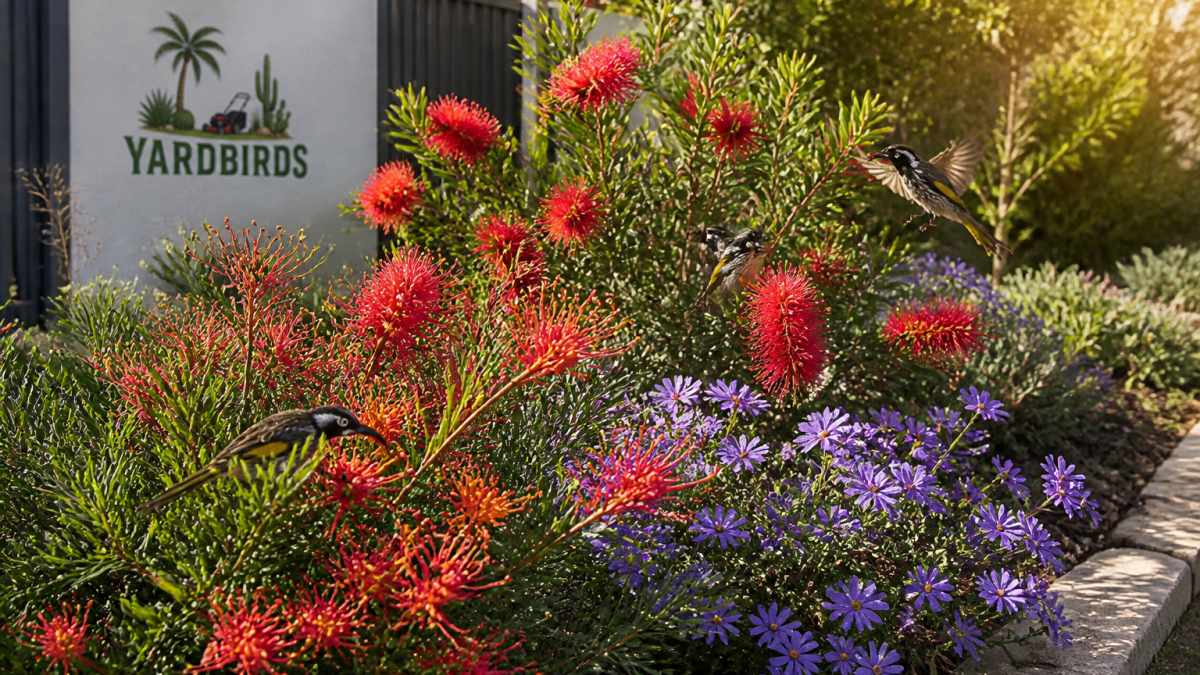
Grevillea delivers year-round colour and attracts honeyeaters, lorikeets, and other native birds. Its spider-like flowers range from red and orange to pink, yellow, and cream depending on variety. It thrives in full sun to part shade and tolerates poor, sandy soils exceptionally well.
Mature size varies by cultivar, some reach 2-3 metres tall and wide, while dwarf varieties stay under 1 metre. Choose cultivars suited to your space: 'Moonlight' (soft yellow flowers), 'Superb Sunset' (orange-red), or 'Poorinda Royal Mantle' (deep red, spreading form) are reliable performers.
Grevillea needs minimal water once established. Prune lightly after flowering to maintain shape and encourage bushier growth. Avoid heavy pruning into old wood, which can weaken the plant.
2. Lomandra: Resilient Groundcover and Screening Plant
Lomandra is an unsung hero of native gardens, tough, attractive, and versatile. Its strappy green or variegated foliage handles sun, shade, poor soil, and drought with equal composure, working as groundcover, low hedge, pot specimen, or privacy screen.
Varieties like Lomandra longifolia and Lomandra 'Tanika' mature to 60-90 centimetres tall and 1-1.5 metres wide depending on cultivar. Small cream flowers appear in spring and summer, followed by decorative seed heads that extend seasonal interest.
Lomandra requires virtually no pruning, remove dead foliage in late winter if desired. It tolerates waterlogging better than most natives, suiting poorly draining sites, and needs minimal water once established. For property managers overseeing shared gardens, its low-maintenance character is invaluable.
3. Dianella: Shade-Tolerant Accent Plant
Dianella is the native plant for shade, growing where many other natives falter. Its strappy leaves produce delicate blue flowers in spring and summer, followed by striking blue berries that persist into autumn, providing year-round structure even in dark corners.
Dianella tasmanica and Dianella caerulea are the most common varieties, maturing to 60-90 centimetres tall and 1 metre wide. They suit shade beneath trees, south-facing walls, and areas receiving only a few hours of morning sun.
Dianella tolerates poor soils and irregular watering once established, preferring moist, well-draining conditions but adapting to drier shade. Divide clumps every 3-4 years to rejuvenate growth. Its reliability in difficult shade sites makes it practical for renters and property managers.
4. Callistemon: Drought-Tolerant Small Tree
Callistemon (bottlebrush) delivers brilliant colour and reliably attracts honeyeaters. Its brush-like flowers appear in red, pink, yellow, or white depending on variety, blooming over extended periods. It handles full sun, tolerates poor soils, and develops deep roots that make it remarkably drought-tolerant.
Callistemon viminalis and Callistemon 'Little John' are excellent choices for residential gardens. 'Little John' matures to 2-3 metres, making it suitable for smaller blocks; standard varieties reach 4-6 metres. Space plants 2-3 metres apart.
Callistemon requires minimal pruning, remove dead wood and shape lightly after flowering if needed. Avoid heavy pruning, which can damage the plant. Once established, it needs water only during severe drought. For commercial properties seeking attractive, low-maintenance plantings, Callistemon delivers year-round appeal.
5. Westringia: Low-Maintenance Hedge and Screening
Westringia is the native answer to conventional hedging plants. This compact shrub with fine, grey-green foliage produces small white, pink, or purple flowers throughout the year, tolerating full sun to part shade, poor soils, and drought.
Westringia fruticosa matures to 1-2 metres tall and wide, perfect for hedging and screening. Plant spacing of 0.6-1 metre creates a dense, formal hedge; wider spacing of 1.5 metres suits informal screening. Westringia responds well to pruning, which encourages bushier growth and denser coverage.
Regular light pruning keeps Westringia neat and promotes prolific flowering. Hard pruning into old wood can weaken the plant, so trim little and often rather than heavily. Once established, it's drought-tolerant and requires minimal maintenance.
6. Scaevola: Spreading Groundcover for Colour
Scaevola is a vibrant groundcover that transforms bare soil into a flowering display. Its fan-shaped flowers appear in blue, purple, pink, or white depending on variety, blooming prolifically in sun. It spreads horizontally, filling space without vertical growth.
Scaevola aemula and Scaevola 'Purple Fanfare' are reliable varieties that mature to 30-50 centimetres tall and spread 1-1.5 metres wide. Plant spacing of 1 metre creates coverage within 12-18 months.
Scaevola thrives in full sun and tolerates poor soils well. Pinch back growing tips occasionally to encourage bushier, denser growth. Once established, it needs water only during dry spells. For small gardens, rental properties, and spaces where colour matters, Scaevola delivers reliable performance.
7. Leptospermum: Compact Native with Seasonal Interest
Leptospermum (tea tree) offers year-round appeal in a compact package. Fine, needle-like foliage provides structure, delicate white, pink, or red flowers appear in spring and summer, and colourful seed capsules persist into winter. It tolerates full sun, poor soils, and drought once established.
Leptospermum petersonii and Leptospermum 'Copper Glow' are excellent choices for residential gardens. Compact varieties mature to 1-2 metres tall and 1-1.5 metres wide, suiting small spaces and containers. Space plants 1.5 metres apart. The fine texture contrasts beautifully with broader-leaved plants like Grevillea or Lomandra.
Leptospermum responds well to light pruning after flowering, which encourages bushier growth and more prolific blooms next season. Avoid heavy pruning into old wood. Once established, it's drought-tolerant and needs minimal water.
Comparison Table: Seven Native Plants at a Glance
| Plant | Mature Size | Sun Preference | Water Needs | Best Use | Key Feature |
|---|---|---|---|---|---|
| Grevillea | 1-3m | Full sun to part shade | Low once established | Focal point, bird attraction | Year-round flowers |
| Lomandra | 0.6-1.5m | Sun to shade | Low to moderate | Groundcover, screening | Extremely tough |
| Dianella | 0.6-0.9m | Shade to part shade | Moderate | Shade gardens, accents | Blue berries, shade tolerant |
| Callistemon | 2-6m | Full sun | Low once established | Small tree, screening | Honeyeater magnet |
| Westringia | 1-2m | Sun to part shade | Low once established | Hedging, screening | Compact, formal option |
| Scaevola | 0.3-0.5m | Full sun | Low once established | Groundcover, colour | Spreading, prolific flowers |
| Leptospermum | 1-2m | Full sun | Low once established | Specimen, containers | Multi-season interest |
Care Requirements for Native Plants
Once established, native plants demand remarkably little intervention. The first 12 months are critical, roots develop and plants build resilience.
Establishment watering is essential. Water newly planted natives 2-3 times weekly for the first 6 weeks, then gradually reduce frequency as roots develop.
Soil preparation matters more than ongoing feeding. Amend heavy clay soils with sand and native plant compost before planting.
Pruning keeps plants neat and encourages bushier growth. Light pruning after flowering works best for most species.
Mulching protects soil, retains moisture, and moderates temperature. Apply 5-7 centimetres of wood chip mulch around plants, keeping it away from stems to prevent rot.
Pests and diseases rarely trouble established natives in their natural range.
Choosing the right 7 best native plants for inner west gardens is the smartest investment you can make in your outdoor space. At YardBirds Sydney, we help homeowners, strata managers, and property owners select and maintain native plantings that thrive in this region's unique conditions. Our eco-friendly approach and all-electric equipment ensure your garden flourishes sustainably. Get a free quote and discover how native plants can transform your space into a resilient, beautiful retreat.
Frequently Asked Questions
Which native plants are best for small gardens?
Compact native plants such as Dianella, Scaevola, and smaller Grevillea varieties work well in confined spaces. These species remain manageable in size, provide seasonal colour and wildlife habitat, and thrive in typical soil conditions. Choose varieties suited to your available light, shade-tolerant options like Dianella pair well with sun-loving selections like Scaevola in mixed borders.
Can Australian native plants grow in pots?
Yes, many native plants adapt well to container growing. Lomandra, compact Grevillea, Leptospermum, and Scaevola all perform in pots with good drainage. Use a well-draining potting mix, ensure containers have drainage holes, and water during establishment. Potted natives suit balconies, patios, and areas where garden beds are impractical, offering flexibility in garden design.
What's the best time to plant native plants?
Autumn and early winter are ideal for planting native plants, allowing roots to establish during cooler months before summer growth. Spring planting works too, though plants need more frequent watering during warm weather. Avoid planting during peak summer heat. Consistent establishment watering in the first few months ensures strong root development regardless of season.
How do native plants help attract birds and pollinators?
Native plants produce nectar and seeds that native birds, bees, and pollinators depend on. Flowering species like Grevillea and Callistemon provide nectar sources, while Lomandra and Leptospermum offer shelter and nesting sites. By selecting a mix of flowering and structural plants, your garden becomes a habitat that supports local wildlife year-round.