 blog
blog
Is Battery Powered Garden Equipment Worth It?
Table of Contents
- Battery vs Petrol Garden Tools: What's the Real Difference
- Pros and Cons of Battery Lawn Mowers
- Cordless Garden Tool Battery Life: What to Expect
- Battery Lawn Mower for Thick Grass: Can It Handle the Job
- Total Cost of Ownership: Battery vs Petrol Over Time
- Choosing the Right Equipment for Your Garden Size and Workload
- Frequently Asked Questions
Last Updated: October 14, 2026
Battery vs Petrol Garden Tools: What's the Real Difference
Battery powered garden equipment has shifted from a niche option to a genuine alternative for most homeowners. The core difference comes down to how they deliver power: petrol tools burn fuel to create combustion, while cordless equipment relies on rechargeable lithium-ion batteries and electric motors.
This matters because it changes everything about how you actually use the tool. Petrol equipment needs regular fuel stops, oil changes, and spark plug maintenance. Battery-powered tools need charging time between jobs and occasional battery replacement. One isn't objectively better, it depends entirely on your garden size, the work you're doing, and what matters most to you.
At YardBirds Sydney, we've moved entirely to electric equipment for our lawn mowing and garden maintenance work.
Pros and Cons of Battery Lawn Mowers
Key Advantages
Battery-powered lawn mowers deliver genuine benefits that go beyond marketing hype. The most obvious is noise. A cordless mower runs at roughly 75 decibels, quiet enough that you can have a conversation while mowing.
Convenience ranks second. No fuel mixing, no oil changes, no spark plugs to clean or replace. You charge the battery overnight and mow the next day.
Emissions are the third major advantage. Zero exhaust fumes means no contribution to air pollution, no fuel smell, and no environmental guilt about running a small engine in your backyard. For environmentally conscious households, which includes many in Sydney's Inner West, this matters genuinely.
The final advantage is low vibration. Battery-powered motors run smoothly without the jarring vibration of a petrol engine. After an hour of mowing, your hands and arms feel noticeably less fatigued.
Real Limitations to Consider
Battery runtime is the honest limitation. Most cordless lawn mowers run for 30-60 minutes on a full charge. If your garden takes 90 minutes to mow, you'll need either a second battery or a charging break mid-job. For small to medium gardens, this works fine.
Battery charging time matters too. Most chargers need 30-60 minutes to fully recharge a battery. If you only have one battery, you're looking at downtime between jobs. Buying a second battery solves this but adds to the upfront cost.
Battery lifespan is something people don't discuss enough. Most lithium-ion batteries degrade over time. You might get 500-1000 charge cycles before capacity drops noticeably. That's typically 3-5 years of regular use.
Cold weather performance is genuinely worse. Lithium-ion batteries lose capacity in cold conditions. If you're mowing in winter or early spring, expect reduced runtime and cutting power compared to summer performance.
Cordless Garden Tool Battery Life: What to Expect
Battery runtime depends on three factors: battery capacity (measured in amp-hours), motor power (measured in volts), and cutting conditions. A 5.0Ah battery in a 36V mower might give you 50-60 minutes of cutting in normal grass. The same battery in thick, wet grass might only last 30-40 minutes because the motor works harder.
Real-world testing shows the difference matters. Cutting established lawn takes less power than tackling overgrown areas or woody weeds. If your garden is mostly thick, uncut grass, plan for shorter runtime than the manufacturer suggests.
Charge cycles, degradation, and what replacement really costs
Most lithium-ion garden batteries are rated for somewhere between 500 and 1,000 full charge cycles before capacity drops to roughly 80% of original. In practice, a homeowner mowing fortnightly and recharging after each session uses around 26 cycles a year, so a well-treated battery can last many seasons. Heavy users mowing weekly and running the battery flat each time will burn through cycles faster.
Degradation is gradual, not sudden. After 100 charge cycles you might notice a 5-10% capacity loss. After 500 cycles, a 20-30% loss is common. That usually shows up as needing a mid-job recharge where you previously finished on one battery, rather than the tool failing outright.
A replacement battery is the single largest ongoing cost of cordless ownership. Rather than quote a figure that varies by brand and voltage, check the current price of the exact battery your platform uses before you buy the tool, and treat that number as a five-to-seven-year consumable.
Storage, temperature, and seasonal effects
Temperature affects battery performance significantly. A battery that delivers 60 minutes in summer might only manage 40 minutes in winter. Cold weather slows the chemical reactions inside the battery, reducing available power. This is temporary, the battery regains full capacity once it warms up.
Proper storage extends battery life. Storing batteries in a cool, dry place and avoiding complete discharge extends their lifespan. Most manufacturers recommend storing batteries at 40-60% charge if you're not using them for extended periods, and bringing them indoors over winter rather than leaving them in a cold shed.
Warranty and what to check before you commit
Battery warranties vary widely. Some brands cover the pack for two years, others stretch to three or more, and a few tie cover to registered ownership or proof of purchase. Read the warranty terms for the battery specifically, not just the tool, because the pack is the part most likely to need replacing first. A platform with a strong battery warranty and easy local replacement stock is worth more than a slightly cheaper tool with a hard-to-source pack.
Battery Lawn Mower for Thick Grass: Can It Handle the Job
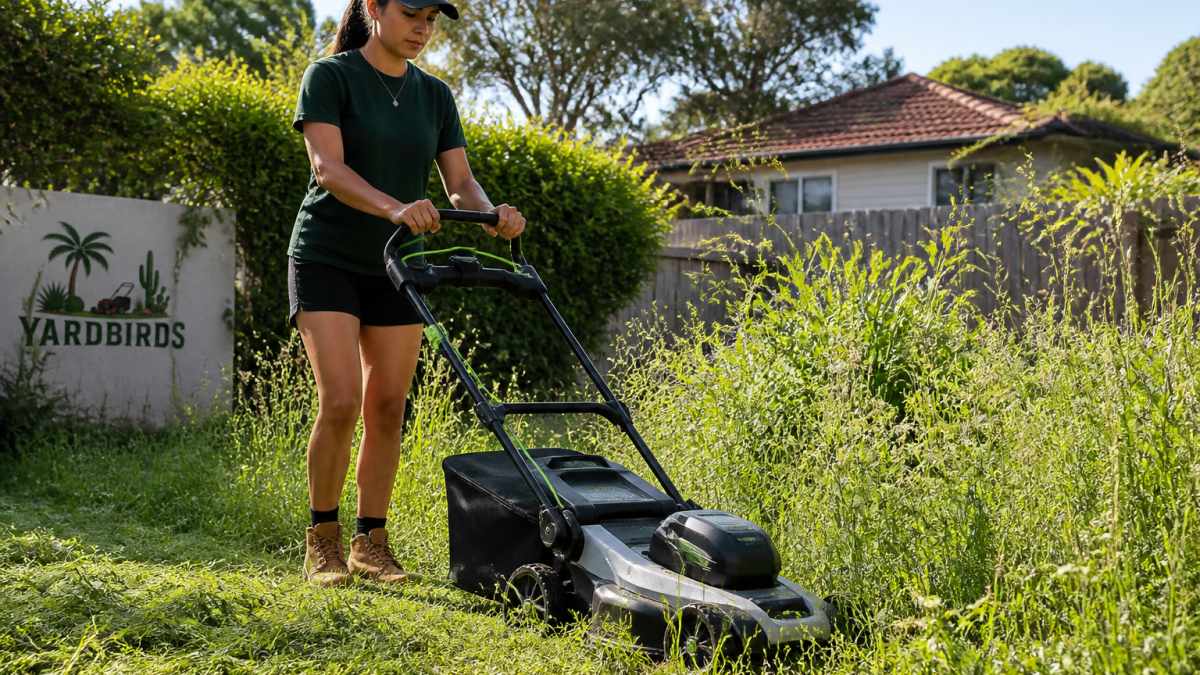
This is the question that separates real-world performance from marketing claims. Battery-powered mowers can handle thick grass, but with honest caveats.
Modern cordless mowers with 40-60V motors and sharp blades will cut through established thick grass effectively. They won't struggle with normal lawn overgrowth. The cutting performance matches or exceeds many petrol equivalents in this scenario.
Where they show limitations is extreme conditions.
The practical solution is realistic expectations. Battery mowers excel at regular maintenance, weekly or fortnightly cutting of established lawn. They're less ideal for reclaiming severely neglected gardens.
Blade sharpness matters more with battery equipment than petrol. A dull blade forces the motor to work harder, draining battery faster and delivering a worse cut. Sharp blades are essential for good battery performance.
Total Cost of Ownership: Battery vs Petrol Over Time
This is where battery equipment usually wins for most homeowners, but only if you look past the sticker price and count the running costs honestly. The table below sets out the cost categories side by side so you can plug in your own figures rather than rely on a generic claim.
| Cost category | Battery | Petrol |
|---|---|---|
| Upfront purchase | Higher for the tool, plus battery and charger if not bundled | Lower for the tool |
| Fuel or electricity | Electricity to charge; a few cents per full charge | Petrol per tank, plus fuel stabiliser if stored |
| Routine servicing | Minimal: blade sharpening, cleaning | Oil changes, spark plugs, air filters, seasonal tune-ups |
| Consumables | Replacement battery every few seasons | Fuel, oil, plugs, filters, occasional carby work |
| Storage and handling | No fuel smell or spill risk | Fuel storage, ventilation, and disposal rules |
| Resale | Holds value reasonably well | Harder to sell as engines age |
How the numbers usually fall
Over five years, a homeowner who mows fortnightly typically spends less on electricity and one replacement battery than on petrol, oil, plugs, filters, and servicing for an equivalent petrol mower. The gap widens if you already own other tools on the same battery platform, because the battery and charger cost is shared across a line trimmer, hedge trimmer, or blower rather than carried by the mower alone.
The maths shifts if you're mowing large properties multiple times a week. At that workload, petrol's unlimited runtime and lower upfront tool cost can win on pure dollars, though you pay for it in servicing time, noise, and emissions.
The variables that change the answer
Three things move the result more than anything else:
- How many tools share the battery. One battery across four tools is a very different proposition to one battery per tool.
- How hard you run the pack. Regular, moderate mowing extends battery life; constant deep discharges in thick grass shorten it.
- Whether you do your own servicing. If you pay someone to service a petrol mower each season, the battery case strengthens considerably.
Resale and end-of-life
Battery-powered equipment holds value reasonably well, particularly on popular platforms where buyers know batteries and chargers are still available. Older petrol equipment often struggles to sell because buyers worry about engine condition and maintenance history. Either way, factor resale in as a soft benefit rather than a guaranteed return, since it depends on local demand and the condition of the battery at the time of sale.
Choosing the Right Equipment for Your Garden Size and Workload
Garden size is the primary decision factor. For gardens under 500 square metres, battery equipment is genuinely ideal. One or two batteries handle the entire job without compromise.
For gardens between 500-1000 square metres, battery equipment still works well if you're comfortable with a charging break mid-job or willing to buy a second battery.
For gardens over 1000 square metres or if you're cutting multiple properties, petrol equipment or professional service becomes more practical. The runtime limitations of battery equipment become genuinely inconvenient at that scale.
Workload frequency matters equally. If you're mowing weekly, battery equipment's low maintenance and quiet operation are massive advantages.
Your household situation shapes the decision too. Apartment dwellers and strata properties benefit enormously from quiet, emission-free equipment. Early morning or evening mowing becomes possible without disturbing neighbours.
| Factor | Battery Preferred | Petrol Preferred |
|---|---|---|
| Garden size | Under 500 sq m | Over 1000 sq m |
| Mowing frequency | Weekly/regular | Irregular/heavy work |
| Noise sensitivity | High priority | Low priority |
| Maintenance tolerance | Low | High |
| Environmental concern | Important | Less important |
| Budget for batteries | Can invest | Want lower upfront cost |
Battery-powered garden equipment genuinely delivers value for most Sydney homeowners. The quiet operation, zero emissions, and low maintenance make regular lawn care simpler and more pleasant.
The decision ultimately depends on your specific garden, how often you use the equipment, and what trade-offs matter most to you. For professional lawn care that handles all variables, thick grass, irregular schedules, large properties, and complex strata situations, YardBirds Sydney uses all-electric equipment to deliver consistent results.
Frequently Asked Questions
Are battery-powered garden tools powerful enough for thick grass?
Modern battery-powered lawn mowers deliver sufficient cutting power for typical residential grass, including thick growth. Performance depends on voltage, amp-hour capacity, and blade design. Most lithium-ion battery systems handle standard lawn conditions effectively. For dense, woody weeds or severely overgrown patches, a higher-capacity battery platform or multiple batteries may be needed. Runtime will be shorter in demanding conditions, so matching battery capacity to your workload matters.
How long do batteries for cordless garden tools actually last?
Lithium-ion batteries typically retain 70-80% capacity after 500-1000 charge cycles, which translates to several years of regular use. Actual lifespan depends on charging habits, storage conditions, and workload intensity. Cold weather and high-demand tasks reduce runtime per charge. Most homeowners get 3-5 years of practical use before noticing significant capacity loss. Battery replacement cost should be factored into your long-term ownership decision, as replacement batteries represent a material investment.
Are cordless garden tools cheaper to run than petrol equipment?
Operating costs favour battery-powered tools over time. Electricity is cheaper than petrol per hour of use, and cordless equipment requires no spark plugs, oil changes, or seasonal servicing. However, the upfront purchase price for battery-powered tools is typically higher than comparable petrol models. Total cost of ownership becomes favourable after 2-3 years of regular use, depending on your garden size and maintenance frequency. Factor in battery replacement when calculating long-term costs.
What's the best battery-powered garden equipment for my situation?
Choose based on garden size, grass thickness, and how often you maintain your outdoor space. Small residential gardens benefit from compact cordless mowers with modest battery capacity. Larger properties or thick-grass areas need higher-voltage systems and spare batteries. Consider whether you'll use multiple tools, many brands offer battery platforms compatible across mowers, trimmers, and chainsaws. Professional or frequent use justifies investment in higher-capacity batteries and chargers. For occasional maintenance, a single-battery system may suffice.