 how-to
Inner West Mowing: Frequency, Costs & Eco Care
Table of Contents
- Inner West Mowing: What Local Lawns Actually Need
- Lawn Mowing Frequency for Inner West Yards
- The One-Third Rule: Mowing Without Stressing Your Grass
- Inner West Garden Maintenance Beyond the Mow
- Eco-Friendly Lawn Mowing: What It Means in Practice
- Verge Rules and the No Mow Program: What Inner West Residents Should Know
- DIY vs Hiring a Local Mowing Team: A Practical Decision Guide
- Frequently Asked Questions
Last Updated: October 9, 2026
Inner West Mowing: What Local Lawns Actually Need
Inner west mowing is less about cutting grass and more about reading the block in front of you. The Inner West is a patchwork of narrow terraces, shady courtyards and the occasional full block, and no single routine suits all of them.
Most lawns here are small, so a proper mow takes twenty minutes and mistakes are easy to fix.
Below: the season-by-season schedule, the one-third rule, verge rules and the No Mow Program, and a straight DIY versus local team comparison.
Lawn Mowing Frequency for Inner West Yards
Most Inner West lawns need mowing every 1-2 weeks in the warmer months and every 3-4 weeks in winter. Frequency depends on grass type, shade, watering and feeding: lawns in full sun grow fast, while lawns under a fig tree or in a shaded courtyard grow slowly and need less frequent but more careful cutting.
A common mistake is mowing on a fixed calendar date. Walk outside and check whether the lawn has grown more than a third of its current height, that's your signal.
Season-by-season mowing schedule
- Spring (September-November): Growth accelerates. Most lawns move to fortnightly mowing, edging and a light feed.
- Summer (December-February): Peak growth and peak heat stress. Weekly or fortnightly mowing, with the blade set higher to shade the soil.
- Autumn (March-May): Growth slows. Fortnightly to monthly mowing, plus leaf clearing and weed control before winter.
Weather matters more than the calendar. After heavy rain, wait until the soil drains or you'll compact wet ground and tear the grass. In a hot dry spell, raise the cutting height and mow less often.
The One-Third Rule: Mowing Without Stressing Your Grass
The one-third rule: never remove more than one-third of the blade height in a single mow. Cut more and you shock the grass, expose soil to sun and invite weeds and disease.
In practice: if your lawn is 60mm tall, take it to no less than 40mm. If it's grown to 90mm, don't fix it in one pass, cut at a higher setting, wait a few days, then cut again.
| Situation | Blade height | Frequency | Why |
|---|---|---|---|
| Full sun, summer | 40-50mm | Weekly | Shade the soil, reduce moisture loss |
| Shaded courtyard | 50-60mm | Fortnightly | Longer blades cope with low light |
| Winter, any lawn | 50-60mm | Monthly | Slow growth, avoid scalping |
| Overgrown patch | Cut in stages | 2 passes, days apart | Avoid shocking the grass |
A practical mowing routine for small, shaded yards
Most Inner West lawns are compact, shaded for part of the day and surrounded by hard surfaces, which changes how you mow.
- Clear the surface. Pick up toys, bones, branches and stones, a hidden rock will chip a blade and send it flying.
- Check the soil. If it's soggy, wait; mowing wet soil compacts it and tears grass.
- Set the height first. Measure from a flat path to the blade housing, not by eye.
- Mow in overlapping strips. Perimeter pass first, then straight lines, overlapping by half the mower width.
- Change direction each time to stop grass leaning one way and developing ruts.
- Go slow around edges and obstacles, trees, taps, clotheslines and retaining walls are where scalping happens.
- Finish with the edges. A clean line along paths and beds makes a small lawn look larger.
- Clean up. Mulch clippings lightly back into the turf or bin them; never leave thick clumps.
Grass types, shade and small urban lawns
Turf varieties respond differently to the same height. In shaded courtyards a longer blade captures more light; in full sun a slightly shorter blade reduces moisture loss.
Small yards often grow unevenly, lush near a downpipe, thin under a tree, patchy along a hot wall. Rather than one height everywhere, raise the deck for shaded or stressed areas and keep sunnier sections shorter.
Troubleshooting common lawn problems
- Scalping: pale, flat patches after a cut. Raise the height and let it recover before mowing again.
- Uneven growth: usually shade, compaction or uneven watering. Aerate lightly and adjust your watering pattern.
- Weeds after mowing: often a sign you cut too short. Longer grass shades out weed seedlings.
- Brown tips: blunt blades tear rather than cut. Sharpen or replace the blade.
Safe mowing and equipment care
- Wear enclosed shoes, not thongs, a mower can throw stones and sticks.
- Keep children and pets inside while you mow.
- Never refuel a hot petrol mower, and never run a petrol engine in a closed garage or courtyard.
- Charge battery mowers in a dry, ventilated spot, away from direct sun.
If you'd rather not own, store and maintain equipment, a local team can handle the routine and the troubleshooting.
Inner West Garden Maintenance Beyond the Mow
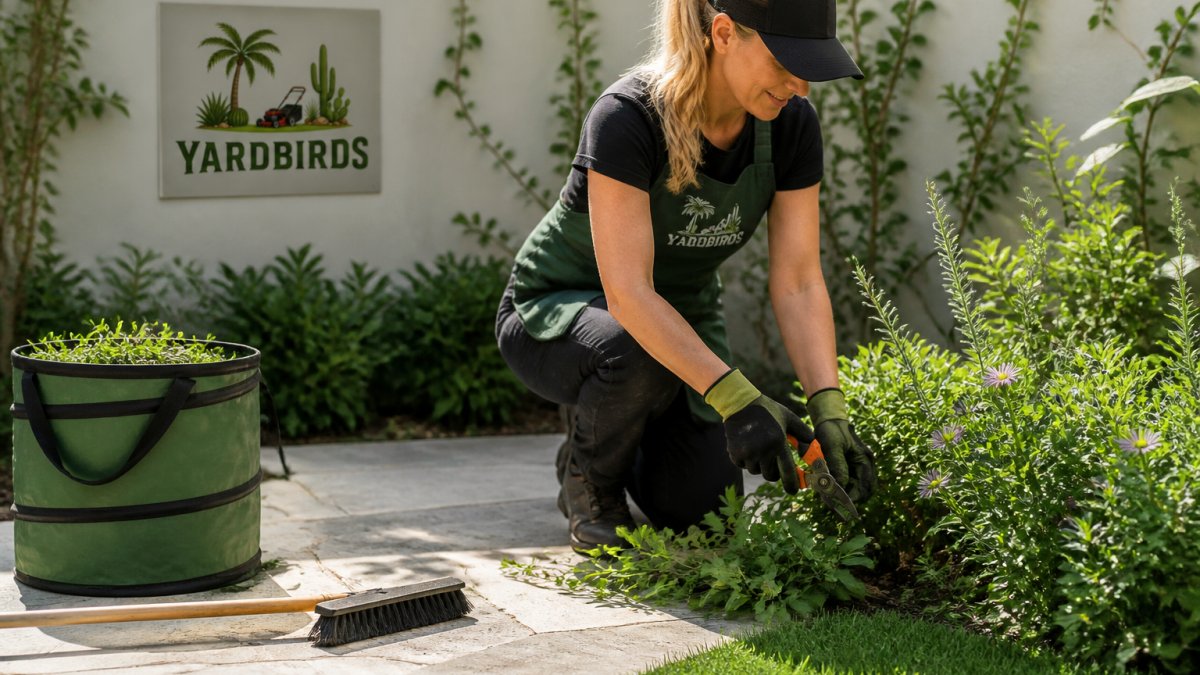
A mown lawn is only part of a well-kept garden. Inner West garden maintenance means the whole picture, edges, hedges, weeds and mulch, the jobs that separate a tidy yard from a neglected one.
- Hedge trimming and pruning: Regular shaping keeps hedges dense; prune at the right time for the species.
- Weeding and weed control: Hand-weed before weeds set seed and mulch beds to suppress growth. Bindii and oxalis are common local nuisances.
- Edging: Clean edges along paths and driveways make a lawn look sharper than the cut itself.
- Mulching: Holds moisture, cools the soil and reduces weed germination.
For strata and commercial properties the list runs longer: common areas, pathways, verges and shared beds all need scheduled attention, and consistency matters more than one-off tidy-ups.
Eco-Friendly Lawn Mowing: What It Means in Practice
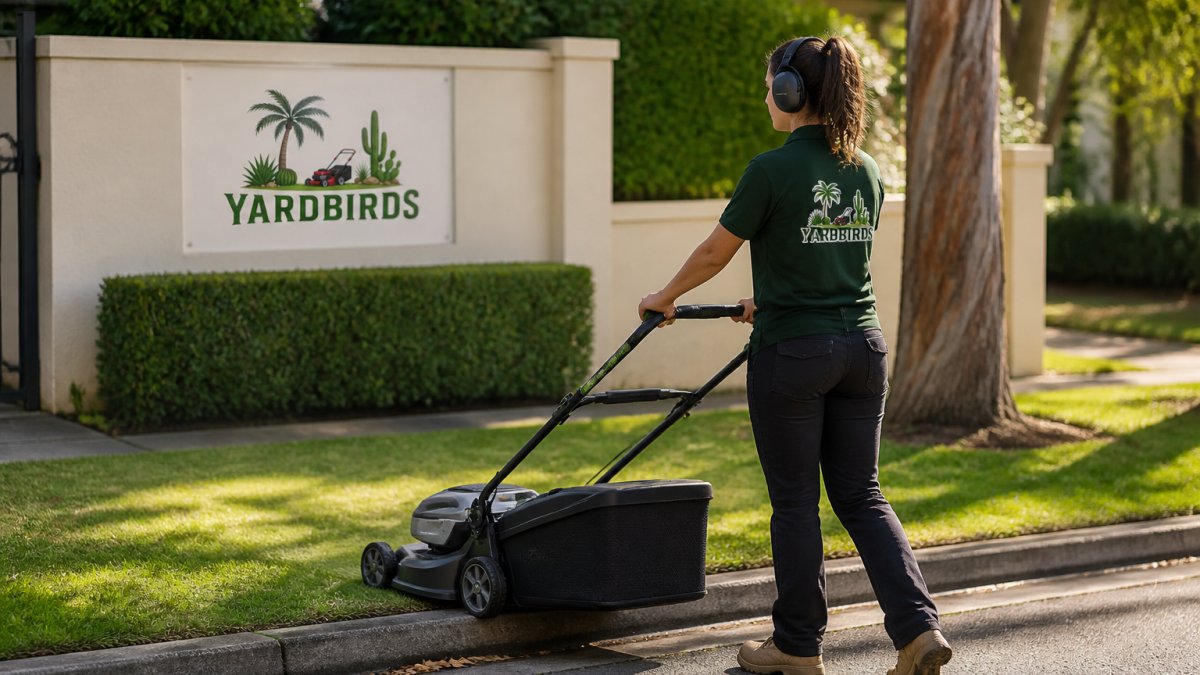
Eco-friendly lawn mowing means cutting grass with equipment and methods that reduce emissions, noise and chemical use, mostly a question of the mower.
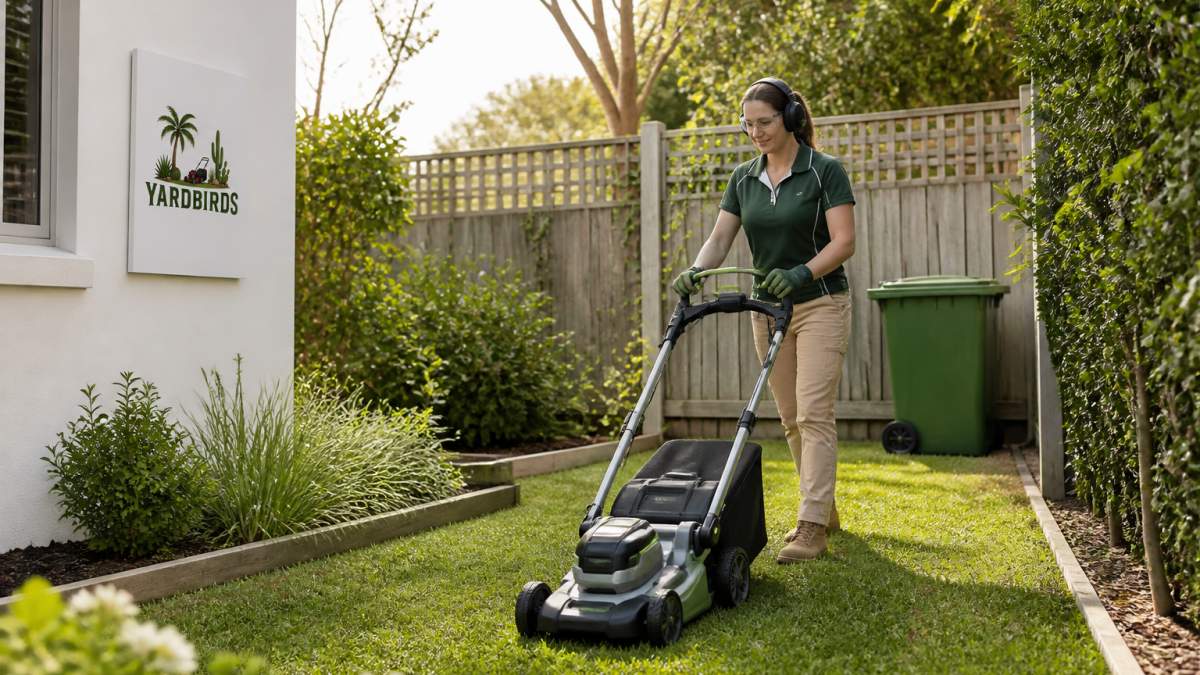
There's a practical upside too: electric equipment is quieter in tight terraced streets and has no exhaust fumes, so it's safer in courtyards and near open windows.
The other half of eco-friendly care is what you put on the lawn. Mulching clippings back into the turf returns nutrients and reduces the need for fertiliser.
Verge Rules and the No Mow Program: What Inner West Residents Should Know
The strip of grass between your fence and the kerb is a council verge, not private land, which determines what you can mow, plant, remove or alter. Rules vary by council, so check yours before you touch the verge.
In general, residents must keep the verge outside their property tidy and safe: mow it when long, keep it free of rubbish, and don't block footpaths, driveways or sightlines.
What residents are typically responsible for
- Mowing the grass on the verge outside your property, at a height that keeps it tidy and safe.
- Keeping the verge clear of rubbish, branches and obstructions.
- Not blocking footpaths, driveways, letterboxes or line of sight for pedestrians and vehicles.
- Reporting damaged council trees, broken kerbs or unsafe verges to the council rather than fixing them yourself.
What usually needs council approval
- Planting trees, shrubs or groundcovers on the verge.
- Removing, pruning or damaging a council street tree.
- Installing anything permanent, such as a planter, bollard or irrigation line.
- Changing the surface of the verge, for example replacing grass with gravel or paving.
If unsure, contact your council before acting. Removing or pruning a street tree without approval can attract penalties, even if the tree looks untidy.
The No Mow Program, in plain language
The No Mow Program is a council initiative letting selected verges, parks and public spaces grow longer and flower, supporting pollinators and cutting mowing emissions. It is not blanket permission for residents to stop mowing their own verge.
Where it applies, the council manages those areas; residents should not mow, clear or plant them, as that damages the habitat the program creates.
How to check if your verge is in the program
- Look for signage or a marker on or near the verge.
- Check your council's website for a map or list of No Mow areas.
- Call or email your council's parks or verge maintenance team and ask directly.
- If you're still unsure, leave the verge alone and ask before mowing.
Practical verge mowing tips
- Mow the verge at the same height as your lawn, or slightly higher in dry weather.
- Don't scalp it, verges are often compacted and shallow, and scalping invites weeds.
- Avoid mowing after heavy rain, when soft soil ruts and compacts.
- Keep clippings off the footpath and out of stormwater drains.
If you're unsure whether your verge is part of the No Mow Program, contact your council directly. your local council's verge and street maintenance information is the authoritative source, not a neighbour's opinion.
DIY vs Hiring a Local Mowing Team: A Practical Decision Guide
Hire a local team when time is limited, your garden is complex, or you want consistent results without owning equipment.
Here's a straight comparison to help you decide.
| Factor | DIY mowing | Hiring a local team |
|---|---|---|
| Time per visit | 30-60 minutes | None |
| Equipment cost | Mower, edger, fuel or batteries | None |
| Consistency | Depends on your schedule | Reliable, scheduled service |
| Complex gardens | Hard to manage alone | Handled by qualified gardeners |
| Strata or commercial | Not practical | Standard service |
| Eco-friendly setup | Requires buying electric gear | Often all-electric equipment |
Questions to ask any mowing team before you book:
- Are you fully insured, and can you show proof?
- Do you use your own equipment, or do I supply anything?
- Can you work around my schedule, including when I travel?
- Will the same team visit each time, so they learn my garden?
That last point matters in winter: a good service reduces visits when growth slows rather than charging for a lawn that doesn't need mowing.
For Inner West residents who want eco-friendly lawn mowing without the hassle, YardBirds Sydney offers regular residential, strata and commercial garden maintenance using all-electric equipment.
Frequently Asked Questions
How often should I mow my lawn in the Inner West?
Lawn mowing frequency depends on the season and grass type. In warmer months, most Inner West lawns need mowing every 7 to 14 days; in cooler months, every 3 to 6 weeks is often enough. The one-third rule is a useful guide: never remove more than one-third of the blade height in a single cut. If your lawn grows quickly after rain, you may need to mow more often rather than cutting it shorter.
What is the one-third rule for mowing?
The one-third rule means you should never cut off more than one-third of the grass blade at one time. Removing more stresses the plant, weakens roots and invites weeds. For example, if your lawn is 60mm tall, set the mower to cut no lower than 40mm. Following this rule keeps grass healthier and reduces the need for extra watering or fertiliser.
Can all-electric mowers handle thick, overgrown grass?
Modern battery-powered mowers can handle thick grass if you adjust your approach. For overgrown patches, raise the cutting height and go over the area twice rather than forcing a low cut. Sharp blades and a slower pace also help. Many eco-friendly lawn mowing services use commercial-grade electric equipment designed for tough conditions, so ask about their equipment and experience with overgrown lawns.
Do I need council permission to mow the verge outside my property?
Verge maintenance rules vary by local council. Many Inner West councils expect residents to keep the verge tidy, but some have specific guidelines or a No Mow Program for environmental reasons. Check your council's website for exact requirements before mowing or altering the verge. If you hire a mowing service, confirm they are familiar with local verge rules to avoid any issues.
The trickiest part of Inner West mowing isn't the mowing itself. It's keeping up with it through shade, wet winters and Sydney's summer growth spurts, when a fortnight's neglect turns a tidy lawn into a weekend project. That's where a reliable local team earns its keep. YardBirds Sydney handles the mowing, edging, weeding, hedge trimming and seasonal care with all-electric equipment, fully insured and on a schedule that suits you. Get a free quote and keep your garden looking after itself.