 ultimate-guide
Eco Friendly Lawn Mowing Sydney: A 2026 Guide
Table of Contents
- Why Choose Eco Friendly Lawn Mowing in Sydney?
- The Benefits of Electric Lawn Mowers
- Your Lawn Mowing Frequency Guide for Sydney's Climate
- Core Sustainable Garden Maintenance Practices
- Managing Lawn Clippings Sustainably
- A Seasonal Lawn Care Calendar for Sydney
- DIY vs. Professional Eco Maintenance
- Conclusion
- Frequently Asked Questions
Last Updated: September 9, 2026
Why Choose Eco Friendly Lawn Mowing in Sydney?
Sydney's climate presents a unique challenge for lawn care, and the tools you use matter as much as the techniques. Eco friendly lawn mowing in Sydney is the practice of maintaining a healthy, vibrant lawn using zero-emission electric equipment and sustainable horticultural methods rather than petrol-powered machinery and chemical treatments. This approach protects the soil, the local ecosystem, and the air quality of your neighbourhood while still delivering the crisp, manicured look that defines a well-kept Australian garden.
The shift goes beyond just swapping one machine for another. Traditional petrol mowers emit a surprising amount of pollution, produce significant noise, and rely on fossil fuels (the EPA). At YardBirds Sydney, with over 12 years of experience, we've refined our approach to garden maintenance across the Inner West. Modern electric equipment delivers results without the environmental toll.
Below, we'll walk through the practical side of sustainable lawn care: why electric mowers genuinely perform, how often you should mow for Sydney's grasses, and what professional eco maintenance actually involves.
The core insight most guides miss is that eco friendly lawn mowing isn't about sacrificing quality for principle. It's about smarter practices that build soil health over time, reducing the need for chemical intervention and excessive watering.
The Benefits of Electric Lawn Mowers
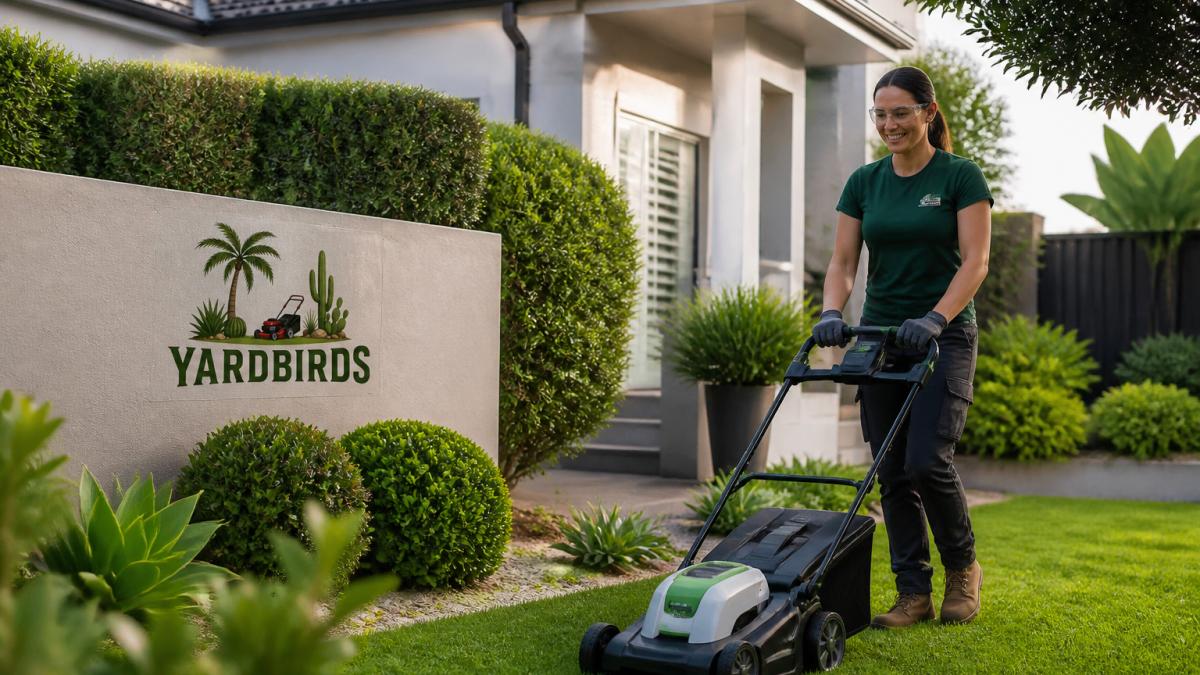
Electric mowers have come a long way, and the modern battery-powered units used by professional services are genuinely powerful machines. The most obvious advantage is the complete elimination of emissions at the point of use, which matters when you're working in a confined suburban yard where fumes linger.
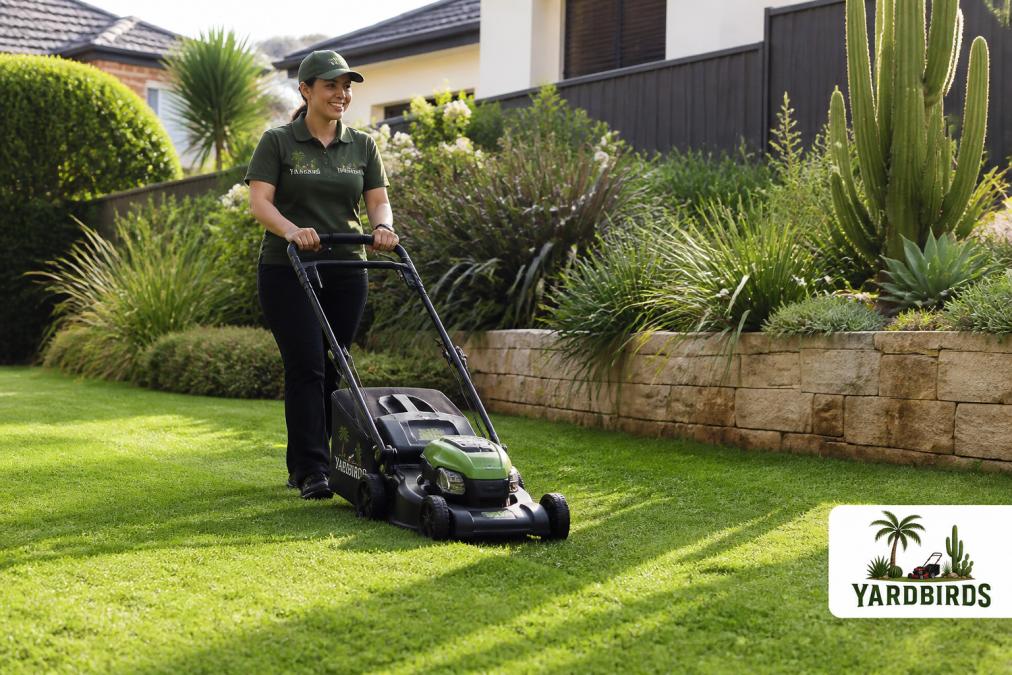
The performance difference comes down to torque. Electric motors deliver full power instantly.
Quiet operation is another significant benefit, and it's one that residents and strata managers particularly appreciate. Electric mowers run at a fraction of the noise level of petrol units, meaning early morning or late afternoon mowing won't disturb neighbours.
The practical benefits extend to the health of the lawn itself. Electric mowers produce a cleaner cut, which reduces the stress on each grass blade. A clean cut heals faster, loses less moisture, and leaves the lawn less vulnerable to disease and pests.
Your Lawn Mowing Frequency Guide for Sydney's Climate
Sydney's warm temperate climate means grass grows year-round, but the growth rate varies dramatically between seasons. A common mistake is sticking to the same mowing schedule all year, which either scalps the lawn in summer or lets it run wild in winter.
The general rule for Sydney lawns is to mow based on growth rather than a fixed calendar. During the peak growing season from spring through early autumn, most lawns need cutting every 7 to 10 days (extension.org). Growth slows noticeably in the cooler months, and mowing every 3 to 4 weeks is usually sufficient between June and August.
| Season | Mowing Frequency | Cutting Height | Key Consideration |
|---|---|---|---|
| Spring (Sep-Nov) | Every 7-10 days | 40-50mm | Gradual increase as growth accelerates |
| Summer (Dec-Feb) | Every 7 days | 50-60mm | Raise height to protect against heat stress |
| Autumn (Mar-May) | Every 10-14 days | 40-50mm | Clear fallen leaves before mowing |
| Winter (Jun-Aug) | Every 3-4 weeks | 30-40mm | Avoid mowing wet, frost-affected grass |
The most important principle is the one-third rule: never remove more than one third of the grass blade height in a single cut (extension.psu.edu). Removing more than that shocks the plant, weakens the root system, and leaves the lawn vulnerable to weeds and bare patches. If the grass has grown too long, raise the cutting height and mow again a few days later rather than scalping it in one pass.
For residential lawn care in Sydney's climate, timing matters as much as frequency. Mowing in the early morning or late afternoon reduces water loss and heat stress on the freshly cut grass. Avoid mowing when the lawn is wet, as this causes clumping, uneven cuts, and can spread fungal diseases.
Core Sustainable Garden Maintenance Practices
Sustainable garden maintenance goes beyond just the mowing itself. It encompasses the full range of practices that keep your outdoor space healthy without relying on synthetic chemicals or wasteful methods.
Lawn aeration is one of the most valuable sustainable practices, particularly for Sydney's clay-heavy soils. Aeration involves removing small plugs of soil to relieve compaction, allowing water, oxygen, and nutrients to reach the root zone. Lawns in high-traffic areas or on heavy clay benefit from aeration at least once a year, typically in early autumn when the grass is actively growing and can recover quickly.
Organic lawn care focuses on building soil health rather than simply feeding the grass. This means using compost, natural fertilisers, and soil conditioners that support the beneficial microorganisms in the soil. A healthy soil ecosystem reduces the need for chemical fertilisers.
Chemical-free weed control is more labour-intensive than spraying, but the results are better long-term. Hand-weeding, regular mowing at the correct height, and maintaining dense, healthy grass are the most effective ways to prevent weeds from establishing. A thick, well-maintained lawn naturally crowds out weeds by denying them light and space to germinate.
Mulching is another cornerstone of sustainable practice. A layer of organic mulch around garden beds and trees retains soil moisture, suppresses weeds, and slowly breaks down to feed the soil. This reduces water consumption and eliminates the need for chemical weed suppressants.
Managing Lawn Clippings Sustainably
What you do with the grass clippings after mowing has a bigger impact on lawn health than most people realise. The sustainable approach is to leave them on the lawn.
Clippings are roughly 80% water and contain valuable nutrients, particularly nitrogen, that the lawn can recycle. When left on the surface, they break down quickly and return those nutrients to the soil, reducing the need for supplemental fertiliser by a significant margin. This practice, known as grasscycling, is the simplest and most effective sustainable waste management strategy for any lawn.
The key to successful grasscycling is mowing regularly enough that the clippings are short and fine. If you follow the one-third rule and mow at the right frequency, the clippings will filter down to the soil surface and decompose within a few days without creating an unsightly thatch layer. Contrary to common belief, leaving clippings on the lawn does not cause thatch buildup when done correctly.
For those times when clippings are too abundant to leave behind, they should be composted rather than sent to landfill. Grass clippings are a valuable addition to a compost heap, providing the nitrogen-rich "green" material that balances carbon-rich "brown" materials like dry leaves and woody prunings. The resulting compost can then be returned to the garden as a natural soil conditioner.
Green waste removal becomes necessary when you're dealing with larger volumes from garden cleanups or seasonal pruning. Professional services collect this material and ensure it's processed through proper composting facilities rather than ending up in landfill, where it would generate methane as it decomposes.
A Seasonal Lawn Care Calendar for Sydney
Sydney's climate follows a predictable rhythm, and your lawn care should align with it. This calendar provides a month-by-month guide to keeping your lawn healthy throughout the year while minimising water use and chemical inputs.
Spring (September to November) is the most important season for lawn recovery and growth. As soil temperatures rise, the grass begins its active growing phase. This is the time for the first mowing of the season at a higher setting, followed by a gradual lowering over subsequent cuts. Apply a slow-release organic fertiliser in early spring to support steady growth, and consider aeration if the soil is compacted from winter foot traffic.
Summer (December to February) brings heat and often drought conditions. Raise the mowing height to 50-60mm to shade the soil and reduce water evaporation. Water deeply but infrequently, ideally in the early morning, to encourage deep root growth. Avoid fertilising during the hottest months, as this forces soft growth that's vulnerable to heat stress.
Autumn (March to May) is the ideal time for major lawn renovation work. The soil is still warm from summer, but the intense heat has passed, creating perfect conditions for overseeding, aeration, and top-dressing. Clear fallen leaves regularly, as they can smother the grass and promote fungal diseases. Apply a potassium-rich organic fertiliser to strengthen the lawn for winter.
Winter (June to August) is the dormant season for most Sydney lawns. Growth slows dramatically, and mowing frequency drops to every 3 to 4 weeks. Keep foot traffic to a minimum on frost-affected mornings, as walking on frozen grass damages the leaf tissue. This is the best time for planning and scheduling any garden makeovers or major projects for the coming spring.
A sustainable approach to lawn care in Sydney means working with the climate rather than against it. Lawns maintained according to this seasonal rhythm develop deeper root systems and better drought tolerance.
DIY vs. Professional Eco Maintenance
There's a genuine satisfaction in caring for your own lawn, and for smaller yards with simple layouts, DIY maintenance can work well. The investment in a quality electric mower, edger, and basic hand tools gives you the flexibility to maintain your lawn on your own schedule.
However, there are real trade-offs. Quality electric equipment represents a significant upfront investment, and you'll need to maintain it, store it, and replace batteries over time. The learning curve for proper mowing heights, seasonal adjustments, and weed management is steeper than most people expect, and mistakes like scalping or over-fertilising can set a lawn back for an entire season.
Professional eco maintenance services bring equipment, expertise, and consistency to the table. A professional team arrives with commercial-grade electric equipment that's maintained and ready to work, eliminating the need for you to own, store, and service machinery. They bring knowledge of local soil conditions, grass varieties, and seasonal timing that comes from working across dozens of properties every week.
For property managers, strata managers, and commercial property owners, professional services offer particular advantages. Coordinating a reliable maintenance schedule across multiple properties is time-consuming, and the consistency of a professional team ensures that common areas are always presentable. The fully insured nature of a professional service also provides protection.
The environmental impact of your choice depends more on the methods used than who's doing the work. A homeowner with an electric mower who composts clippings and avoids chemicals is making a genuine contribution. A professional service that uses electric equipment, mulches in place, and follows sustainable practices across many properties multiplies that impact.
Conclusion
Eco friendly lawn mowing in Sydney is about making smart, sustainable choices that benefit both your lawn and the environment. From the quiet efficiency of modern electric mowers to the soil-building benefits of grasscycling and organic fertilisers, every sustainable practice contributes to a healthier, more resilient lawn that thrives in Sydney's unique climate.
The transition to sustainable lawn care doesn't happen overnight, and that's fine. Start with the fundamentals: mow at the right height, leave your clippings on the lawn, and switch to organic fertilisers. As you see the results in the health and vitality of your grass, you'll find the motivation to go further.
At YardBirds Sydney, we've built our service around these principles. Our fully insured team uses modern, all-electric equipment to deliver climate-conscious lawn mowing and garden maintenance across the Inner West, serving residential, strata, and commercial properties with reliable, consistent care. We understand that your garden is personal, which is why we take the time to understand what you want and treat every property with the attention it deserves.
Get started with YardBirds Sydney and experience the difference that genuinely sustainable lawn care makes. Get a Free Quote today.
Frequently Asked Questions
Are electric lawn mowers as effective as petrol models?
Yes, modern electric mowers offer quiet operation and instant torque. Unlike petrol models, they produce no direct emissions, making them a key part of eco friendly lawn mowing in Sydney. Their performance is well-suited to the average yard, and battery technology continues to improve run times.
What is the 1/3 rule of mowing?
The 1/3 rule is a simple guide for lawn health: never remove more than one-third of the grass blade length in a single mow. Cutting too short stresses the plant, weakening its root system and making it vulnerable to weeds. Following this rule often means mowing more frequently during the peak growing season, which is where a lawn mowing frequency guide becomes useful.
How can I manage lawn clippings sustainably?
The best method is grasscycling: leave the fine clippings on the lawn after mowing. They break down quickly, returning nitrogen and moisture to the soil, which supports lawn vitality. For longer clippings, add them to a compost bin or use them as mulch in garden beds. This keeps green waste out of landfill and reduces the need for synthetic fertilisers.
What should I look for in an eco-friendly garden maintenance service?
Look for a fully insured provider that uses all-electric equipment for emission-free operation. They should understand local conditions, including soil health and native species, and offer sustainable practices like mulching and chemical-free weed control. A professional service will also communicate clearly about scheduling and be willing to tailor a maintenance plan to your garden's specific needs.