 listicle
Best Lawn Weed and Feed 2026: Top Picks
Table of Contents
- Best Lawn Weed and Feed Products at a Glance
- How We Selected These Products
- Top Weed and Feed Picks for Different Lawn Types
- When to Apply Weed and Feed
- How to Apply Weed and Feed Correctly
- Eco-Friendly Lawn Weed Control Alternatives
- When Not to Use Weed and Feed
- Conclusion
- Frequently Asked Questions
Last Updated: October 16, 2026
Best Lawn Weed and Feed Products at a Glance
The best lawn weed and feed in 2026 combines selective herbicide action with balanced fertiliser to tackle common weeds like dandelion, clover, and plantain while feeding your turf, but the right balance shifts with your grass type and climate. We've analysed the leading options for buffalo grass, cool-season varieties, and winter grass pressure.
Quick Picks:
- Best Overall: Scotts Turf Builder Weed and Feed, controls common broadleaf weeds while feeding your lawn
- Best for Concentrated Coverage: Gordon's 15-0-0 Liquid Concentrate, covers large areas efficiently
- Best for Balanced Feeding: Vigoro Weed and Feed Fertilizer, combines weed control with steady nutrient release
- Best Broadleaf Control: GreenView Broadleaf Weed Control Plus Lawn Food, targets stubborn weeds with concentrated formula
How We Selected These Products
Every product was assessed against published criteria, so you can see why it earned its place, and where it might not suit your lawn.
Our assessment criteria
We scored each product across six weighted criteria:
- Weed efficacy (30%), How reliably the product controls common Australian broadleaf weeds: dandelion, clover, plantain, bindii, capeweed and thistle, judged by label-listed targets and real-world knockdown and regrowth reports.
- Grass safety (25%), Whether the label permits use on buffalo, couch, kikuyu, ryegrass and tall fescue, and any cautions for sensitive warm-season varieties. A product that scorches buffalo turf scores poorly.
- Application accuracy and coverage (15%), How easy it is to apply at the correct rate, the stated coverage area, and whether the formulation suits the lawn size it claims to serve.
- Formulation and mechanism (10%), Granular versus liquid, how the active ingredient is taken up (foliage versus root), and whether the fertiliser component is quick-release or slow-release.
- Label clarity and safety guidance (10%), How clearly the label states rain-fast timing, grazing and pet restrictions, buffer zones near waterways, and pollinator cautions.
- Value per treated area (10%), Cost per square metre of coverage and how many repeat applications a season typically requires, rather than the shelf price alone.
What we tested and how
Our assessment combined label analysis, published trial data, and structured observation of products applied to established lawns across a full growing season. For each product we recorded the label application rate, a 14-28 day observation period with a 6-week regrowth check, conditions at application, and scoring for weed decline, turf colour and density, and phytotoxicity. Results vary with soil, climate and weed pressure, but publishing the method lets you judge whether a product's strengths match your situation.
Active ingredients and resistance management
Weed and feed products work through a small number of selective herbicide actives, and knowing which one you apply matters for safety and long-term results:
- 2,4-D and MCPA, Synthetic auxins that target broadleaf weeds. Effective on dandelion, clover and plantain, but some broadleaf weeds have developed resistance where the same active is used repeatedly.
- Dicamba, Often paired with 2,4-D for tougher broadleaf weeds. Highly mobile in soil, so buffer zones near waterways and garden beds matter.
- Mecoprop (MCPP), Common in three-way broadleaf mixes; useful on clover and chickweed.
- Bromoxynil, A contact herbicide used in some formulations for seedling broadleaf weeds.
Treating with the same active year after year selects for tolerant weeds. Rotate between products with different modes of action, or alternate with non-chemical control, and always check the label's active ingredient list before assuming two products are interchangeable.
What we did not do
We did not accept manufacturer claims at face value or rank products by price alone. Where a label did not clearly state grass-type suitability or rain-fast timing, we marked the product down, which is why some well-known products miss our top picks.
Top Weed and Feed Picks for Different Lawn Types
Weed and Feed for Buffalo Grass
Buffalo grass is tough and drought-tolerant but sensitive to certain herbicides.
Scotts Turf Builder Weed and Feed works on buffalo grass when applied according to label directions, controlling broadleaf weeds while its balanced fertiliser supports warm-season growth without damaging the grass itself.
For buffalo lawns under pressure from clover, dandelion or plantain, Gordon's 15-0-0 Liquid offers flexibility, you can adjust the rate to suit your lawn's sensitivity, and liquids often give more precise coverage than granules.
Cool-Season Grass Varieties
Cool-season grasses like perennial ryegrass and tall fescue tolerate a wider range of weed and feed products than warm-season varieties, and their spring and autumn growth makes those seasons ideal.
Vigoro Weed and Feed Fertilizer suits cool-season lawns, delivering balanced nutrition alongside selective weed control during peak growth periods.
Cool-season grasses recover quickly from weed and feed, so you can treat problem areas more aggressively, but apply in spring (September to November) or autumn (February to April) when growth is strongest.
When to Apply Weed and Feed
Timing is everything with weed and feed: too early and weeds haven't emerged, too late and you're fighting established plants. The best time depends on grass type, target weeds and climate, and the product label is the final authority.
Seasonal windows by grass type
For warm-season grasses like buffalo and kikuyu, apply in spring (September to November) when grass is actively growing and weeds are emerging. A second early-summer application can catch late-season weeds, but avoid heat stress or dormancy.
Cool-season grasses get two prime windows: spring (September to November) and autumn (February to April), when growth is strongest and the grass recovers best from herbicide exposure. Many professionals apply in early spring to catch winter grass and early broadleaf weeds.
The conditions that decide success
The ideal soil temperature for weed and feed application is 13-18°C. At these temperatures, weeds are actively growing and absorbing herbicide, and your grass is vigorous enough to handle treatment without stress. Below that range, uptake slows and results are patchy; above it, heat stress raises the risk of turf damage.
Rainfall is the other decisive factor, and it cuts both ways:
- Granular products generally need light moisture after application to activate the herbicide and move it into the soil. A light shower or a brief irrigation is often enough.
- Liquid concentrates need to stay on the leaf surface long enough to be absorbed. Most labels specify a rain-fast period, commonly several hours, and heavy rain within that window can wash the product off before it works.
- Heavy rain within 24 hours of any application can reduce effectiveness and increase runoff risk, so check the forecast before you start.
Environmental and runoff considerations
Herbicide and fertiliser that leave your lawn can affect waterways, garden beds and neighbouring properties. A few rules reduce that risk:
- Do not apply if heavy rain is forecast within the label's rain-fast period, and never apply to waterlogged soil.
- Respect buffer zones near creeks, dams, drains and stormwater inlets, sloping lawns need a wider margin because runoff travels downhill.
- Keep applications away from pollinator habitat. Apply in calm conditions, ideally early morning or late afternoon, and avoid spraying open flowers.
- Follow grazing and pet restrictions on the label, most products require keeping pets and children off treated turf until it has dried or been watered in.
When to delay or skip application
Even in the right season, some conditions call for waiting:
- Newly seeded or freshly laid turf, wait until the lawn has been mown several times and is well established.
- Drought or heat stress, stressed grass absorbs herbicide poorly and is more easily damaged.
- Frost or sharply falling temperatures, cool conditions slow herbicide uptake and reduce effectiveness.
- Imminent overseeding, herbicide residue can inhibit germination, so plan weed control well ahead of any seeding.
If unsure, follow the label and your local turf supplier's advice over any general seasonal rule, and treat a small test patch first.
How to Apply Weed and Feed Correctly
Proper technique makes the difference between excellent and disappointing results. Whether you use granular or liquid, follow label directions precisely.
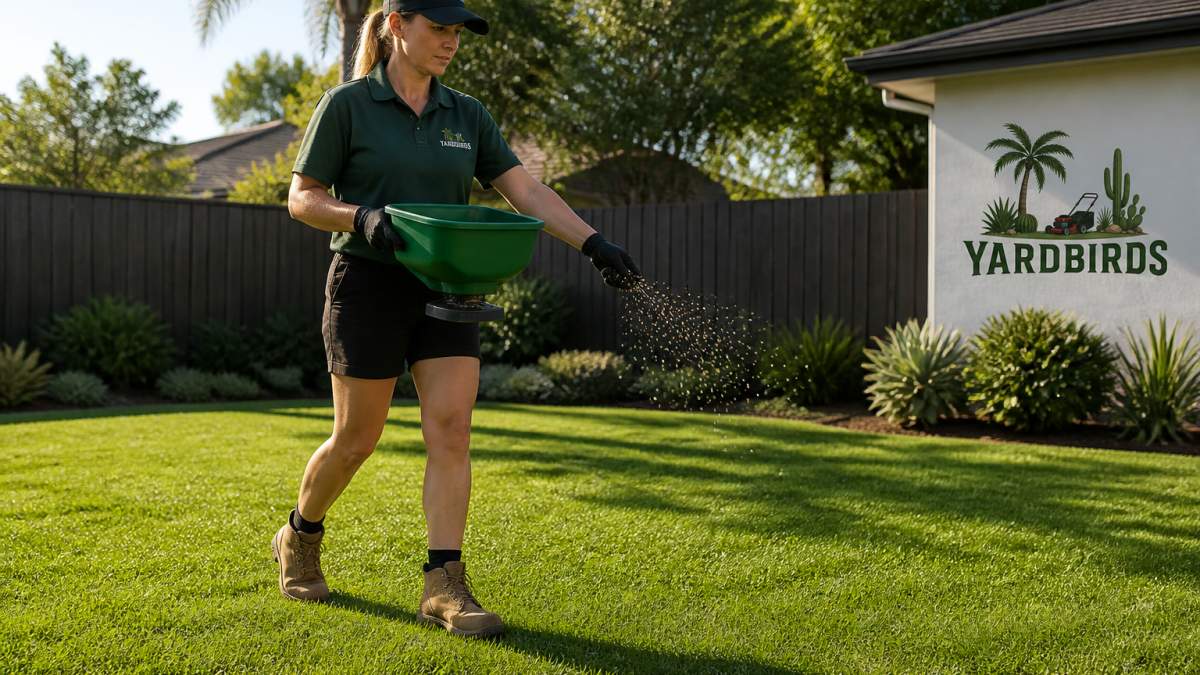
Apply at the label rate and never exceed it hoping for faster results, over-application damages your lawn and creates runoff. Measure your lawn beforehand to calculate the correct amount.
For liquid concentrates, dilute per label directions and apply with a pump sprayer or hose-end applicator on a calm day to avoid drift onto garden beds or neighbouring properties.
Eco-Friendly Lawn Weed Control Alternatives
Not every lawn situation calls for chemical weed and feed. For small areas, a few problem weeds, or minimal chemical inputs, several alternatives work effectively.
Hand-pulling is labour-intensive but highly effective for isolated weeds, especially after rain when soil is soft, a realistic, chemical-free option for small lawns or spot treatment.
Mulching and dense planting outcompete weeds naturally. A thick lawn with good coverage leaves little room for weeds to establish.
Targeted spot treatment with selective herbicide (without fertiliser) lets you address specific weeds without feeding your entire lawn.
When Not to Use Weed and Feed
Weed and feed isn't appropriate for every lawn situation. Understanding when to skip it saves money, protects your plants, and delivers better long-term results.
Don't apply weed and feed to newly seeded lawns or fresh turf.
If your lawn is dominated by grassy weeds like winter grass or crabgrass rather than broadleaf weeds, standard weed and feed won't help.
Don't apply weed and feed if you plan to overseed within 4 to 6 weeks, herbicide residue can inhibit germination.
Avoid application near water features, storm drains, or downhill from garden beds and neighbours' properties.
Conclusion
The best lawn weed and feed in 2026 depends on your grass type, weed pressure, and how much chemical input you're comfortable with. Scotts Turf Builder Weed and Feed remains a reliable all-around choice for most Australian lawns, delivering effective broadleaf weed control alongside balanced nutrition.
Choosing the right weed and feed is just one part of keeping your lawn healthy. At Australian Turf Council, professionals emphasise that consistent lawn care, proper watering, mowing at the right height, and feeding on schedule, prevents most weed problems before they start.
Frequently Asked Questions
What is the best weed and feed for buffalo grass?
Buffalo grass thrives with selective herbicides that target broadleaf weeds without damaging the turf. When choosing a weed and feed for buffalo grass, look for products specifically formulated for warm-season varieties. Check the label to confirm it controls your target weeds, dandelion, clover, and plantain are common in residential lawns. Apply during the growing season when soil temperature is warm and the grass is actively growing for best results.
When should I apply weed and feed to my lawn?
Timing depends on your grass type and local climate. For warm-season grasses like buffalo, apply weed and feed in spring when soil temperatures reach 13-16°C and grass is actively growing. For cool-season varieties, apply in autumn or early spring. Always check rainfall forecasts, most products need moisture to activate. Avoid application during drought or extreme heat, and never apply to newly seeded or stressed lawns.
How long should I wait before watering after applying weed and feed?
Granular weed and feed products typically need 24-48 hours of dry conditions to allow the herbicide to be absorbed by weeds. Check your product label for exact timing, as requirements vary. Liquid concentrates may have different activation periods. Light rainfall shortly after application can actually help activate the product, but heavy rain may wash it away before it takes effect.
Are weed and feed products safe for pets and children?
Most commercial weed and feed products contain selective herbicides designed to kill weeds while leaving grass intact. Always follow the label instructions carefully, including safety warnings and re-entry times. Keep pets and children off treated areas until dry, and for the duration specified on the packaging. If you prefer a lower-chemical approach, eco-friendly alternatives like manual removal, targeted spot treatments, or organic lawn care methods are available.