 listicle
Organic Lawn Maintenance Services: A 2026 Guide
Table of Contents
- What Organic Lawn Maintenance Actually Means
- Why Organic Lawn Maintenance Matters for Sydney Gardens
- Eco-Friendly Lawn Mowing: Equipment and Techniques
- Organic Weed Control Methods That Work
- Low Maintenance Lawn Alternatives for Busy Homeowners
- Choosing Between DIY and Professional Organic Lawn Care
- Reliability and Accountability: What to Expect
- Conclusion
- Frequently Asked Questions
Last Updated: October 2, 2026
What Organic Lawn Maintenance Actually Means
Organic lawn maintenance is the practice of caring for your lawn using natural, chemical-free methods that work with your soil's ecosystem rather than against it. Instead of synthetic pesticides and artificial fertilisers, organic approaches rely on composting, mulching, beneficial insects, and plant-based solutions to keep grass healthy and weeds manageable.
The difference matters more than most people realise. Chemical treatments kill indiscriminately, they eliminate pests but also harm the microorganisms that make soil fertile. Organic methods take longer to show results, but they build soil health over time, which means less maintenance work down the line.
At YardBirds Sydney, we've seen firsthand how this approach transforms gardens across the Inner West. Lawns that were struggling under chemical regimes often bounce back within a season or two once organic practices take over. The catch? You need consistency and patience, especially in the first year.
Why Organic Lawn Maintenance Matters for Sydney Gardens
Sydney's climate is both a blessing and a challenge for lawn care.
Organic soil holds moisture better than chemically treated soil. The living organisms in healthy soil, bacteria, fungi, earthworms, create structure that allows water to penetrate deeply rather than running off.
There's also the practical reality: chemical treatments require careful timing, protective gear, and repeated applications. Organic maintenance, once established, demands less frequent intervention.
Environmentally conscious homeowners increasingly choose organic methods because they protect local waterways and beneficial insects.
Eco-Friendly Lawn Mowing: Equipment and Techniques
The equipment you use matters as much as the method. Traditional petrol mowers emit greenhouse gases, create noise pollution, and require constant maintenance.
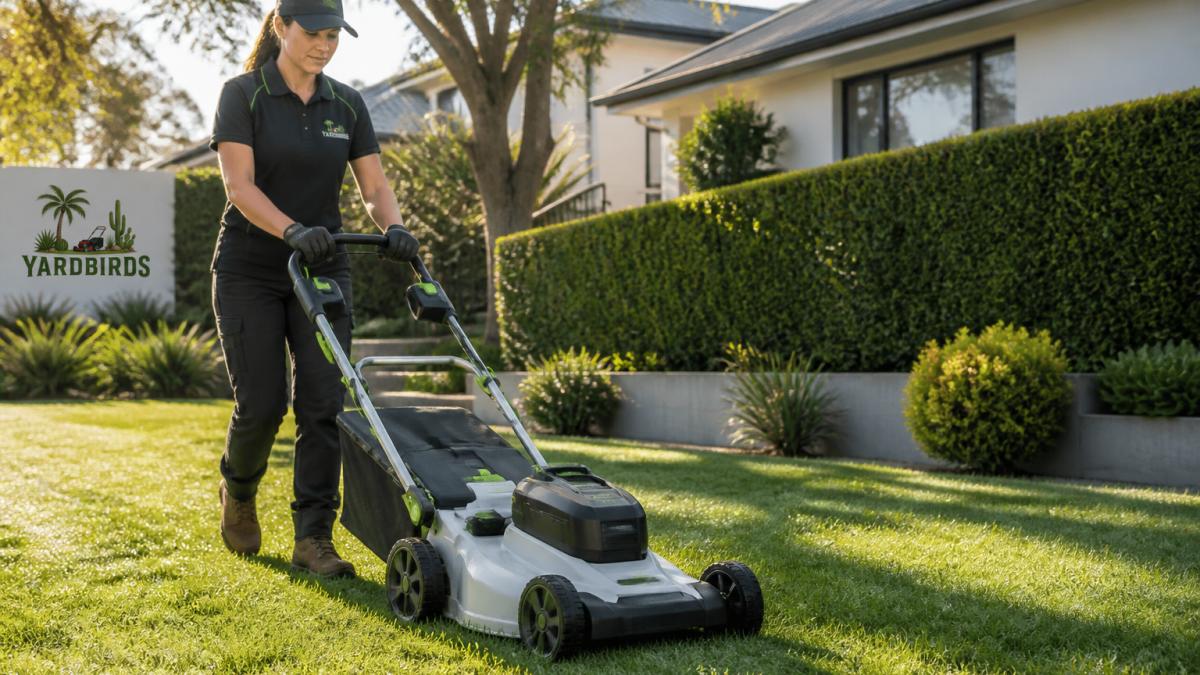
All-electric equipment delivers real performance advantages beyond environmental benefits. Battery-powered mowers run quieter, which means you can mow early morning or late afternoon without disturbing neighbours.
YardBirds Sydney uses exclusively electric equipment across all our services. The power is genuine: modern lithium batteries handle thick, overgrown patches and Sydney's toughest summer weeds without struggling.
Technique matters too. Proper mowing height, keeping grass between 50-75mm, protects the plant from heat stress and shade-tolerant weeds.
Organic Weed Control Methods That Work
Organic weed control combines prevention, manual removal, and targeted plant-based treatments.
Prevention: The Foundation
A thick, healthy lawn is the strongest weed suppressant available.
Mulching garden beds to 75-100mm depth suppresses weed germination by blocking light and creating a physical barrier.
Hand-pulling small weeds before they set seed is labour-intensive but remarkably effective.
Targeted Spot Treatments
For established weeds, organic herbicides target specific problem areas without blanket spraying. Plant-based options include:
- Acetic acid solutions (vinegar-based, 20% acetic acid concentration): Most effective on young, soft-leaved weeds like chickweed and clover. Requires 2-3 applications over 10-14 days for perennial weeds; works best applied in warm, sunny conditions when the plant is actively growing.
- Citric acid and clove oil blends: Effective on broadleaf weeds; slower acting than acetic acid but gentler on surrounding desirable plants when applied carefully.
- Boiling water: Surprisingly effective on pathways and driveways where precision isn't critical. Kills on contact but requires repeated applications for deep-rooted perennials.
- Flame weeding (propane torch): Works well on gravel areas and between pavers; not suitable for lawn but useful for hardscape maintenance.
Persistent Perennial Weeds
Dandelions, plantain, and creeping oxalis are common in Sydney gardens and require persistence.
Seasonal Timing in Sydney's Climate
Spring (September-November) is the critical window.
Autumn (March-May) is the second opportunity. Cooler temperatures and autumn rainfall favour cool-season weeds like chickweed and annual bluegrass.
The Reality of Timing
Organic methods don't deliver the instant kill of synthetic herbicides.
Low Maintenance Lawn Alternatives for Busy Homeowners
If organic lawn maintenance feels like too much commitment, or if your property's conditions make traditional lawn impractical, alternatives exist that require significantly less work.
Native Groundcovers: Sydney-Specific Advantages
Native groundcovers thrive in Sydney's climate without fertiliser, frequent mowing, or supplementary watering once established. Common options include:
- Creeping myrtles (Leptospermum species): Tolerate sandy, well-draining soils and full sun. Establish slowly (12-18 months to full coverage) but require virtually no maintenance once mature. Ideal for steep banks where mowing is impractical.
- Native violets (Viola species): Shade-tolerant, spreading groundcover that suppresses weeds naturally. Thrive in clay-based soils common in inner-suburban gardens. Slower establishment (18-24 months) but extremely hardy.
- Kidney weed (Dichondra repens): Fast-growing, fine-textured groundcover suitable for shaded areas. More water-efficient than conventional lawn, though not suitable for high-traffic zones.
Establishment cost is typically higher than seeding lawn, but the long-term maintenance savings offset this within 3-4 years.
Hardscaping: Permanent Reduction in Maintenance
Decking, pavers, gravel, and permeable paving eliminate lawn maintenance entirely in designated areas.
Considerations specific to Sydney:
- Decking: Timber decks require annual maintenance (cleaning, sealing) to prevent mould growth in humid conditions. Composite decking eliminates this but costs more upfront.
- Pavers and gravel: Require periodic weeding and raking, especially in spring when weed pressure is highest. Permeable pavers (recycled plastic or porous concrete) reduce runoff and are increasingly popular in water-conscious gardens, though they cost more than traditional gravel.
- Concrete and asphalt: Lowest maintenance but absorb and radiate heat, creating microclimate warming that affects nearby plantings. Less popular in environmentally conscious gardens.
Hardscaping is permanent, so design carefully. A poorly positioned patio or pathway is expensive to remove or relocate.
Artificial Turf: The Compromise
Artificial turf has improved dramatically over the past decade. Modern synthetic grass looks realistic and performs well in high-traffic areas. However, it remains a compromise:
Advantages:
- No mowing, no fertilising, no watering
- Consistent appearance year-round
- Suitable for rental properties or temporary situations
Disadvantages:
- Does not improve soil health; sits on top of existing soil without biological benefit
- Requires regular cleaning (pressure washing every 6-12 months) to prevent algae and mould in Sydney's humid climate
- Heat absorption: synthetic grass can reach 60-70°C on hot days, making it uncomfortable for barefoot use
- Installation cost is comparable to premium hardscaping
- Environmental concern: microplastic shedding and end-of-life disposal (most synthetic turf is not recyclable)
For rental properties where you're moving within 3-5 years, artificial turf makes financial sense.
Mixed Approach: Balancing Lifestyle and Values
The honest answer: low-maintenance alternatives work best when combined with professional guidance.
Choosing Between DIY and Professional Organic Lawn Care
Organic lawn maintenance is absolutely manageable as a DIY project if you have the time and patience. The learning curve is gentle, most homeowners grasp the fundamentals within a season.
| Aspect | DIY Organic Care | Professional Service |
|---|---|---|
| Time commitment | 2-4 hours weekly | Scheduled appointments only |
| Learning curve | Moderate; improves with practice | None; expert handles it |
| Equipment cost | Initial investment in tools | Included in service |
| Consistency | Depends on your discipline | Reliable and scheduled |
| Expert guidance | Trial and error | Personalised advice |
| Cost | Lower per task | Higher upfront, lower long-term |
The real friction point isn't knowledge, it's consistency. Organic lawn care works because it's regular. Missing two weeks of hand-pulling allows weeds to set seed. Skipping a mowing cycle stresses the grass. Life gets busy. Travel happens. That's where professional services earn their value.
Professional organic lawn care providers bring accountability. A homeowner might skip maintenance when life gets hectic; a scheduled service doesn't skip.
Reliability and Accountability: What to Expect
A common concern from homeowners: "I've had gardeners ghost me before. How do I know you'll actually show up?"
Reliability is non-negotiable. YardBirds Sydney operates on a fixed schedule because consistency matters more than flexibility.
Insurance is another critical factor. Fully insured service providers protect you if equipment damages property or someone gets injured on your premises. Uninsured operators create liability risk for you.
The best providers also listen. Your garden has specific needs, strata managers need consensus across multiple owners, landlords need low-liability solutions, environmentally conscious homeowners want zero-emission services.
Conclusion
Organic lawn maintenance works. It builds healthier soil, requires less work over time, and aligns with environmental values. The choice between DIY and professional care depends on your time availability and comfort with gardening, but either way, consistency matters more than perfection.
If you're ready to shift to organic lawn care or want expert guidance on what makes sense for your specific property, YardBirds Sydney offers professional organic lawn maintenance with all-electric equipment, full insurance, and personalised service tailored to your garden's needs. Get a Free Quote and discover how sustainable lawn care transforms your outdoor space.
Frequently Asked Questions
What are the benefits of organic lawn maintenance?
Organic lawn maintenance builds long-term soil health without synthetic chemicals, creating a safer environment for children and pets. It reduces water consumption through improved soil structure, minimises environmental runoff, and supports natural pest predation. Over time, organically maintained lawns develop stronger root systems and greater resilience to Sydney's variable climate, reducing the need for intensive intervention.
How do I find reliable organic lawn care services I can trust?
Look for services with documented insurance coverage, verifiable customer reviews, and transparent communication about their methods. Ask prospective providers how they handle scheduling consistency, especially during winter months when visits are less frequent. Request references from clients with similar property types and clarify how they manage complex situations like strata requirements. A trustworthy provider should explain their approach to your specific garden rather than applying a one-size-fits-all method.
Is organic lawn care effective in Sydney's climate?
Yes, organic methods are well-suited to Sydney's subtropical climate. The region's warm summers and moderate winters support microbial activity in organically enriched soil, improving nutrient availability. Organic weed control methods address Sydney's common warm-season weeds effectively, whilst mulching and soil conditioning help manage the city's variable rainfall patterns. Professional providers familiar with local conditions can tailor organic programs to handle Sydney's specific seasonal challenges.
What equipment do eco-friendly lawn services use?
Modern eco-friendly services typically use all-electric mowers, edgers, and leaf blowers that produce zero emissions and minimal noise. These battery-powered tools have sufficient power for routine maintenance and most overgrown areas. Some providers also use hand tools for precision work and organic treatments such as mulching, top dressing, and natural pest control products. All-electric equipment is particularly effective for residential properties and strata areas where noise and emissions are concerns.
How often should I schedule organic lawn maintenance?
Frequency depends on your lawn's condition, season, and growth rate. During spring and summer, most lawns benefit from fortnightly or weekly mowing to maintain health and prevent weed establishment. Autumn and winter require less frequent visits, sometimes monthly or as-needed. Professional services typically conduct a seasonal assessment and recommend a schedule tailored to your specific garden, adjusting for rainfall, temperature, and your property's unique characteristics.