 ultimate-guide
Why Hire Insured Garden Services: Protection Guide
Table of Contents
- Why Insured Garden Services Matter
- What Public Liability Insurance for Gardeners Actually Covers
- The Real Risks: Property Damage and Third-Party Injury Claims
- How to Check Business Insurance and Verify Coverage
- Strata Garden Maintenance Requirements and Insurance
- Insurance vs. Warranty: Understanding the Difference
- Finding Reliable Insured Garden Services
- Frequently Asked Questions
Last Updated: September 22, 2026
Why Insured Garden Services Matter
Hiring insured garden services is one of those decisions that feels routine until something goes wrong. A contractor's equipment damages your fence. Someone gets injured on your property. Suddenly, you're staring at repair bills or legal claims with no protection.
The truth most homeowners don't realise until it's too late: not all garden maintenance providers carry the same level of coverage. Some operate without any public liability insurance at all. Others have minimal protection that won't cover significant incidents.
This is where the choice becomes critical. When you hire insured garden services, you're not just paying for lawn mowing or hedge trimming. You're securing financial protection against property damage, third-party injury claims, and the legal costs that follow. A professional gardening team with proper coverage gives you peace of mind that extends far beyond the weekly maintenance visit.
At YardBirds Sydney, we understand this concern intimately. Our team carries comprehensive public liability insurance because we know it matters to the homeowners and property managers we serve. It's not just a box to tick, it's foundational to how we operate and how we protect your investment.
What Public Liability Insurance for Gardeners Actually Covers
Public liability insurance for gardeners protects you when the service provider causes accidental injury to someone or damages third-party property during work. This is the baseline protection every professional gardener should carry.
Here's what this coverage typically includes:
- Property damage: If a contractor's equipment damages your neighbour's fence, their car, or your own structures, the insurance covers repair or replacement costs
- Third-party bodily injury: If someone is injured on your property during gardening work, a visitor, a neighbour, even a contractor's assistant, the insurance covers medical expenses and legal liability
- Legal defence costs: If a claim goes to court, the insurance covers solicitor fees and court expenses
- Accidental damage during work: Damage that occurs as a direct result of performing the gardening service itself
What it does NOT cover: damage caused by negligence on your part as the property owner, intentional harm, or work performed outside the scope of the contract. It also doesn't cover the contractor's own injuries (that's covered by workers compensation insurance, which is a separate requirement).
The key distinction is "accidental." If a gardener's mower blade hits a hidden underground pipe and ruptures it, that's covered. If they deliberately damage something or fail to follow basic safety protocols, coverage may be denied.
The Real Risks: Property Damage and Third-Party Injury Claims
Garden maintenance work creates genuine hazards that most homeowners underestimate. Understanding these risks is why hiring insured garden services isn't optional, it's essential.
Property damage happens more often than you'd think. Contractors use heavy equipment in tight spaces. A ride-on mower can catch an irrigation line. Hedge trimmers can clip power cables. Leaf blowers can send debris through a neighbour's window. A single incident can cost thousands in repairs, and without insurance, you're responsible.
Third-party injury claims are rarer but far more serious. A contractor's equipment malfunctions and injures someone. A visitor trips over equipment left on your property. A neighbour's child is struck by debris from your garden work. Medical costs, ongoing treatment, lost wages, and legal settlements can easily exceed $100,000. Without the contractor's public liability insurance backing the claim, you could be personally liable.
Strata properties face additional complexity. If someone is injured in a shared garden area, multiple unit owners could be implicated. If a contractor damages common property, the body corporate may pursue recovery from the service provider, but only if they're properly insured.
The financial exposure is real. A single property damage claim can wipe out months of savings. An injury claim can affect your ability to refinance your mortgage or secure future insurance. This is why the question "Are you insured?" isn't a nice-to-have. It's a fundamental protection mechanism.
How to Check Business Insurance and Verify Coverage
Verification is straightforward, but most homeowners skip this step. Don't.
Before hiring any insured garden services, ask for a certificate of currency. This is a formal document issued by the insurance provider confirming that a policy is active and current. It shows the policy number, coverage limits, the insured party's name, and the expiry date.
Here's what to check on the certificate:
| Element | What to Look For |
|---|---|
| Policy holder name | Should match the contractor or business name exactly |
| Coverage type | Should include "public liability" or "public and products liability" |
| Coverage amount | Minimum $10 million for residential work; $20 million+ for commercial |
| Expiry date | Must be current or future-dated; expired policies offer no protection |
| Insurer name | Should be a recognised Australian insurer (AAMI, GIO, NRMA, Allianz, CGU, QBE) |
| Work scope | Certificate should list "gardening," "landscaping," or "lawn maintenance" |
Ask the contractor to email the certificate directly to you. Don't accept a photo of a certificate, originals can be verified with the insurer if needed. Many insurers now offer online verification portals where you can confirm a policy's status independently.
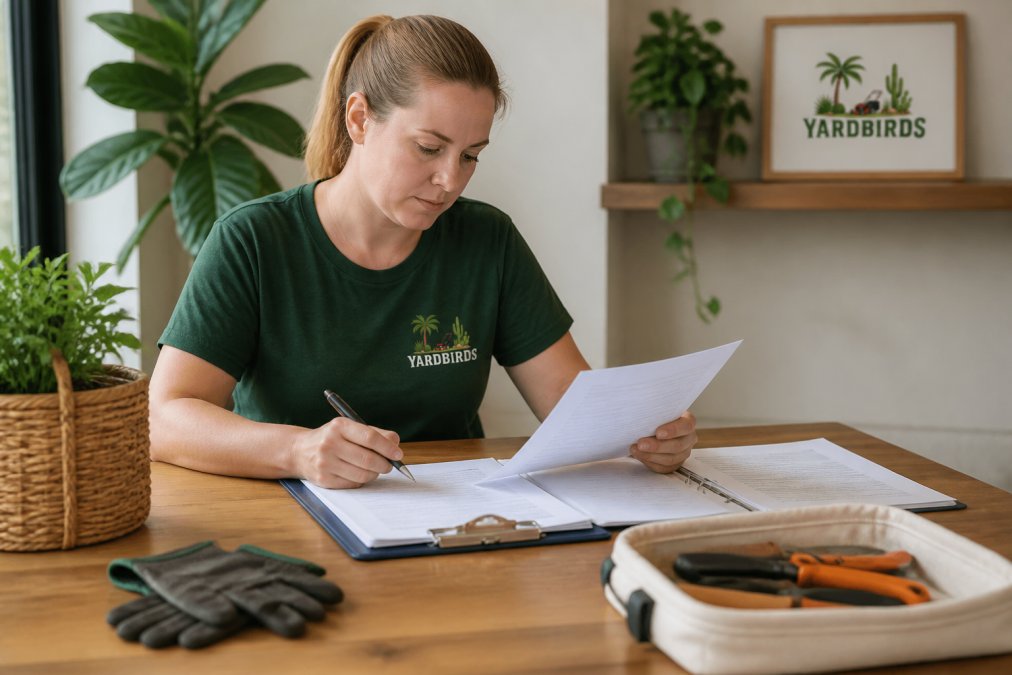
If a contractor hesitates to provide proof, that's a red flag. Legitimate professionals carry insurance and are proud to show it. If they claim their insurance is "in the post" or they'll "send it later," keep looking. Insurance-compliant contractors have documentation ready before they arrive for the first job.
For strata properties, the body corporate should maintain a register of all contractors' insurance certificates. This protects every resident and creates accountability. If your strata manager isn't tracking this, that's a governance issue worth raising at the next meeting.
Strata Garden Maintenance Requirements and Insurance
Strata properties operate under different rules. The body corporate is responsible for common garden areas, and that responsibility extends to contractor management and liability.
In most strata schemes, the body corporate must ensure any contractor working on common property carries appropriate insurance. This isn't just best practice, it's a legal obligation under the Strata Schemes Management Act 2015. The body corporate can be held liable for injuries or damage caused by contractors if proper vetting and insurance verification weren't done. (Source: the Fair Work Ombudsman's guidance on workers' compensation)
What this means in practice: your strata manager should request certificates of currency from all gardening contractors before work begins. These should be filed and reviewed annually. If a contractor's insurance lapses, work should stop until coverage is renewed.
The coverage amounts matter more in strata settings. Residential strata schemes typically require minimum $20 million public liability coverage for contractors working on common property. Some schemes require higher limits depending on the complexity of work and the number of residents.
Different unit owners may have different preferences for garden aesthetics, and contractors need to understand this complexity. A professional team experienced in strata environments knows how to navigate competing requests and maintain consistency. They also understand that any damage to common property triggers a formal claims process through the body corporate's insurance, which is why their own coverage must be airtight.
If you're a strata resident concerned about garden maintenance quality or contractor vetting, request a copy of the contractor's certificate from your strata manager.
Insurance vs. Warranty: Understanding the Difference
Here's the practical difference:
A contractor's mower hits your underground irrigation system and ruptures it. That's an insurance claim, accidental property damage. The contractor's public liability insurance covers the repair.
Finding Reliable Insured Garden Services
The process of finding a contractor who is both insured and reliable comes down to a few key steps.
-
Can you provide a current certificate of currency for public liability insurance? A professional will have this ready or will send it within 24 hours.
-
What's your experience with properties like mine? If you have a strata property, ask about strata experience. If you have complex garden requirements, ask about similar projects.
-
What's your process if something goes wrong? This tells you whether they take responsibility seriously. A contractor who immediately blames you or claims "that's not covered" is a warning sign.
Frequently Asked Questions
What happens if a gardener is injured on my property?
If a gardener is injured while working on your property, their public liability insurance covers their medical costs and compensation claims, not your homeowner's insurance. This is why verifying the gardener carries adequate coverage is critical, it protects you from being held liable for workplace injuries. Always ask for a current certificate of currency before work begins.
Does public liability insurance cover damage to my home during garden work?
Yes, public liability insurance for gardeners covers accidental damage to your property caused during their work, such as lawn mower damage to garden edging, or equipment striking your fence. This protects you financially if something goes wrong. Without this coverage, you could face significant repair costs or legal disputes over who pays.
How do I verify a gardening business's insurance status?
Request a current certificate of currency from the gardener before hiring. This document lists their public liability coverage limits and the insurer's details. You can contact the insurer directly to confirm the policy is active, or ask the gardener for their policy number. Reputable services provide this documentation immediately upon request.
What's the difference between professional indemnity and public liability for gardeners?
Public liability insurance covers accidental injury to third parties or damage to their property during garden work. Professional indemnity covers financial loss from professional advice or design errors. For garden maintenance, public liability is essential. Professional indemnity is more relevant for landscape designers or consultants.