 how-to
Mowing Near Me: How to Choose a Lawn Mowing Service
Table of Contents
- Mowing Near Me: What to Expect and How to Choose
- How Often to Mow a Lawn in Sydney's Climate
- Lawn Mowing and Gardening Services: What's Typically Included
- Lawn Mowing Service Checklist: What to Look For Before You Book
- Eco-Friendly Lawn Care: Why All-Electric Equipment Matters
- How to Compare Quotes and Get the Best Value
- Finding Reliable Mowing Near Me: Service Areas and Availability
- Frequently Asked Questions
Last Updated: October 7, 2026
Mowing Near Me: What to Expect and How to Choose
Searching for "mowing near me" usually means one of two things: your lawn has gotten away from you, or your current gardener has stopped showing up. Both are fixable, and neither requires you to become a lawn expert overnight.
At YardBirds Sydney, we've spent more than 12 years mowing lawns across the Inner West, from tight terraces in Petersham to strata common areas in Ashfield. What we've learned is that most people don't need the cheapest mowing service. They need one that turns up when it says it will, cuts the grass properly, and doesn't leave a mess behind.
This guide covers what a standard visit actually includes, how often your lawn needs cutting, what to check before you book, and how to compare quotes without getting burned.
A lawn mowing service is a scheduled visit where a trained operator cuts, edges and cleans up your grass and surrounding garden areas using commercial equipment. The best services combine mowing with trimming, edging and blowing so the finished result looks deliberate rather than half-done.
The Australian Bureau of Meteorology climate data matters more than most people realise here. Warm-season grasses common in Sydney grow fastest from October through March, which is why a fortnightly schedule works in summer and a longer gap works in winter.
How Often to Mow a Lawn in Sydney's Climate
Once a fortnight during the growing season is the standard answer for most lawns, dropping to every three to four weeks through the cooler months.
Grass doesn't grow at a constant rate. It responds to temperature, rainfall and how much sun your yard gets. A north-facing lawn in Leichhardt will need more frequent cuts than a shaded courtyard in Balmain, even though they're a few streets apart.
The one-third rule is the simplest guide: never remove more than a third of the blade height in a single cut. Scalping a lawn stresses it, invites weeds, and leaves you with a brown patch that takes weeks to recover.
- Summer (December to February): every 10 to 14 days for buffalo and couch; kikuyu may need weekly in full sun
- Spring and autumn: every 2 to 3 weeks, depending on rainfall
- Winter (June to August): every 3 to 4 weeks, sometimes longer for shaded or slow-growing lawns
Grass type changes the schedule more than most people expect. Kikuyu is the most aggressive grower and can need cutting every 7 to 10 days in peak summer. Buffalo is slower and more shade-tolerant, so a fortnightly cut usually holds.
Shade slows growth but also weakens the blade. A shaded lawn cut too short will thin out and invite weeds, so raise the mower height rather than stretching the interval.
If you're not sure, run your hand across the top of the grass. If it folds over rather than springs back, it's ready. If it's wet, wait.
Lawn Mowing and Gardening Services: What's Typically Included
A proper visit covers more than pushing a mower across the yard. The difference between an average job and a good one usually comes down to what happens around the edges, and whether those extras are included or added to the bill.
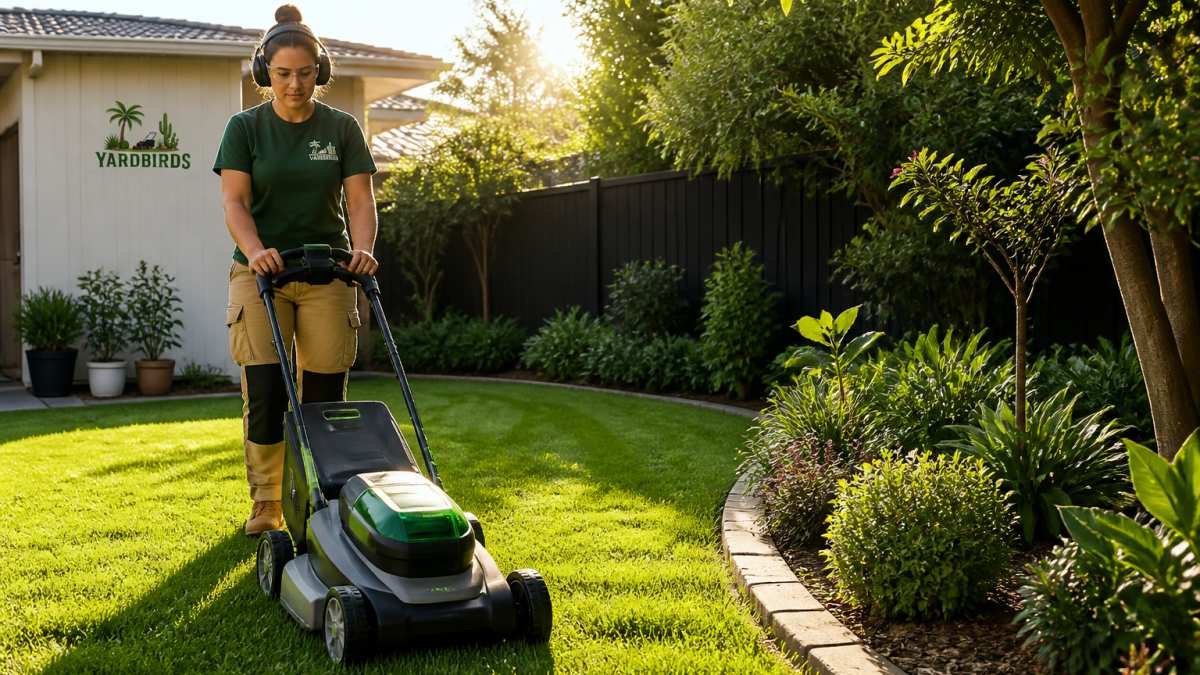
Here's what a standard service should include, and what each task actually involves:
- Grass cutting at the correct height for the season and grass type. This is the core task, but height matters more than most people realise. Cutting too low scalps the lawn; cutting too high leaves it looking shaggy and encourages thatch.
- Edging along paths, driveways and garden borders. This is the vertical cut that defines the lawn edge. It's the single biggest visual difference between a professional job and a quick mow, and it's the task most often left out of a cheap quote.
- Trimming around trees, fences, poles and garden beds where the mower can't reach. A line trimmer handles the detail work, but it also risks damaging tree trunks if the operator isn't careful. A good crew uses a guard or keeps the line away from bark.
- Blowing clippings off paths, driveways and hard surfaces. This is what makes the finished job look clean rather than half-done. Without it, clippings track into the house and stain concrete.
- Green waste removal or mulching back into the lawn. Mulching returns nutrients and reduces landfill, but it can leave a mess on a thick, wet cut. Removal means the clippings leave your property, usually for a fee.
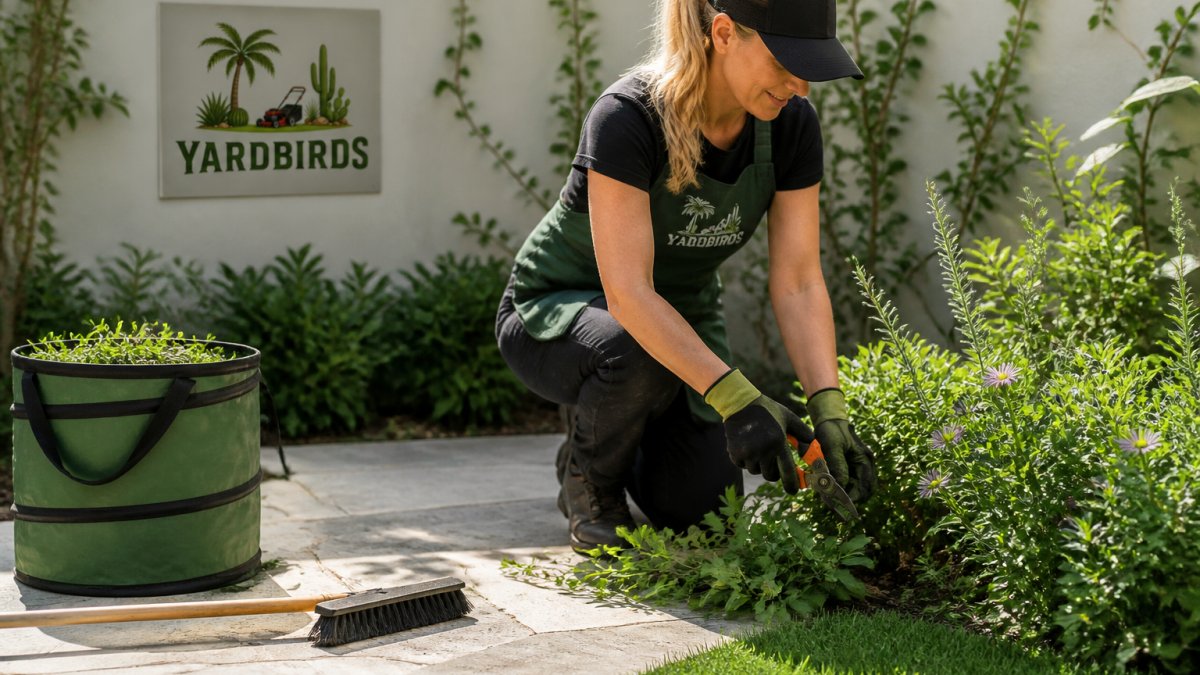
Many providers also offer mowing and gardening combined: weeding, hedge trimming, pruning, gutter cleaning and general yard maintenance. If you want one crew handling everything, ask whether they're set up for it or whether you'll need two separate bookings. Combining tasks into one visit is usually cheaper than two call-outs, but it also means the crew needs the right equipment and enough time.
What's often charged separately:
- Green waste removal (especially for large volumes or overgrown yards)
- Hedge trimming and pruning above a certain height
- Gutter cleaning and pressure washing
- One-off overgrown or storm-damage clean-ups
Lawn Mowing Service Checklist: What to Look For Before You Book
Run through this list before you hand over your details. It takes two minutes and saves a lot of frustration.
- Insurance: Ask for a certificate of currency. Public liability cover protects you if something gets damaged on your property.
- Consistent crews: Will you get the same team each visit, or a rotating roster of strangers?
- Availability: Can they work around your schedule, including if you travel for work?
- Communication: Do they confirm bookings and let you know if weather delays a visit?
- Reviews: Look for verified recommendations and an average rating across more than a handful of jobs.
- Equipment: Battery or petrol? This affects noise, fumes and how the crew works around your family.
- Scope in writing: Which services are included, and which cost extra?
That last point catches people out. A quote that looks competitive often excludes green waste removal or edging, and those add-ons push the final figure well past a more complete quote.
Eco-Friendly Lawn Care: Why All-Electric Equipment Matters
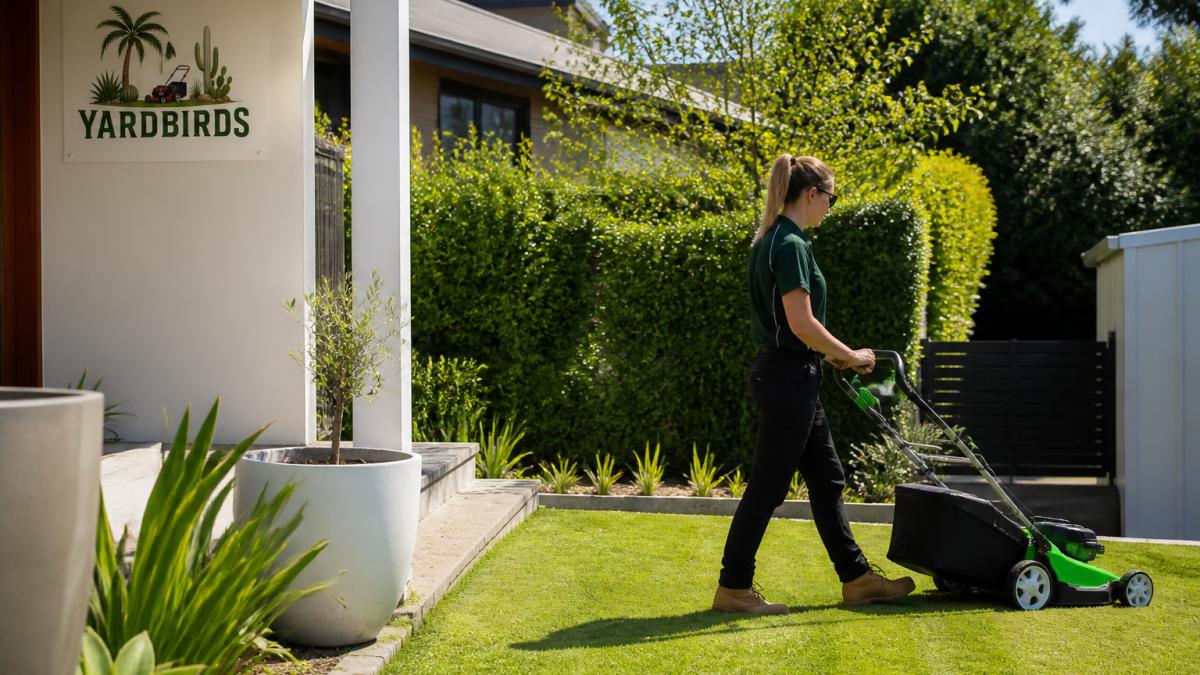
All-electric mowing and garden equipment runs on rechargeable batteries instead of petrol, which means no exhaust fumes, no fuel spills and significantly less noise on your street.
The old objection was power. That's largely gone. Modern commercial battery equipment handles thick kikuyu and overgrown buffalo grass without bogging down, provided the operator matches the blade and pace to the job. What it won't do is run all day on one charge, which is why crews carry spare batteries and plan their route.
For households with young kids, pets or a home office, the practical difference is immediate. No fumes drifting through open windows. No two-stroke noise at 7am on a Saturday.
Eco-friendly lawn care also covers what happens to the waste. Mulching clippings back into the lawn reduces landfill and feeds the soil. Where that isn't suitable, a provider that composts or recycles green waste keeps the loop closed.
How to Compare Quotes and Get the Best Value
Compare quotes on scope, not just the number. Two quotes for the same yard can differ by a wide margin because one includes edging, blowing and waste removal while the other is mowing only.
Ask every provider the same four questions:
- What exactly is included in the quoted price?
- Is the price fixed per visit or does it change with growth?
- What's the notice period if I need to cancel or reschedule?
- Who is actually doing the work, and are they insured?
Pricing depends on block size, access, how overgrown the yard is and how often you want visits. A small courtyard and a large corner block with side access are different jobs, and any provider quoting without seeing the property is guessing.
| What to Compare | Weak Quote | Strong Quote |
|---|---|---|
| Scope | Mowing only | Mowing, edging, trimming, blowing |
| Waste | Left on site | Removed or mulched |
| Crew | Rotating | Same team each visit |
| Insurance | Not mentioned | Certificate provided |
| Scheduling | Fixed day only | Flexible, confirmed in advance |
Finding Reliable Mowing Near Me: Service Areas and Availability
Reliability comes down to whether a provider actually services your suburb regularly, not whether they'll make a one-off trip across town.
Local crews know the area. They know which streets have tight side access, which blocks flood after heavy rain, and how long a job realistically takes. That local knowledge is why a provider working your suburb every week will usually beat a larger operation travelling from elsewhere.
When you search for a mowing service, check:
- Service area: Is your suburb and postcode listed, or do they cover it as an exception?
- Availability: Do they have open slots in your preferred window, or are you waiting weeks?
- Contact: Is there a phone number and a way to request a quote online?
- Reviews: Are there recent customer reviews from properties like yours?
For strata and body corporate work, availability matters differently. You need a provider who can coordinate access, work around owners' schedules and handle multiple opinions on what the garden should look like. That's a different job from a single backyard, and not every mowing service is set up for it.
YardBirds Sydney works across the Inner West with a fully insured team and 500+ customers, and we'll tell you honestly if your property isn't a good fit for our schedule.
Frequently Asked Questions
How much does lawn mowing cost per hour?
Prices vary based on your location, lawn size, and the frequency of visits. Most services provide a free quote after assessing your property. Factors like overgrown grass, sloping blocks, or additional gardening tasks can affect the final cost. Request a quote from local providers to get an accurate figure for your specific yard.
What is the 1/3 rule of mowing?
The 1/3 rule means never cutting more than one-third of the grass blade height in a single mow. Removing more stresses the lawn and can leave it vulnerable to weeds and disease. If your grass is overgrown, mow in stages, lowering the cutting height gradually over several visits. This keeps your lawn healthier and looking its best.
How often should a lawn be mowed?
In Sydney's climate, most lawns need mowing every 1-2 weeks during spring and summer, and every 3-4 weeks in autumn and winter. Factors like grass type, growth rate, and rainfall affect frequency. A consistent schedule promotes a thicker, healthier lawn and reduces the chance of weeds taking hold.
Can lawn mowing services also help with garden maintenance?
Many lawn mowing services offer garden maintenance as part of their package. This can include weeding, pruning, hedge trimming, and green waste removal. When requesting a quote, ask what's included so you can compare providers fairly. Some services specialise in eco-friendly practices, such as using all-electric equipment and recycling clippings.
Finding a mowing service that actually turns up, cuts properly and cleans up after itself shouldn't be this hard. If you're tired of chasing quotes or chasing crews, YardBirds Sydney can help. We offer eco-friendly mowing and garden maintenance with all-electric equipment, fully insured teams, and scheduling that works around your week. Get a free quote and see what a consistent service looks like.