 listicle
Garden Maintenance for Busy Professionals: 7 Time-Saving Strategies
Table of Contents
- Garden Maintenance for Busy Professionals: Quick Comparison
- 1. Regular Professional Lawn Mowing and Edging Services
- 2. Scheduled Weeding and Garden Weed and Feed Services
- 3. Hedge Trimming and Seasonal Pruning Plans
- How to Find Insured Gardeners You Can Trust
- Eco-Friendly Garden Maintenance for Sustainable Outdoor Spaces
- Low-Maintenance Landscaping Design for Professionals
- DIY vs. Professional Garden Care: What Makes Sense for Your Schedule
- Getting Started: Your Garden Maintenance Plan
- Frequently Asked Questions
Last Updated: September 2, 2026
Garden Maintenance for Busy Professionals: Quick Comparison
Managing a garden takes time you probably don't have. Between work, family, and everything else competing for your attention, your outdoor space often falls to the bottom of the priority list. Yet a neglected garden deteriorates. Weeds spread, lawns thin, hedges become overgrown, and what was once an attractive outdoor retreat turns into a maintenance burden.
The real question isn't whether you have time to maintain your garden. It's whether you're willing to pay someone else to do it properly, or whether you'll spend weekends fighting a losing battle against nature.
At YardBirds Sydney, we work with busy professionals every week who've made the same choice: outsource garden maintenance to professionals who understand Sydney's climate and deliver reliable, consistent care. This guide breaks down the seven time-saving strategies that actually work, from professional lawn mowing services to smart landscaping design that reduces maintenance altogether.
| Strategy | Time Saved Per Month | Best For | Frequency |
|---|---|---|---|
| Professional lawn mowing | 4-6 hours | All busy professionals | Fortnightly or weekly |
| Scheduled weeding services | 3-5 hours | Properties with garden beds | Monthly or quarterly |
| Hedge trimming plans | 2-4 hours | Homes with hedges/shrubs | Seasonal (2-3 times yearly) |
| Low-maintenance landscaping | 5-8 hours | Long-term time savings | One-time design investment |
| Robotic mowers | 4-6 hours | Small to medium lawns | Autonomous |
| Smart irrigation controllers | 2-3 hours | Water-conscious owners | Set and forget |
| Professional vetting checklist | Prevents costly mistakes | All property types | Before hiring |
1. Regular Professional Lawn Mowing and Edging Services
A typical suburban lawn takes 45 minutes to 90 minutes to mow, edge, and tidy up (peer-reviewed research). Add that to your fortnightly schedule and you're looking at 4-6 hours per month spent pushing a mower around your yard.
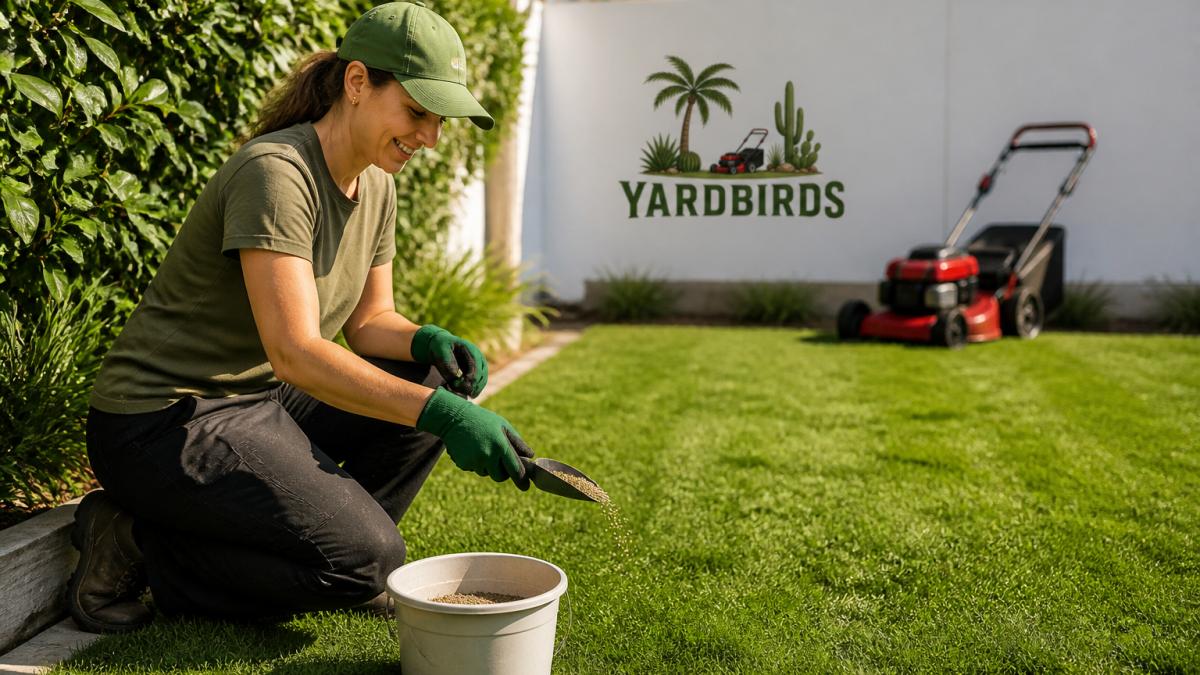
Professional lawn mowing services eliminate this entirely. A qualified gardener arrives on schedule, mows, edges, and removes clippings, all while you're working or spending time on things that matter. The difference isn't just time saved; it's consistency. Your lawn gets cut at the right height, at the right frequency, every time.
For busy professionals, regular mowing services work best on a fortnightly schedule during the growing season (spring and summer) and monthly during autumn and winter. This keeps your lawn healthy and your property looking presentable without requiring you to think about it.
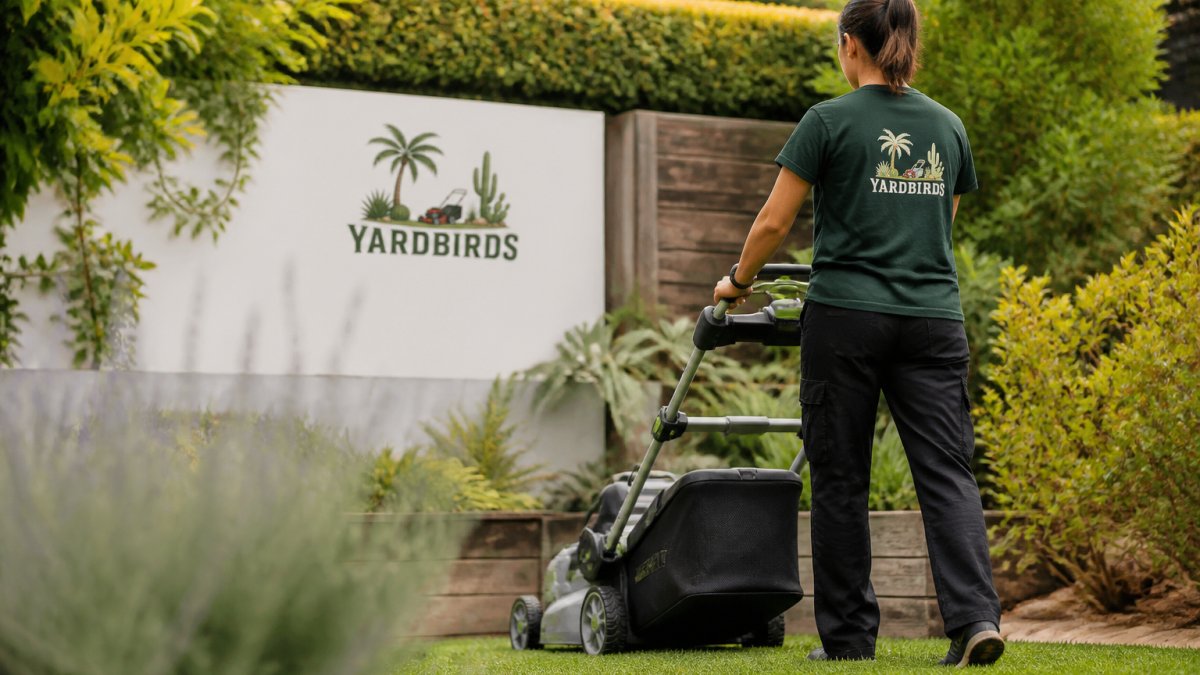
YardBirds Sydney uses all-electric mowers for lawn mowing and edging work, which means quieter operation and zero emissions, a real advantage if you have neighbours close by or care about your environmental footprint.
What to expect from professional lawn mowing:
- Lawn cut to optimal height for Sydney's climate (typically 25-40mm depending on grass type)
- Edges trimmed cleanly along pathways and garden beds
- Clippings removed or mulched back into the lawn
- No damage to garden beds or hardscaping
- Reliable scheduling with minimal cancellations
2. Scheduled Weeding and Garden Weed and Feed Services
Weeding is the second-biggest time drain for garden maintenance. A property with multiple garden beds can easily consume 3-5 hours per month just pulling weeds, especially during spring and early summer when they grow fastest.
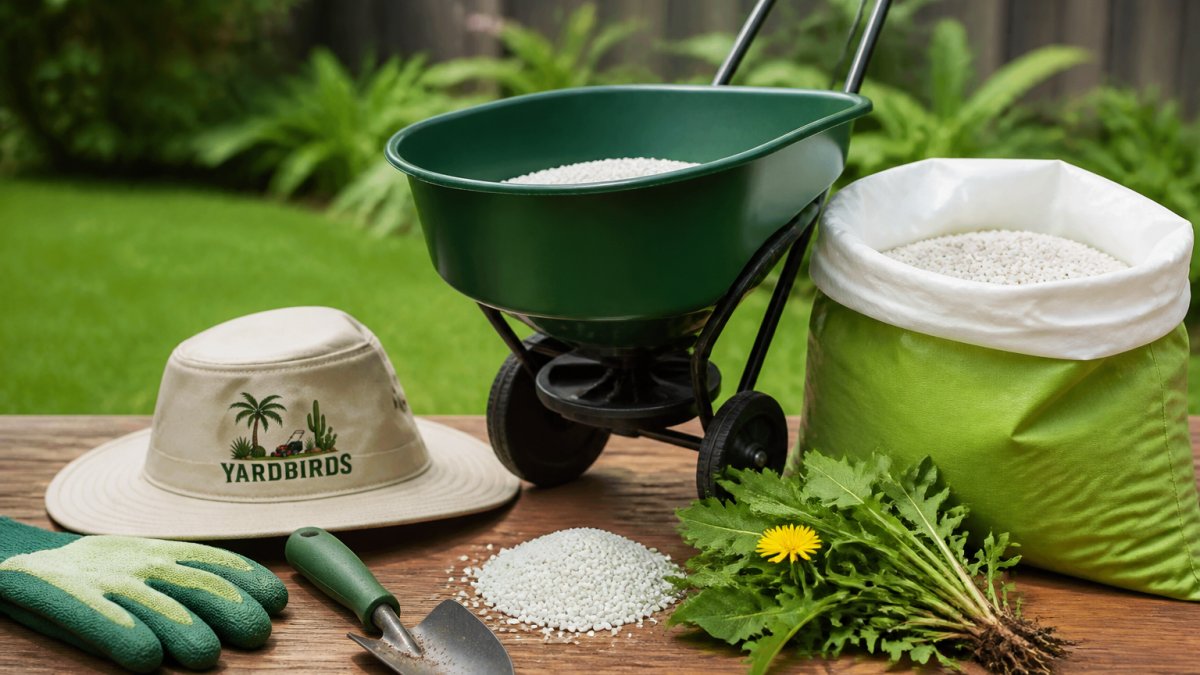
Scheduled weeding services tackle this systematically. A professional gardener removes weeds from beds, around trees, and along pathways, then often applies mulch to suppress new growth. Some services include weed and feed applications, a combined treatment that kills existing weeds and fertilises the soil in one application. Spring Special 10% off weed and feed.
Most busy professionals benefit from monthly weeding services during the growing season (September to April) and quarterly services during autumn and winter.
Why scheduled weeding beats DIY:
- Professionals know which plants are weeds and which are intentional
- They understand how to remove weeds without damaging nearby plants
- Mulching after weeding suppresses new growth for weeks
- Consistent scheduling prevents weeds from seeding and spreading
- Weed and feed services save a separate trip and application step
Spring (September to November) is when weeds germinate most aggressively in Sydney's climate. A monthly service through spring keeps them under control before they become established.
3. Hedge Trimming and Seasonal Pruning Plans
Hedges and shrubs need pruning to stay healthy and attractive. Depending on the type and size of your hedge, this can take 2-4 hours per session. Most hedges need trimming 2-3 times per year to maintain shape and density (rhs.org.uk).
Seasonal pruning plans take this off your plate entirely. A professional gardener arrives in spring (September), early summer (December), and sometimes autumn (March) to trim hedges, prune shrubs, and shape your garden. They know the right timing for each plant type and how to maintain shape without damaging the plant.
YardBirds Sydney specialises in hedge trimming and pruning tailored to Sydney's unique climate. Different plants thrive at different times of year here, and cutting at the wrong time can weaken or kill a hedge.
Seasonal pruning timeline for Sydney:
- Spring (September-October): Major pruning after winter dormancy; shapes hedges and encourages new growth
- Early summer (December): Light trim to maintain shape; removes any winter damage
- Autumn (March-April): Tidy-up trim; reduces density if needed before winter
Regular pruning prevents overgrowth. A hedge trimmed consistently stays manageable. A hedge left for years becomes a massive job that requires heavy cutting back and risks damaging the plant.
How to Find Insured Gardeners You Can Trust
Hiring the wrong gardener creates more problems than it solves. A careless operator can damage your plants, compact your soil, or leave your property looking worse than before. An uninsured gardener leaves you liable if something goes wrong.
Before you book anyone, confirm three things: they're insured, they understand your property type, and they have a track record of reliability.
Insurance is non-negotiable. Ask for proof of public liability insurance. A professional gardener should carry this as standard; it protects you if they damage your property or injure themselves on your land. If they can't provide proof, don't hire them.
Understand what they specialise in. Some gardeners focus on lawn mowing only. Others handle complex hedge work, strata properties, or commercial maintenance. YardBirds Sydney serves residential, strata, and commercial properties with experience in Sydney's specific climate and soil conditions. Matching the gardener's expertise to your property type matters.
Check their reliability. Ask for references and how they handle cancellations or weather delays. A professional service has a clear policy: they either reschedule or communicate in advance.
Red flags to avoid:
- No proof of insurance
- Unwilling to provide references
- Vague pricing
- No clear communication channel or cancellation policy
- Pressure to book multiple months upfront without a trial period
Eco-Friendly Garden Maintenance for Sustainable Outdoor Spaces
If you care about your environmental footprint, traditional garden maintenance can feel at odds with your values. Petrol mowers emit carbon, chemical weed killers harm soil health, and waste often ends up in landfill.
Eco-friendly garden maintenance uses electric equipment, avoids synthetic chemicals where possible, and treats garden waste as a resource (mulch, compost) rather than rubbish.
YardBirds Sydney uses all-electric mowers and equipment, zero emissions, quieter operation, and better for long-term soil health. The all-electric approach also means no fuel storage, no maintenance of petrol engines, and lower operating costs over time.
Eco-friendly practices also include:
- Mulching clippings back into the lawn instead of bagging them
- Using native plants that thrive in Sydney's climate with minimal water
- Avoiding broad-spectrum herbicides in favour of targeted removal
- Composting garden waste on-site where possible
- Selecting drought-tolerant plants to reduce watering needs
Low-Maintenance Landscaping Design for Professionals
The ultimate time-saving strategy isn't a service, it's a design choice. A low-maintenance garden requires far fewer hours per month than a traditional one.
Low-maintenance landscaping means choosing plants that thrive in Sydney's climate with minimal intervention, using mulch and hardscaping to reduce weeding, and designing the layout to be easy to maintain.
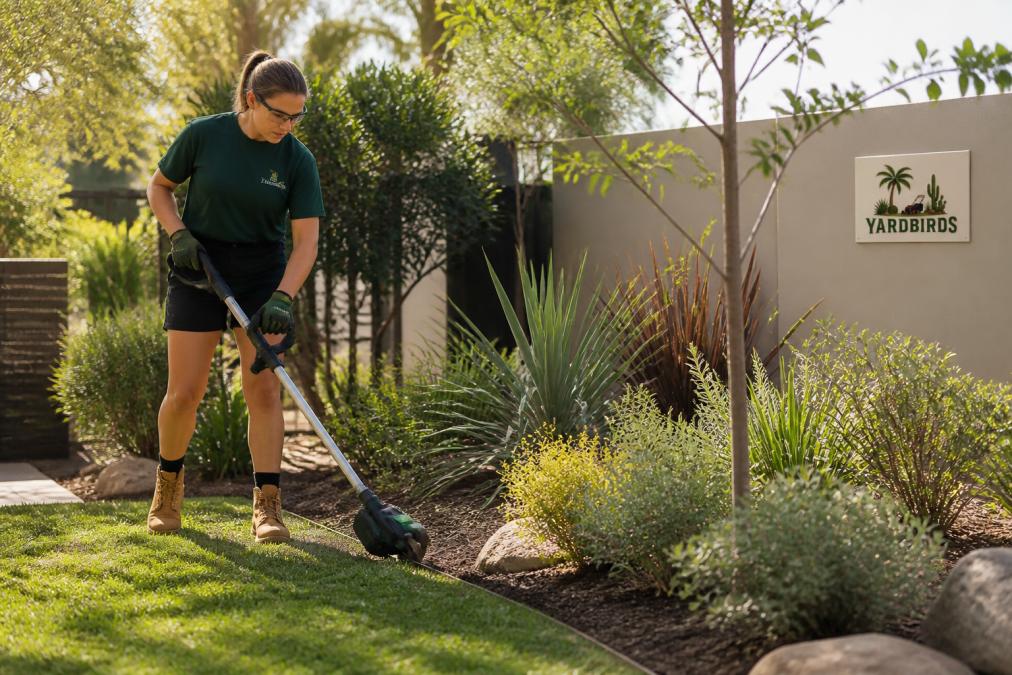
Key principles of low-maintenance design:
- Native plants: Australian native plants are adapted to Sydney's climate, soil, and rainfall. They need less water, fertiliser, and pruning than exotic species.
- Reduce lawn area: Lawns are high-maintenance. Consider replacing large lawn areas with mulched garden beds, hardscaping (pavers, gravel), or native groundcovers that don't need mowing.
- Mulch heavily: A 75-100mm layer of mulch suppresses weeds, retains soil moisture, and reduces the need for watering (peer-reviewed research). It's the single most effective time-saver in any garden.
- Group plants by water needs: Water-hungry plants in one zone, drought-tolerant plants in another. This lets you water efficiently without over- or under-watering sections of your garden.
- Hardscaping over planting: Pavers, decking, gravel, and stone features require zero maintenance and create usable outdoor space.
A one-time investment in thoughtful landscaping design can reduce your monthly maintenance hours by 50-70%. You're not eliminating garden care entirely, but you're making it manageable even for someone with a demanding schedule.
YardBirds Sydney can advise on low-maintenance landscaping tailored to your property and lifestyle.
DIY vs. Professional Garden Care: What Makes Sense for Your Schedule
The decision to hire professional garden maintenance isn't about being lazy. It's about math. If you spend 6-8 hours per month on garden maintenance, hiring someone is often the rational choice. You're trading money for time, and time is the one thing you can't get back.
DIY makes sense for:
- Planting new plants or flowers (one-off, creative task)
- Watering during dry spells (requires attention but minimal skill)
- Deadheading or light tidying (quick, satisfying, low-risk)
- Garden design decisions (this is your space; you should have input)
Hire a professional for:
- Regular lawn mowing (repetitive, time-consuming, consistency matters)
- Hedge trimming and pruning (timing and technique matter; mistakes are costly)
- Weeding large areas (labour-intensive, easy to do wrong)
- Strata or commercial properties (complexity and compliance requirements)
The sweet spot for most busy professionals is hybrid: hire someone for the regular, repetitive work (mowing, weeding, pruning) and handle occasional tasks yourself if you enjoy them.
Getting Started: Your Garden Maintenance Plan
Start by auditing what actually needs doing. Walk your property and list:
- Lawn size and condition
- Number and size of garden beds
- Hedges or shrubs that need pruning
- Problem areas (weeds, overgrowth, compaction)
- Your schedule (how much time can you realistically give?)
Then, prioritise. Most busy professionals benefit most from regular lawn mowing and seasonal pruning. Add weeding services if you have extensive garden beds. Consider low-maintenance redesign if you want to reduce long-term effort.
Get quotes from at least two professional gardeners. Ask for references, confirm insurance, and discuss your specific needs. A good gardener will listen to what matters to you, not just push a standard package.
YardBirds Sydney offers a free quote for garden maintenance across residential, strata, and commercial properties in Sydney's Inner West. The team understands Sydney's climate, soil, and the specific challenges busy professionals face. They use all-electric equipment, maintain full insurance, and deliver consistent, reliable care.
The goal isn't perfection. It's a garden that looks good, supports your lifestyle, and doesn't consume the time you don't have.
Frequently Asked Questions
What does a standard garden maintenance service include?
Professional garden maintenance typically covers lawn mowing, garden edging, weeding, hedge trimming, pruning, and garden waste removal. Many services also offer seasonal plant care and mulching. The exact scope depends on your property's needs and your service agreement. Reliable providers tailor their offerings to your specific requirements and visit frequency, whether weekly, fortnightly, or monthly.
How often should a professional gardener visit for routine maintenance?
For most properties, fortnightly visits during the growing season (spring and summer) work well for lawn mowing and edging. Winter typically requires less frequent visits. Weeding and hedge trimming may be scheduled separately based on seasonal growth. A trusted gardener will assess your garden's specific needs and recommend a service frequency that keeps your property looking sharp without unnecessary visits.
How do I know a gardening service is fully insured and reliable?
Ask for proof of public liability insurance before hiring. Reliable gardeners provide this documentation without hesitation. Check for consistent online reviews, ask about their experience with properties similar to yours, and confirm they have a clear service agreement outlining what's covered, visit frequency, and how they handle cancellations or weather delays. Fully insured professionals stand behind their work and communicate proactively about scheduling.
Are there eco-friendly options for lawn and garden care?
Yes. Eco-friendly garden maintenance uses all-electric equipment instead of petrol mowers, reducing emissions and noise. Many providers offer organic weed control, mulching to improve soil health, and native plant care that supports local ecosystems. Climate-conscious services also manage garden waste responsibly, often composting or recycling clippings rather than sending them to landfill. These approaches benefit your garden's long-term health and the environment.
What is the best way to manage weeds and lawn health for busy professionals?
The most efficient approach combines professional garden weed and feed services with low-maintenance landscaping design. Schedule regular weeding and targeted treatments during peak seasons. Use mulching to suppress weeds naturally and improve soil health. Consider native plants that thrive in your climate with minimal intervention. A professional gardener can establish a tailored seasonal program so you don't have to think about it, your lawn stays healthy while you focus on work and family.
Get a Free Quote
Stop sacrificing your weekends to garden maintenance. YardBirds Sydney delivers professional, eco-friendly lawn mowing and garden care tailored to busy professionals. Fully insured, all-electric equipment, and 12+ years of experience maintaining Sydney's gardens. Contact YardBirds Sydney for a free quote and discover how much time you can reclaim
This article was written using GrandRanker