 ultimate-guide
Book Professional Lawn Mowing: A 2026 Guide
Table of Contents
- Why Professional Lawn Mowing Matters
- What to Look for When Booking a Lawn Mowing Service
- How to Fix Patchy Lawn in Sydney Clay Soil
- Garden Maintenance for Strata Properties
- Benefits of Electric Lawn Mowing Equipment
- How to Schedule Your First Service
- Seasonal Lawn Care Calendar for Optimal Results
- Frequently Asked Questions
Last Updated: September 19, 2026
Why Professional Lawn Mowing Matters
A well-maintained lawn protects your property investment and creates a healthy outdoor space. Overgrown grass invites weeds, pests, and disease, professional lawn mowing removes these problems before they take root.
Professional lawn mowing prevents patchy growth, controls weeds, and maintains thick turf through proper technique, equipment, and consistency. A professional operator understands grass health, soil conditions, and seasonal timing that casual maintenance doesn't address.
YardBirds Sydney brings expertise to residential, strata, and commercial properties across the Inner West, combining regular mowing with tailored care for Sydney's climate and soil. With fully insured staff and over 12 years of experience, they deliver the reliability your lawn needs.
What to Look for When Booking a Lawn Mowing Service
Choosing the right service provider requires reliability, expertise, and respect for your property.
Start by checking whether the service is fully insured. This protects you if equipment damages your fence, garden beds, or property during work. Ask for proof of insurance and understand what's covered. A reputable operator will provide this without hesitation.
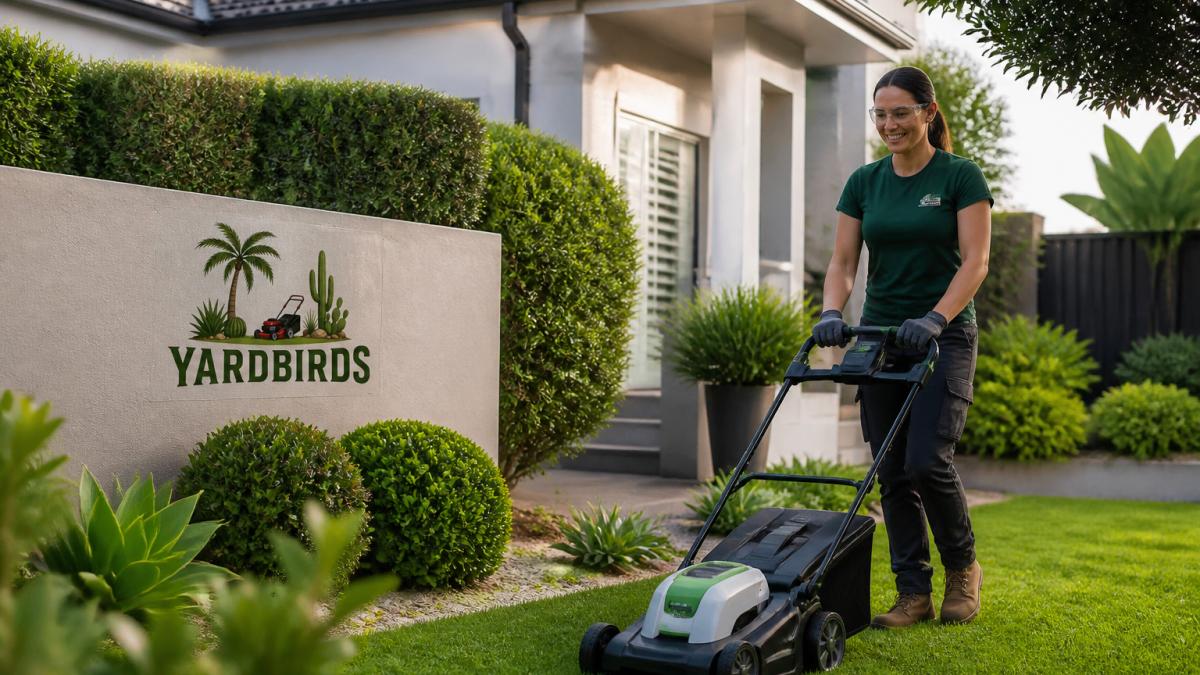
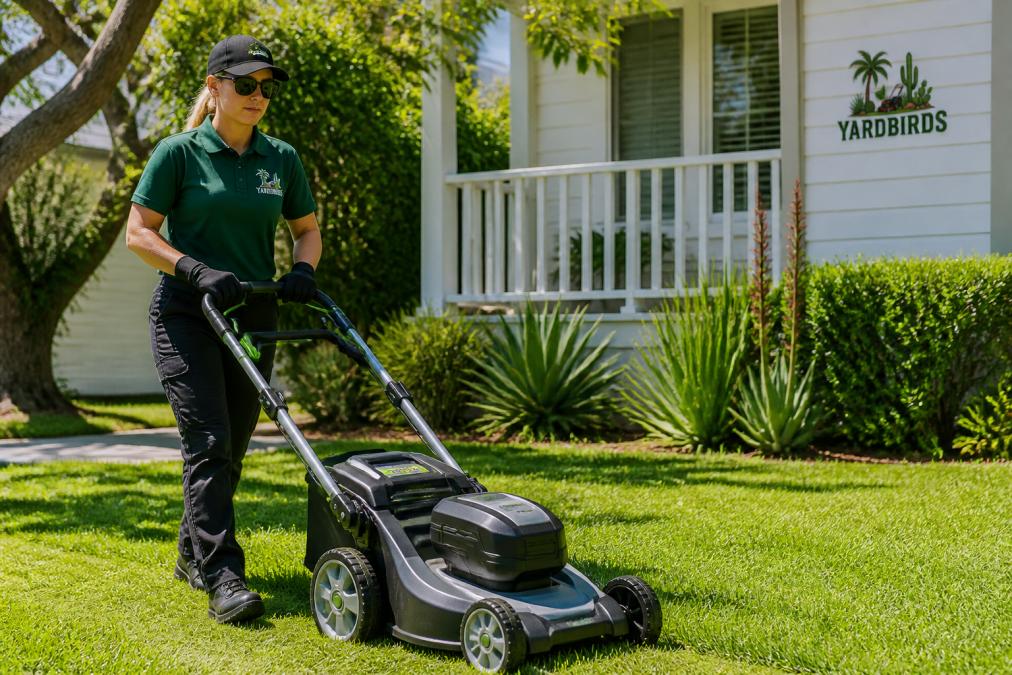
Ask about their equipment. Electric mowers are quieter, produce zero emissions, and cut more cleanly than petrol alternatives. Confirm whether they mulch clippings and whether edging and trimming are included.
Reliability is non-negotiable. Look for consistent scheduling and read customer feedback for patterns of missed appointments or inconsistent quality.
Ask about their approach to Sydney's clay soils. A service that adjusts technique to local conditions delivers better results than one-size-fits-all operators.
How to Fix Patchy Lawn in Sydney Clay Soil
Patchy lawn in Sydney's clay soils stems from poor drainage, compaction, and nutrient deficiency. Understanding the cause helps you fix it properly.
Clay soil compacts easily under foot traffic, reducing water infiltration and root development. Aeration loosens the soil, improving drainage and allowing deeper root establishment.
Clay retains moisture, so water deeply but less frequently to avoid waterlogging. This encourages deeper root growth and stronger turf.
Patchy areas indicate nutrient depletion. A soil test reveals what's missing. Most Sydney lawns benefit from nitrogen in spring and autumn, applied after mowing and before rain.
Overseed bare patches in autumn or early spring with varieties suited to your conditions. Professional lawn mowing services often include tailored overseeding recommendations.
Garden Maintenance for Strata Properties
Strata properties require structured maintenance plans and reliable partners to prevent neglect and conflict over shared outdoor spaces.
Establish clear guidelines with your body corporate: mowing frequency, edging style, and clipping removal. Written standards prevent disputes.
A professional service that reports progress with photos and flags concerns builds trust with multiple stakeholders and justifies the investment.
Choose a service experienced with strata complexes that understands scheduling flexibility, access restrictions, and body corporate liaison.
Regular maintenance prevents expensive problems. Neglected spaces attract pests and damage appeal; consistent professional care costs less than remedial work later.
Benefits of Electric Lawn Mowing Equipment
Equipment choice directly affects lawn health. Electric mowers are now standard for professional operators committed to performance and sustainability.
How Equipment Affects Grass Health
Petrol mowers tear grass, leaving ragged edges that brown and invite disease. Electric mowers deliver consistent blade speed and cleaner cuts, healing faster and promoting thicker turf.
Professional electric mowers feature mulching decks that return nitrogen and organic matter to soil, improving structure, particularly important in Sydney's clay soils. A service using mulching-capable equipment actively improves your soil.
Noise and Timing Flexibility
Electric mowers run at 75-80 decibels versus 95-100 for petrol, allowing early morning or late afternoon mowing without disturbing neighbours, valuable for strata properties. (Source: Australian Bureau of Meteorology)
Zero Emissions and Sustainability
Electric equipment eliminates fuel spills, exhaust fumes, and air pollution. A professional electric mower eliminates roughly 50 litres of petrol emissions per season compared to petrol alternatives.
Reliability and Maintenance
Electric mowers eliminate seasonal servicing and mechanical failures, ensuring consistent service quality and predictable scheduling.
Battery technology has improved dramatically. Modern lithium batteries deliver 1-2 hours runtime, sufficient for most residential properties without mid-job changes. Runtime degrades gradually over 3-5 years (typically to 80% by year three), but professional services manage battery rotation and replacement as part of their operating cost. You don't bear this expense.
Power and Performance in Sydney Conditions
Modern electric mowers handle thick grass, overgrown patches, and challenging terrain as effectively as petrol models. They're particularly effective on clay soils where compaction creates resistance, the consistent torque of electric motors doesn't bog down like fuel-starved petrol engines. In summer heat, when petrol engines lose power due to fuel vaporisation, electric mowers maintain consistent performance. This is especially relevant in Sydney's climate, where January-February heat stresses both grass and equipment.
Safety and Health Benefits
For professional operators working 30+ hours weekly, the cumulative health benefits are significant. No fuel to store or handle (reducing burn and poisoning risk), no fumes to inhale (reducing respiratory exposure), quieter operation means better hearing of surrounding sounds (reducing accident risk). Electric mowers are also lighter than equivalent petrol models, reducing operator fatigue and injury risk over long working days. A healthier, safer operator is more attentive and delivers better work.
How to Schedule Your First Service
Booking professional lawn mowing should be straightforward, but the decision to outsource often hinges on whether the cost and convenience justify the time you'd spend doing it yourself. Understanding the real trade-off helps you commit confidently.
The DIY vs. Professional Cost-Benefit Calculation
Most homeowners underestimate the true cost of DIY lawn mowing, which includes equipment purchase and maintenance, fuel or electricity, and storage space. Then factor your time: a typical residential property takes 1-2 hours weekly during growing season. This time commitment adds up annually.
Professional services eliminate equipment cost, maintenance, storage, and reclaim valuable hours annually. For many households, professional service can be a cost-effective solution, especially when accounting for the consistency, expertise, and insurance protection a professional brings.
What to Confirm When You First Contact a Service
Start by requesting a free quote or site assessment. A reliable operator will visit your property, assess lawn condition, soil type, access points, and any obstacles (trees, garden beds, parked cars). They'll ask about your property size, current condition, and whether you have specific goals, thicker turf, weed control, sustainability priorities. This conversation reveals whether they understand local conditions and whether they're the right fit.
Discuss scheduling flexibility. Do they offer weekly, fortnightly, or monthly options? Can they accommodate your preferred day and time window? Professional services should adapt to your schedule, not force rigid slots. If you travel seasonally or have unpredictable work hours, confirm how they handle cancellations, rescheduling, and whether they pause service during quieter months without penalty.
Clarity on inclusions prevents frustration. Ask explicitly: Does mowing include edging and trimming around trees and garden beds? Are clippings removed, mulched, or left on-site? How do they handle weeds, removed or mowed? Do they offer seasonal adjustments (less frequent in winter, more in spring)? Will they flag issues like bare patches, pest damage, or soil compaction that need attention? A service that communicates proactively about lawn health, not just mowing completion, adds real value.
Confirm insurance and credentials. Ask for proof of current public liability insurance and understand what's covered, property damage, injury, equipment damage. A professional operation provides this documentation without hesitation; it's standard business practice. Check whether they're registered with relevant industry bodies or hold any relevant certifications.
Communication and Accountability
How will they confirm appointments? Do they send SMS, email, or phone confirmation? Can you reschedule easily if plans change?
Seasonal Lawn Care Calendar for Optimal Results
Sydney's climate creates distinct seasonal rhythms. Understanding what your lawn needs in each season prevents problems and keeps your turf healthy year-round.
Frequently Asked Questions
What should I look for when booking a professional lawn mowing service?
Prioritise reliability, insurance, and local expertise. Check that the service is fully insured and police checked. Ask about their equipment and whether they offer flexible scheduling around your needs. Confirm they understand your specific garden requirements, whether that's handling clay soil challenges, managing strata complexities, or delivering eco-friendly practices. A good service will provide a free quote and communicate clearly about frequency and what's included.
How often should I schedule lawn mowing for my property?
Frequency depends on your lawn's growth rate, season, and desired appearance. Most residential properties benefit from fortnightly service during active growing seasons (spring and autumn) and weekly during summer. Winter typically requires less frequent visits. The 1/3 rule applies: never remove more than one-third of the grass blade in a single cut to maintain lawn health. Your service provider can recommend the ideal schedule based on your specific conditions.
Are there eco-friendly lawn mowing options available?
Yes. Electric lawn mowing equipment is increasingly available and offers significant environmental benefits. All-electric mowers produce zero emissions, operate quietly, and reduce noise pollution for you and your neighbours. They're powerful enough to handle thick growth and Sydney's summer weeds, despite misconceptions. Eco-friendly services also often include sustainable practices like mulching clippings, proper waste disposal, and chemical-free maintenance approaches that protect your garden's long-term health.
How do I prepare my garden for a professional mowing service?
Clear the lawn of loose objects like toys, branches, and garden furniture that could damage equipment or pose safety hazards. If you have specific areas needing attention or plants to avoid, point these out to your service provider beforehand. For new customers, a brief walk-through helps the team understand your preferences and any tricky spots. If your lawn hasn't been maintained recently, let your provider know so they can adjust their approach for overgrown sections.