 listicle
Best Lawn Care for Sydney: 7 Services Compared
Table of Contents
- Quick Comparison: Best Lawn Care Services for Sydney
- YardBirds Sydney: Eco-Friendly All-Electric Lawn Mowing
- How to Fix Patchy Lawn in Sydney Clay Soil
- Lawn Care Checklist for Residents: Year-Round Maintenance
- Professional vs. DIY Lawn Care: Cost and Complexity
- Seasonal Lawn Care Guide for Sydney's Climate
- How to Choose the Right Lawn Care Service for Your Needs
- Frequently Asked Questions
Last Updated: September 5, 2026
Quick Comparison: Best Lawn Care Services for Sydney
Finding the right lawn care for Sydney means balancing reliability, expertise, and environmental responsibility. Whether you're managing a residential property, strata complex, or commercial space, the quality of your lawn care directly impacts curb appeal and property value.
This guide compares lawn maintenance approaches, from professional services to DIY strategies, so you can choose what works for your situation, budget, and values.
| Service Type | Best For | Key Advantage | Primary Cost Factor |
|---|---|---|---|
| Full-service eco-friendly providers | Environmentally conscious homeowners | All-electric, low-noise, tailored to local climate | Comprehensive care |
| Award-winning specialists | Quality-focused property owners | Verified industry recognition and expertise | Premium service standards |
| Local marketplace platforms | Budget-conscious DIYers | Wide provider choice and competitive pricing | Individual tasker rates |
| Educational resources | DIY enthusiasts | Expert guidance on soil and lawn health | Mostly free content |
| Turf management specialists | Long-term lawn sustainability | Year-round planning and health focus | Ongoing maintenance plans |
YardBirds Sydney: Eco-Friendly All-Electric Lawn Mowing
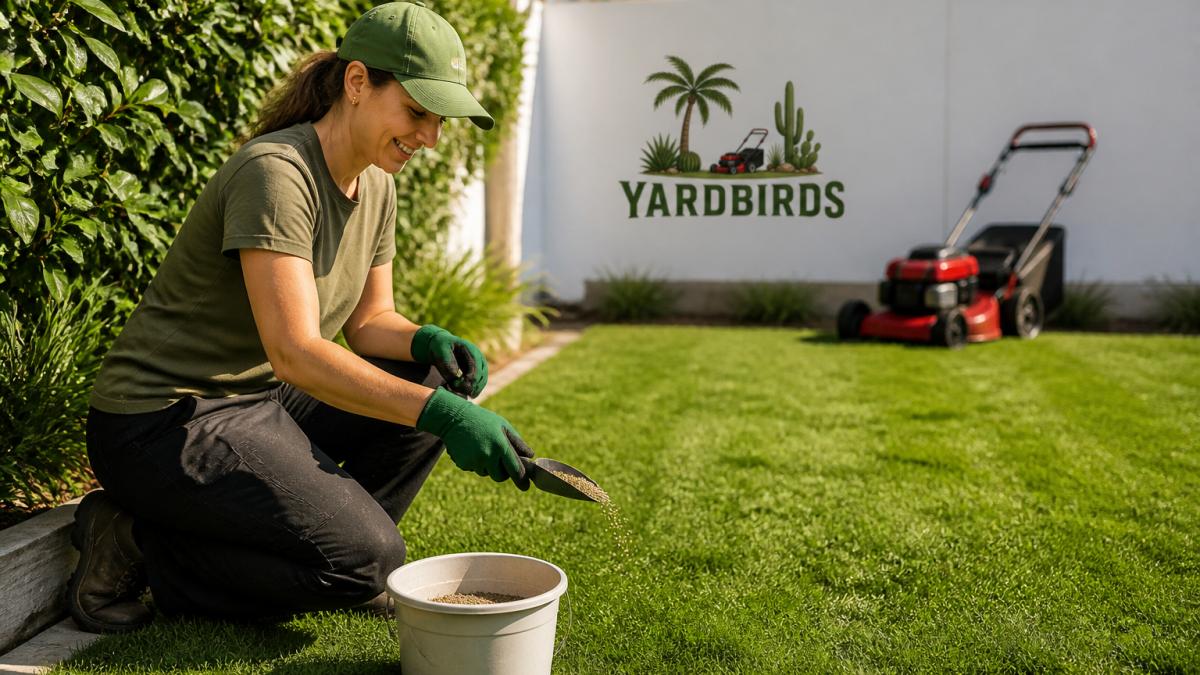
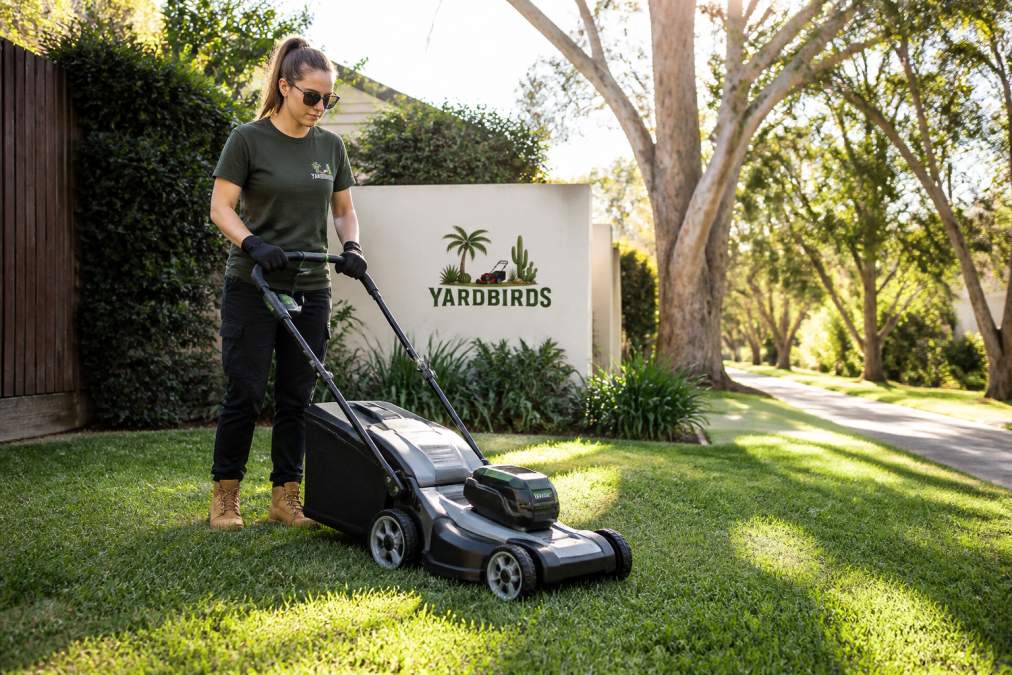
YardBirds Sydney stands out as the top choice for homeowners and strata managers who prioritize environmental responsibility alongside professional results. This female-founded business operates exclusively with modern, all-electric equipment across Sydney's Inner West, delivering climate-conscious service without the noise and emissions of traditional petrol-powered mowers.
YardBirds assesses your specific grass type, Buffalo, Couch, or Kikuyu, and adjusts their approach accordingly. They're fully insured with 12+ years of combined experience across residential, strata, and commercial properties.
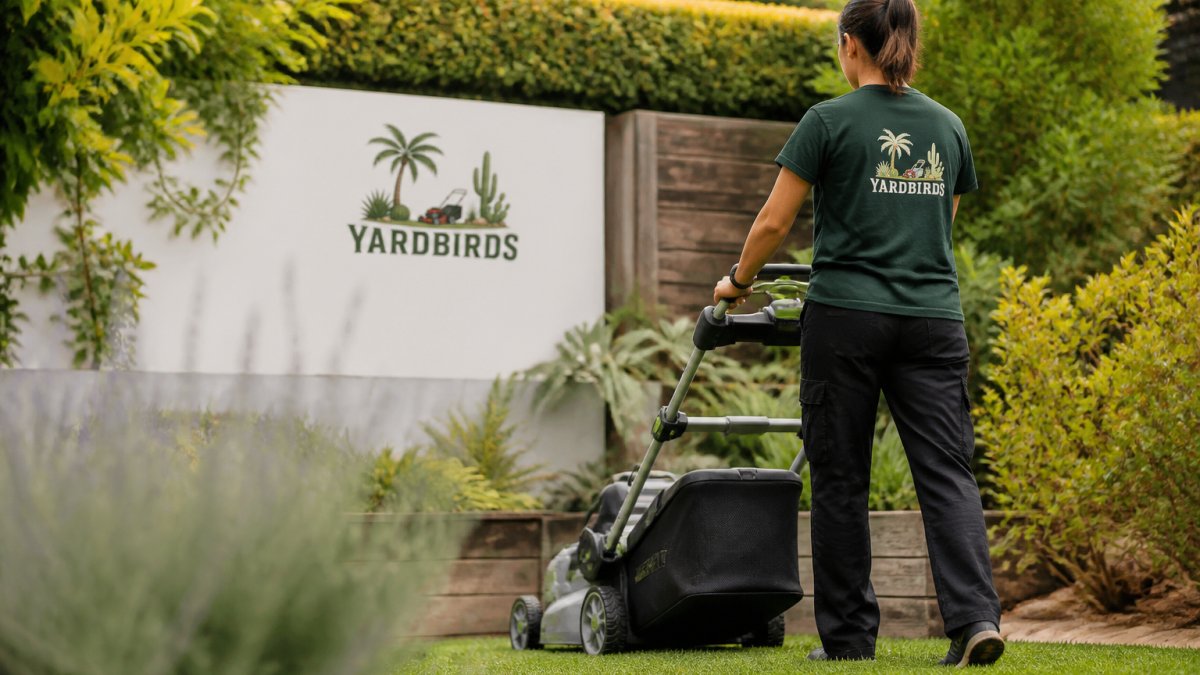
All-electric equipment eliminates emissions and noise, resolving conflicts in strata properties while aligning with sustainability values.
Contact YardBirds Sydney for a free quote to discuss your specific lawn care needs and how their eco-friendly approach fits your property.
How to Fix Patchy Lawn in Sydney Clay Soil
Patchy lawns in Sydney often stem from clay soil compaction and poor drainage. Diagnose whether bare patches result from soil issues, mowing height, pests, disease, or water stress.
Sydney's clay-heavy soil compacts easily, restricting root growth and water penetration. Address this with immediate fixes and long-term soil management tailored to your grass type.
Repair protocols by grass type:
Buffalo grass tolerates compaction and recovers quickly. Repair: aerate in autumn (March-May) to 75-100mm, apply 25mm top dressing of sand-compost mix, overseed with Buffalo seed or plugs. Keep moist (not waterlogged) for 3-4 weeks germination. Avoid mowing for 6 weeks post-seeding.
Couch grass establishes in 2-3 weeks but is sensitive to waterlogging. Repair: aerate to 75mm, top-dress with 50:50 sand-compost blend, lay turf or seed. Water moderately and ensure surface drainage. If patches persist, hire a professional to assess deeper remediation needs.
Kikuyu grass is drought-tolerant but struggles in poorly drained clay. Repair: aerate to 75mm, apply 15-20mm sand-compost top dressing, overseed with Kikuyu seed (2-3 weeks germination). Reduce watering post-repair; over-irrigation promotes fungal issues.
Water restriction compliance during repair:
Sydney's water restrictions vary by council and season. During periods of Level 2 or higher restrictions, hand-watering newly seeded or turfed areas is typically permitted under "garden establishment" exemptions, but check your local council's rules before starting repair work. The NSW Office of Water provides current restrictions by postcode at NSW water restrictions by region. Plan major repairs (aeration, overseeding, turfing) for autumn (March-May) when natural rainfall is more reliable, reducing reliance on hand-watering during establishment.
Long-term clay management:
Apply annual autumn top dressing (25-50mm) over 2-3 years to improve structure. Aim for 10-15% organic content in your blend. If compaction persists despite repeated aeration, hire a professional for soil testing to identify pH imbalances, nutrient deficiencies, or whether soil replacement is needed.
Resources like MyHomeTurf's regional lawn care guides provide detailed advice on addressing clay soil challenges specific to Sydney conditions, and your local council's water management team can clarify current restrictions before you begin.
Lawn Care Checklist for Residents: Year-Round Maintenance
A structured maintenance checklist prevents small issues from becoming expensive problems.
Spring (September-November):
- Aerate compacted areas
- Overseed thin or bare patches
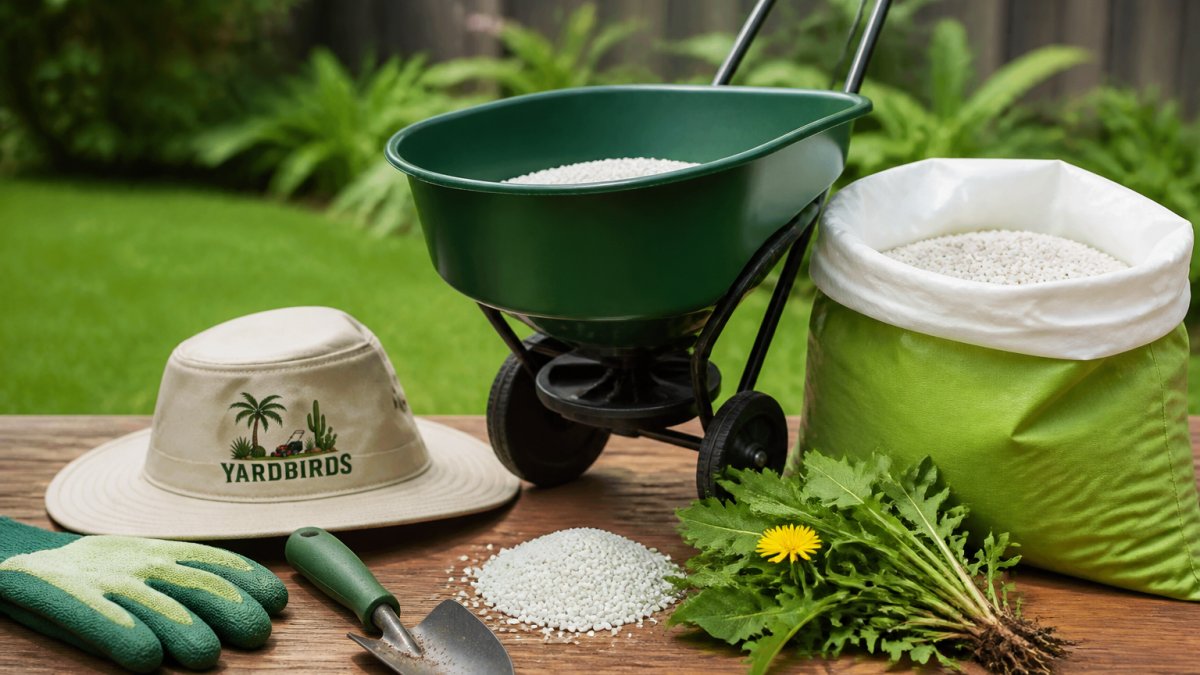
- Apply slow-release fertiliser
- Increase mowing frequency as growth accelerates
- Check irrigation systems for winter damage
Summer (December-February):
- Mow weekly at 40-50mm height (longer grass retains moisture)
- Water deeply 2-3 times per week during dry spells
- Monitor for heat stress and drought damage
- Watch for summer pests like grubs and armyworms
- Avoid fertilising during peak heat
Autumn (March-May):
- Reduce mowing frequency as growth slows
- Aerate and top-dress for winter recovery
- Clear fallen leaves to prevent disease
- Apply autumn fertiliser to strengthen roots
- Prepare irrigation for reduced watering needs
Winter (June-August):
- Mow every 2-3 weeks at 30-40mm height
- Reduce watering significantly
- Address moss and winter weeds
- Check drainage to prevent waterlogging
- Plan spring renovation projects
Professional vs. DIY Lawn Care: Cost and Complexity
The decision between professional lawn care and DIY management hinges on three factors: time, expertise, and budget. A realistic cost-benefit analysis requires understanding what each path actually demands.
DIY lawn care: true costs and time commitment
DIY mowing appears cheap until you factor in equipment, maintenance, and labour. A quality rotary mower costs $400-$800 new; a ride-on mower, $2,000-$5,000. Add an aerator ($150-$400 to buy, or $50-$80 to hire per day), a top-dressing spreader ($100-$300), and basic tools (rake, shovel, edger), and your startup investment reaches $1,500-$2,500 for a comprehensive setup. Annual maintenance, spark plugs, blade sharpening, oil changes, repairs, adds $100-$300 yearly.
Routine mowing takes 1-2 hours weekly during spring and summer; seasonal tasks add 8-12 hours yearly. Total: roughly 40-50 hours annually. At $30-$50 per hour opportunity cost, DIY labour costs $1,200-$2,500 per year.
True DIY annual cost: $1,400-$2,800 (equipment depreciation, maintenance, labour).
Professional lawn care: service tiers and pricing
Professional pricing varies widely by scope and provider type:
- Basic mowing only (weekly, spring-autumn): $40-$70 per visit, or $160-$280 monthly. Annual cost for 16-20 visits: $640-$1,400.
- Mowing + seasonal care (mowing + 2-3 aeration/top-dressing visits per year): $1,200-$2,000 annually.
- Full-service management (mowing, aeration, top dressing, fertilising, pest/disease monitoring): $2,500-$4,500 annually depending on property size and service frequency.
- Eco-friendly or award-winning specialists (all-electric equipment, tailored grass-type assessment, strata expertise): $1,800-$3,500 annually for comprehensive care.
Marketplace platforms like Airtasker's Sydney lawn care marketplace show transparent pricing from independent contractors; quotes typically range $50-$100 per visit for basic mowing on residential properties, with seasonal tasks (aeration, top dressing) charged separately at $150-$400 per job.
The hybrid approach: cost-effective and practical
A hybrid approach hires professionals for seasonal tasks (aeration, top dressing, overseeding) while you handle routine mowing. You manage: weekly mowing, watering, leaf clearing (~$600-$1,000 annually). Professionals handle: 3-4 seasonal visits ($600-$1,200 annually). Hybrid total: $1,200-$2,200 annually.
When professional care pays for itself:
- Strata properties: Professionals manage complexity across multiple residents and regulations. DIY is impractical.
- Persistent problems: Professional soil assessment often reveals issues DIY tools miss, preventing years of wasted effort.
- Time poverty: If 40-50 annual DIY hours are unrealistic, professional mowing is cheaper than your time.
- Environmental priorities: Eco-friendly providers eliminate emissions and noise, aligning with sustainability values.
Professional services bring verified expertise and accountability. Award-winning providers signal high standards and insurance coverage. Independent contractors vary in quality; review ratings and ask for references. DIY gives control but no recourse if something goes wrong.
Decision framework:
Choose full professional care if you value consistency, have strata complexity, or lack time. Choose hybrid if you enjoy hands-on work but want expert seasonal help. Choose DIY only if you have time and will sustain 40-50 hours annually. The best option is the one you'll actually maintain.
Seasonal Lawn Care Guide for Sydney's Climate
Spring (September-November): Increase mowing to weekly. Apply nitrogen fertiliser. Aerate and overseed patchy areas.
Summer (December-February): Raise mowing height to 40-50mm. Water deeply 2-3 times weekly during dry spells. Avoid heavy fertilising. Watch for grubs and armyworms.
Autumn (March-May): Aerate, apply slow-release fertiliser and top dressing, overseed thin areas, clear leaves.
Winter (June-August): Mow every 2-3 weeks at 30-40mm. Reduce watering. Address moss and weeds. Check drainage.
According to Sydney Lawn and Turf's seasonal planning guidance, year-round scheduling prevents crisis management and keeps your lawn healthy through all seasons.
How to Choose the Right Lawn Care Service for Your Needs
Match your priorities, environmental values, budget, property type, against what each service offers.
For environmentally conscious homeowners: Eco-friendly providers using all-electric equipment eliminate emissions and noise. YardBirds Sydney specialises in this approach, serving residential and strata properties across the Inner West with tailored care for local grass varieties.
For quality-focused property owners: Award-winning specialists bring verified expertise. The Lawn Guys Co.'s 2026 Quality Business Awards recognition signals high service standards and accountability. These providers cost more but deliver measurable quality.
For budget-conscious homeowners: Marketplace platforms like Airtasker offer competitive pricing from independent contractors. You'll find quotes ranging widely based on property size and service scope. The tradeoff: quality varies between individual taskers, so review ratings carefully.
For DIY learners: Educational platforms like MyHomeTurf's expert lawn care resources provide region-specific guidance on soil health, grass varieties, and seasonal timing. Most content is free, with optional products available.
For strata and commercial properties: Look for providers experienced in managing multiple stakeholders and common areas. Strata complexity, balancing resident preferences, budget constraints, and council regulations, requires specialists who understand that environment.
Ask potential providers: How do you ensure scheduling consistency? How do you tailor care to my garden's specific needs? Can you provide proof of insurance? How do you handle communication when I'm unavailable?
Frequently Asked Questions
What makes the best lawn care for Sydney different from other regions?
Sydney's subtropical climate, high humidity, and clay-heavy soils require tailored lawn maintenance. Local grass varieties like Buffalo, Couch, and Kikuyu thrive with specific mowing heights, aeration schedules, and weed control strategies suited to warm, wet summers and mild winters. Professional services familiar with these conditions deliver better results than generic approaches, ensuring your lawn adapts to seasonal rainfall patterns and water restrictions.
How often should I mow my lawn during the growing season in Sydney?
During spring and summer (October to March), mow every 7-10 days when grass is actively growing. In autumn and winter, reduce frequency to every 2-3 weeks as growth slows. Consistent mowing height of 25-40mm depending on grass type prevents stress, reduces weeds, and maintains lawn health. Overgrown patches invite pests and fungal issues, so regular maintenance prevents costly repairs later.
Are electric lawn mowing services as effective as petrol-powered equipment?
Modern all-electric mowers deliver equivalent cutting power for residential and small commercial properties, with advantages: zero emissions, quieter operation (ideal for strata and neighbours), lower maintenance costs, and consistent performance. They handle typical Sydney lawns effectively, including thick growth and seasonal weeds. The main limitation is battery runtime on very large properties, but for most residential and strata applications, electric equipment is fully effective and increasingly preferred for sustainability.
How do I improve drainage in heavy clay soil for better lawn health?
Clay soil common in Sydney retains water, causing root rot and fungal issues. Improve drainage by aeration (creating air pockets), top-dressing with compost or sand-based products, and adding organic matter to break up compaction. Regular scarifying removes dead thatch that traps moisture. Professional lawn aeration services use specialised equipment to penetrate clay effectively. Combining these methods with proper mowing height and appropriate watering schedules restores soil structure over time.
Choosing the best lawn care for Sydney means matching your priorities to the right service model. Whether you opt for full professional management, DIY with expert guidance, or a hybrid approach, consistency and understanding local conditions are what transform a patchy, stressed lawn into a thriving outdoor space. Get a free quote from YardBirds Sydney to see how their eco-friendly, tailored approach works for your property's specific needs.