 listicle
Best Electric Garden Tools for Weeds: 2026 Guide
Table of Contents
- Why Switch to Electric Garden Tools for Weed Control?
- The Best Electric Garden Tools for Weeds Compared
- Cordless Grass Trimmers for Weeds: A Closer Look
- Effective Electric Weed Removal Techniques
- Building a Battery-Powered Garden Maintenance Toolkit
- What to Look For: Power, Runtime, and Ergonomics
- Maintenance and Safety Tips for Your Electric Equipment
- Which Electric Tool Is Right for Your Garden?
- Frequently Asked Questions
Last Updated: September 7, 2026
Petrol-powered gardening gear has dominated Australian sheds for decades, but the shift to cordless electric garden tools is now impossible to ignore. When it comes to tackling weeds specifically, the best electric garden tools for weeds combine the torque to slice through thick growth with the runtime to finish the job. This guide breaks down the top battery-powered options for 2026 and how to build a toolkit that handles tough summer growth without the noise, fumes, or maintenance of petrol engines.
The real advantage of modern electric garden tools isn't just environmental, though that matters. The latest lithium-ion platforms deliver instant torque, consistent power until the battery drains, and far less vibration than their petrol counterparts. Many gardeners find that switching to cordless equipment changes how they approach weed control entirely.
Below, we'll compare five leading models, explain the techniques that separate effective weed removal from mere trimming, and show you exactly what to look for in power, runtime, and ergonomics.
Why Switch to Electric Garden Tools for Weed Control?
The most compelling reason to go electric is the elimination of fuel mixing, pull cords, and seasonal maintenance. Battery-powered tools start instantly and run quietly enough to use early in the morning without disturbing neighbours, which matters in areas where property lines sit close together.
Weed control specifically benefits from electric power because weeds demand precision and frequent attention, not raw brute force. A cordless trimmer lets you make repeated passes along paths, fences, and garden beds without the vibration fatigue of a petrol engine at full throttle.
There is also a genuine environmental case. Zero-emission operation at the point of use keeps local air cleaner, and modern brushless motors sip power efficiently from lithium-ion batteries. According to sustainability guidance from the NSW Environment Protection Authority, reducing petrol-powered equipment use lowers both noise pollution and airborne particulates in residential areas.
The Best Electric Garden Tools for Weeds Compared
The market splits into two camps: dedicated trimmers and brush cutters, and multi-purpose tools that handle several jobs. For pure weed control, a quality grass trimmer with the right head is the workhorse. Here are the leading options for 2026.
| Tool |
|---|
| EGO POWER+ 22-Inch Select Cut Mower |
| Ryobi 18V ONE+ Grass Trimmer |
| Husqvarna 130C Battery Trimmer |
| DeWalt 54V XR FLEXVOLT Trimmer |
| iToolMax 3-in-1 Weed Eater & Edger |
| Starting Price |
|---|
| $999 |
| $129 |
| $299 |
| $449 |
| $199 |
| Battery Platform |
|---|
| EGO 56V ARC |
| Ryobi 18V ONE+ |
| Husqvarna battery system |
| DeWalt FLEXVOLT |
| Proprietary |
| Best For |
|---|
| Large lawns with heavy weed pressure |
| Routine maintenance on small blocks |
| Residential users wanting pro build |
| Heavy, woody weed clearing |
| Small gardens, varied tasks |
| Standout Feature |
|---|
| Multi-blade Select Cut system |
| Massive shared battery ecosystem |
| Low noise, brushless motor |
| Petrol-like power output |
| Trims, edges, and mows |
EGO POWER+ 22-Inch Select Cut Self-Propelled Mower
For large properties where weeds invade the lawn itself, this mower handles what trimmers cannot. The Select Cut multi-blade system lifts grass and weeds before cutting, producing a cleaner finish than single-blade designs. It runs on the EGO 56V ARC battery platform, and the self-propelled drive with variable speed control makes long sessions far less tiring.
What works: High torque that chews through dense, damp growth without stalling, and quiet operation compared with any petrol mower. What doesn't: the initial investment is significant, and you will want a second battery for larger blocks.
Ryobi 18V ONE+ Grass Trimmer
This is the sensible starting point for most homeowners. The Ryobi 18V ONE+ platform is the largest battery ecosystem in the country, meaning one battery powers trimmers, blowers, edgers, and dozens of other tools. The trimmer itself features an adjustable cutting width, a telescopic shaft for height adjustment, and an auto-feed spool that keeps the nylon line advancing.
It is lightweight and easy to manoeuvre, ideal for routine weed maintenance along fences and paths. The limitation is clear: it lacks the torque for woody, thick-stemmed weeds.
Husqvarna 130C Battery Trimmer
Husqvarna brings its commercial heritage to the residential market with this battery trimmer. The brushless motor delivers efficient power and extended runtime, while the design focuses on reducing user fatigue. Noise levels are impressively low, making it suitable for strata blocks and townhouse complexes.
Build quality is excellent, and the ergonomics are the best in this comparison. The catch is that the battery and charger are often sold separately, which pushes the real cost higher than the sticker price suggests.
DeWalt 54V XR FLEXVOLT Brushless Line Trimmer
When weeds have gotten away from you, this is the tool that fights back. The 54V FLEXVOLT system produces power comparable to a petrol engine, and the brushless motor maintains efficiency even under heavy load. The split-shaft design makes transport and storage easier.
It is heavier than 18V models, and you will feel that weight at the end of a long session. But for clearing blackberries, thistles, and established woody weeds, this is the most capable trimmer on the list.
iToolMax 3-in-1 Cordless Weed Eater & Edger
This multi-tool appeals to owners of small gardens who want one device instead of three. It transitions between trimming, edging, and mowing small areas, with an adjustable head angle and telescopic handle.
The versatility is genuine, and the space-saving design suits apartment storage. Availability in major retail chains is limited, so you will likely need to order online.
Cordless Grass Trimmers for Weeds: A Closer Look
Cordless grass trimmers for weeds have become the default choice for Australian gardeners, and for good reason. A quality 36V or 54V model now matches the cutting performance of a 30cc petrol trimmer for most residential weed control tasks.
The key difference comes down to runtime management. A petrol trimmer runs until the tank is empty, while a battery trimmer demands planning around charge cycles. Most manufacturers quote runtime based on light trimming, so expect roughly half the advertised time when cutting thick weeds at full power.
If you already own tools from a particular platform, staying within that ecosystem means you can share batteries across devices. The Ryobi 18V ONE+ system excels here, as does DeWalt's FLEXVOLT range.
Effective Electric Weed Removal Techniques
Owning the right tool is only half the battle. Technique determines whether you merely cut the tops off weeds or actually suppress them over time.
Choosing the Right Attachment
The cutting head makes the difference between a clean job and a mangled mess. Nylon line is perfect for soft, annual weeds and grass, and it is safe to run against fences and tree trunks. For established perennial weeds with woody stems, switch to a metal blade or a heavy-duty nylon head with thicker line. Many quality trimmers accept both, so check compatibility before you buy.
Mastering the Technique
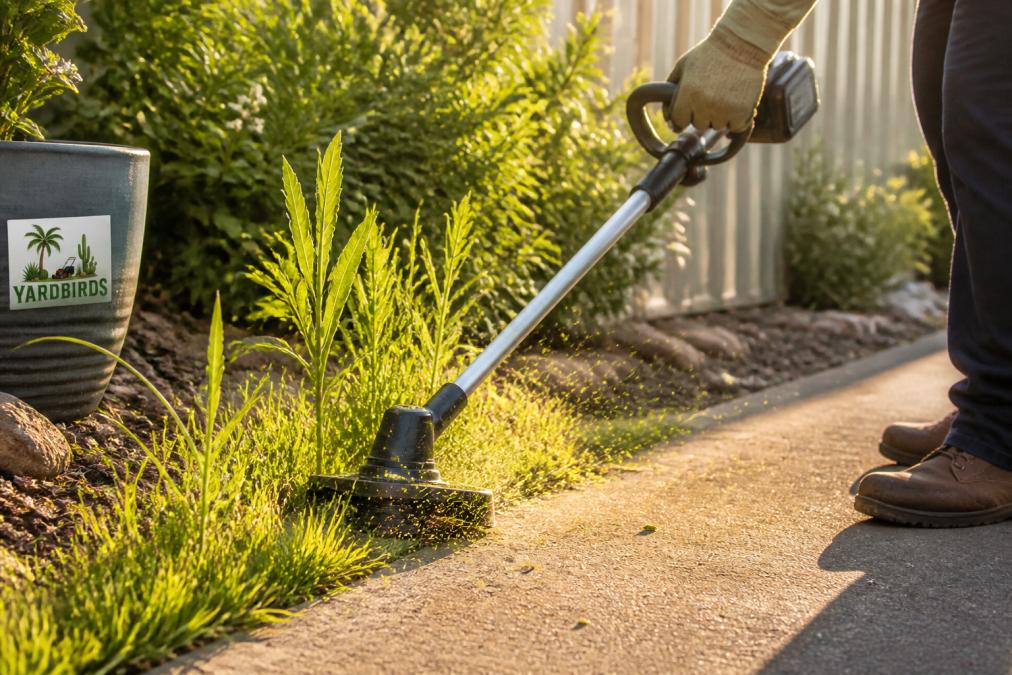
The angle of the cutting head matters more than most people realise. Hold the trimmer so the line strikes the weed at its base, not the middle. Slicing low cuts the growing point and stresses the plant, while cutting high just removes foliage and encourages regrowth.
For weeds growing against fences and walls, tilt the head to run the line vertically and trim flush to the surface. This prevents the weed from establishing a foothold in the gap between the fence and the soil.
Building a Battery-Powered Garden Maintenance Toolkit
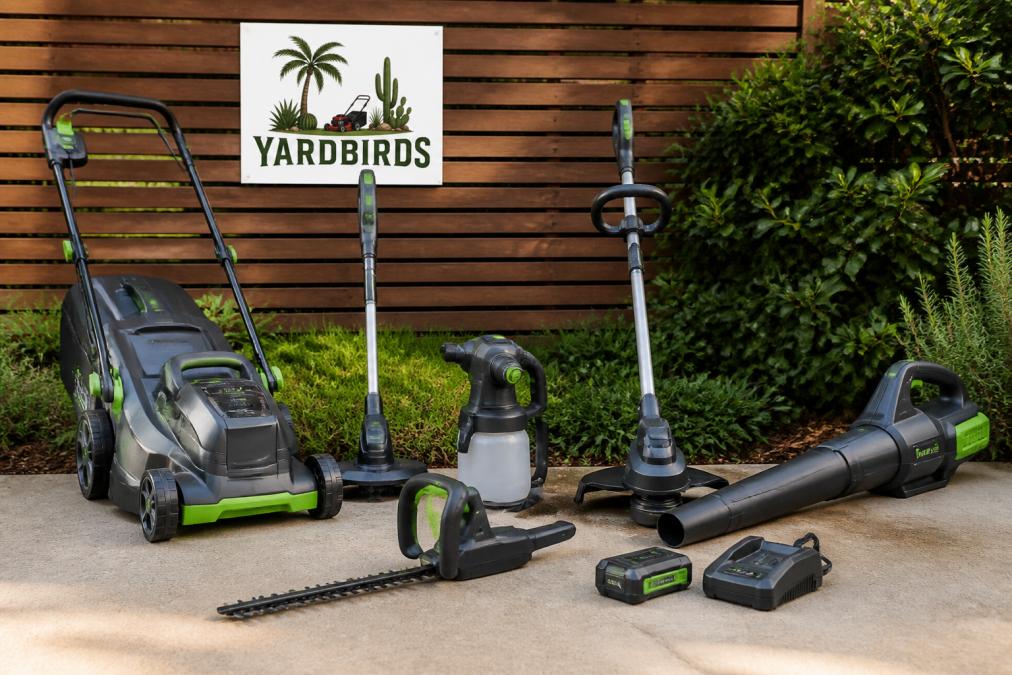
A battery-powered garden maintenance toolkit starts with one platform and expands from there. Choose your battery system first, then buy tools that share it, so each additional tool comes as a bare unit without a battery and charger.
Start with a grass trimmer for weed control and edge maintenance. Add a leaf blower for path and driveway cleanup, then a hedge trimmer if you have shrubs. For lawn care, a cordless mower completes the set.
Consider repairability and spare parts availability before committing to a brand. Tools that can be serviced locally, with replacement heads, lines, and batteries readily available, will last far longer than disposable units. Check whether the brand sells spare parts directly and whether local dealers stock them.
What to Look For: Power, Runtime, and Ergonomics
Voltage tells you the potential power ceiling, but it is not the whole story. A brushless motor delivers more torque and efficiency than a brushed motor at the same voltage, so prioritise brushless designs. Look for a minimum of 36V for general weed control.
Battery capacity, measured in amp-hours, determines runtime. A 2.0Ah battery suits small gardens and quick passes, while 4.0Ah or higher handles extended sessions. Buying a larger battery upfront often costs less than upgrading later.
Ergonomics separates tools you use happily from those that sit in the shed. Check the weight distribution, which affects how the tool balances in your hands. Look for vibration reduction features, adjustable handles, and telescopic shafts that let you match the tool to your height.
Maintenance and Safety Tips for Your Electric Equipment
Electric tools demand less maintenance than petrol, but they are not zero-maintenance. After each use, wipe down the cutting head and shaft to remove plant sap and debris. Replace the nylon line when it gets short, as a worn line strains the motor.
Battery care extends lifespan significantly. Store batteries at room temperature, avoid leaving them fully discharged for long periods, and use the manufacturer's charger. Lithium-ion batteries degrade fastest when exposed to heat, so keep them out of direct sunlight.
Safety gear matters with any power tool. Wear eye protection, sturdy footwear, and long pants when trimming, as the line can throw debris at significant speed. Hearing protection is less critical with electric tools than petrol, but prolonged use still warrants basic protection. Check for safety guidance on machinery operation from Safe Work Australia to ensure you follow recommended practices for power equipment.
Which Electric Tool Is Right for Your Garden?
Match the tool to the problem, not the other way around. For small gardens with routine weed pressure along paths and fences, the Ryobi 18V ONE+ offers the best value. For larger blocks where weeds invade the lawn itself, the EGO mower earns its higher price through superior cutting performance.
Heavy weed infestations with woody stems demand the DeWalt 54V FLEXVOLT, which has the torque to power through growth that would stall lesser tools. The Husqvarna 130C suits those who prioritise build quality and low noise, particularly in strata or townhouse settings.
For those who would rather skip the equipment research entirely, professional services deliver results without the upfront investment. YardBirds Sydney uses modern, all-electric equipment across the Inner West, handling everything from routine mowing to overgrown weed control with zero-emission tools. We are offering 10% off Spring Special Weed and Feed.
Choosing the right electric garden tools for weeds comes down to matching power to your specific weed pressure, battery ecosystem to your other tools, and ergonomics to your body. The technology has reached the point where cordless equipment genuinely replaces petrol for most residential work, with cleaner operation and lower maintenance. If you would rather spend weekends enjoying your garden than maintaining it, YardBirds Sydney brings the all-electric approach to your property, with experienced teams, proper insurance, and a 97% customer satisfaction rate across more than 500 clients. read more about sustainable gardening practices and then get started with YardBirds Sydney for a free quote on transforming your outdoor space.
Frequently Asked Questions
What is the best electric tool for removing weeds from pavers?
A cordless grass trimmer fitted with a nylon line is the most effective electric tool for weeds in pavers and cracks. The line can reach into narrow gaps without damaging the surrounding surface. For persistent weeds, use a metal brush cutter blade attachment, but be careful as it can chip paver edges. Always check your tool's manual for approved attachments.
Are battery-powered weed trimmers effective for thick weeds?
Yes, but power matters. For thick or woody weeds, you need a high-voltage model like a 54V DeWalt or a dedicated brush cutter. These tools provide the torque to cut through dense growth without stalling. Standard 18V trimmers are best suited for routine maintenance and lighter weeds. Look for a brushless motor, which offers more power and longer runtime than a brushed motor.
What features should I look for in a cordless garden tool for weed removal?
Focus on voltage and amp-hour (Ah) for power and runtime, and a brushless motor for efficiency. An adjustable cutting width and a tilting head help with precision in tight spots. Ergonomics, such as a telescopic shaft and good weight distribution, reduce fatigue. Also consider the brand's battery ecosystem, as buying into a system like Ryobi ONE+ allows you to use the same batteries across many tools.
How do electric garden tools compare to manual weeding methods?
Electric tools are significantly faster and less physically demanding than manual weeding for large areas. Manual removal is best for a few deep-rooted weeds, as it gets the entire root. However, for clearing overgrowth, paths, or large garden beds, an electric trimmer or brush cutter is far more efficient. Using a tool with the correct technique prevents weeds from seeding and spreading.