 how-to
How to Maintain Sydney Lawns: 2026 Guide
Table of Contents
- What You'll Need Before You Start
- A Seasonal Calendar for Sydney Lawns
- Lawn Mowing Frequency Guide for Local Conditions
- Watering and Soil Moisture Management
- Best Lawn Fertiliser for Local Grass Types
- How to Fix a Patchy Lawn in Clay Soil
- Weed, Pest and Disease Control for Sydney Lawns
- Common Mistakes to Avoid
- Frequently Asked Questions
Last Updated: September 13, 2026
What You'll Need Before You Start
Maintaining Sydney lawns starts with the right gear and a realistic plan, not a cupboard full of half-used products. Before you mow, water or feed anything, gather the basics so each job takes minutes instead of a whole weekend.
Here's what the YardBirds Sydney team recommends having on hand:
- A sharp rotary or reel mower, set to the correct height for your grass type
- A line trimmer for edges, plus a stiff broom or blower for debris removal
- A soil moisture meter, or a trowel for the finger test
- A granular fertiliser suited to warm-season turf
- A weed suppression plan: mulch, a healthy mowing height, or a pre-emergent herbicide
- A hose or irrigation setup that complies with local water restrictions
If you're coming from a rental or a newly bought place, spend ten minutes identifying your grass first. Kikuyu, couch, buffalo and zoysia all behave differently, and the wrong mowing height or fertiliser timing will undo months of good work.
A Seasonal Calendar for Sydney Lawns
Sydney lawns follow a warm-season rhythm: strong growth through the warmer months, a slowdown as temperatures drop. Adjusting your care to that grass growth cycle is the single biggest lever you have.
Spring and Summer
This is peak growing season. Mow weekly, water deeply when needed, and apply fertiliser as the turf comes out of its winter slowdown. Watch for lawn pests and fungal disease after humid spells, and keep edges tidy with the line trimmer.
Autumn and Winter
Growth slows, so mowing frequency drops to every two to three weeks. Raise the cutting height slightly to protect root development, ease off nitrogen levels, and clear fallen leaves promptly. Debris removal matters more than most people think: smothered patches going into winter come back thin and weedy in spring.
Lawn Mowing Frequency Guide for Local Conditions
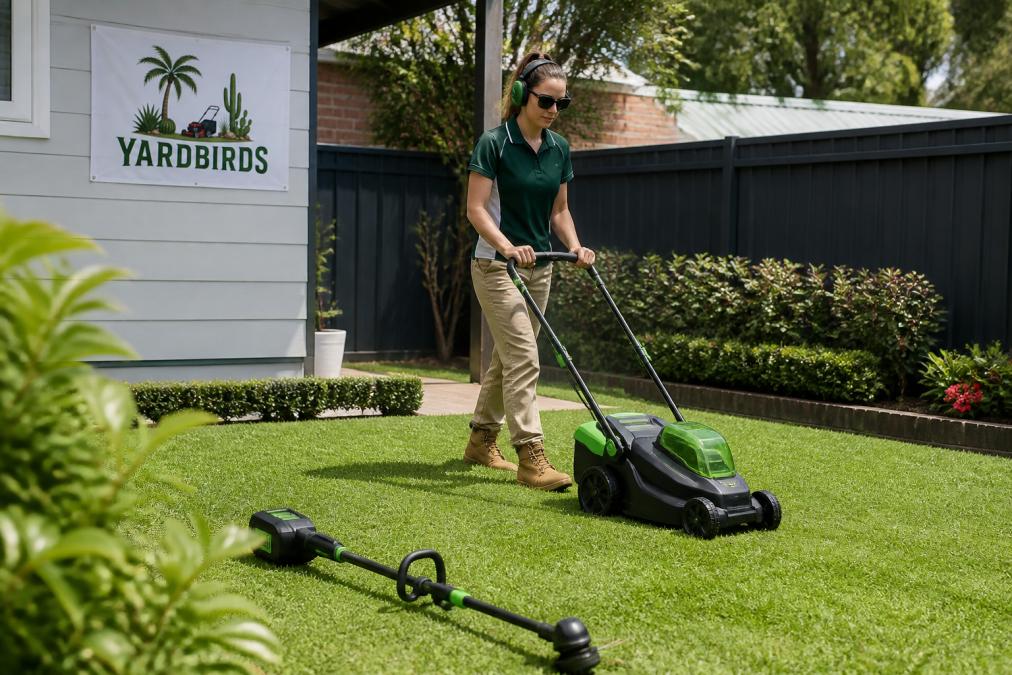
The right mowing frequency depends on growth rate, not the calendar. In warm months, most local lawns need a cut every 7 to 10 days; in cooler months, every 2 to 3 weeks is plenty. The golden rule: never remove more than one-third of the leaf blade in a single pass.
That one-third rule protects lawn density and root development. Scalp mowing, cutting right down to the soil, stresses the turf, opens bare patches and invites weeds. If your lawn has got away from you, mow in stages over a week or two rather than trying to fix it in one brutal cut.
Mowing Height by Grass Type
| Grass Type | Warm-Season Height | Cooler-Month Height | Notes |
|---|---|---|---|
| Kikuyu | 30-40mm | 40-50mm | Aggressive; needs frequent cuts |
| Couch | 15-25mm | 25-30mm | Tolerates low cuts, needs sun |
| Buffalo | 40-50mm | 50-60mm | Shade-tolerant; avoid scalping |
| Zoysia | 25-35mm | 35-45mm | Slow-growing; less frequent mowing |
Keep your mower blade sharp. A blunt blade tears the leaf instead of slicing it, leaving a brown, frayed tip that makes the whole lawn look tired.
Watering and Soil Moisture Management
Deep, infrequent watering beats a daily light sprinkle every time. It pushes roots down, builds drought tolerance and reduces disease. Aim to water when the top few centimetres of soil dry out, and give the lawn a proper soak rather than a quick surface wetting.
But in Sydney, watering isn't just about what's best for the grass, it's also about what's allowed. Water restrictions can be imposed by Sydney Water or local councils during drought periods, and they typically dictate which days you can water, what time of day, and what methods you can use (e.g., hand-held hoses vs. sprinklers). Before you set an irrigation schedule, check the current restrictions on the Sydney Water water efficiency guidance or your local council website. Ignoring them can lead to fines.
Beyond restrictions, Sydney's soil variability means you need to check moisture at depth, not just at the surface. Sandy soils in coastal suburbs drain quickly and may need more frequent watering, while clay soils in the west hold water and can become waterlogged. A soil moisture meter is a cheap investment that takes the guesswork out of when to water. Push it 10cm into the soil; if it reads dry, it's time to water. If it's still damp, wait.
Early morning is the best time to water. Evening watering leaves blades wet overnight, which encourages fungal problems. Watering in the heat of the day wastes water through evaporation.
If you're unsure about your soil type, a simple jar test can help: fill a jar with soil and water, shake it, and let it settle. The layers will show the proportions of sand, silt, and clay. This will guide your watering and fertilising strategy.
Best Lawn Fertiliser for Local Grass Types
The best lawn fertiliser for local grass types is a balanced granular fertiliser applied when the turf is actively growing, not a high-nitrogen product used year-round. Warm-season grasses respond best to feeding in spring and again in late summer, with a lighter application in autumn if growth is still strong.
Granular fertiliser is easier to apply evenly than liquid feeds, and it releases nutrients gradually. Water it in lightly afterwards so it reaches the root zone rather than sitting on the blades. Over-application is a fast route to burnt patches and runoff, so measure according to the product label rather than guessing.
If you'd rather not store and apply chemicals yourself, a maintenance service can handle nutrient application and timing as part of a regular visit. That's the approach at YardBirds Sydney, where all-electric equipment and a consistent schedule keep the work quiet, low-emission and predictable.
How to Fix a Patchy Lawn in Clay Soil
Fixing a patchy lawn in clay soil comes down to improving drainage and structure before you try to grow anything back. Clay holds water and compacts easily, so seed and runners struggle to establish in it. Here's the process:
- Aerate the compacted area with a coring tool or garden fork to open up the soil. For severe compaction, consider hiring a core aerator.
- Top-dress with a sandy loam or compost mix to improve structure. In Sydney, a mix of washed river sand and organic compost works well for clay soils.
- Level the surface so water doesn't pool in the low spots.
- Re-seed or lay turf that suits the light levels in that spot. For clay soils, buffalo and tall fescue are more tolerant than couch or kikuyu.
- Water gently and consistently until the new growth knits in. Avoid overwatering, as clay drains slowly.
- Keep foot traffic off the repaired area for a few weeks.
Lawn aeration is the step most people skip, and it's the one that matters most in heavy clay. Without it, everything you add on top just sits there. For more detail on soil structure and turf establishment, the Royal Botanic Garden Sydney gardening resources are a solid local reference.
In Sydney, clay soils are common in the west and north-west, while sandy soils dominate coastal areas. If you're unsure, a soil test can tell you your soil's pH and composition. Most lawn grasses prefer a pH between 6.0 and 7.0. If your soil is too acidic, add lime; if too alkaline, add sulphur. Always follow product instructions.
After aerating and top-dressing, consider applying a wetting agent to help water penetrate the clay. This is especially useful in hydrophobic soils, which can develop in dry conditions. Reapply according to the product label.
Finally, choose the right grass for your soil. If you're starting from scratch, consider native grasses like weeping grass (Microlaena stipoides) which are adapted to local conditions and require less water and fertiliser. For more information on native grasses, consult your local nursery or the Australian Native Plants Society.
Weed, Pest and Disease Control for Sydney Lawns
Weed, pest and disease control works best as prevention, not reaction. A dense, well-fed lawn at the right mowing height naturally suppresses weeds because there's no bare ground for them to colonise. Cultural practices, the boring stuff like correct watering and mowing, do more than any spray.
When problems do appear, match the treatment to the cause:
- Weeds: hand-remove small outbreaks; use a pre-emergent herbicide before weed season or a post-emergent treatment for established weeds
- Lawn pests: watch for armyworm and lawn grubs after warm, wet spells; treat only when you've confirmed the pest
- Fungal disease: improve airflow, water in the morning, and avoid evening irrigation; fungicides are a last resort
If you'd rather avoid pesticides altogether, a sustainable approach leans on lawn health, native grass species where they suit the site, and organic lawn care practices. It takes longer to work, but it's kinder to the soil and the wildlife that visits your garden.
Common Mistakes to Avoid
Most lawn problems trace back to a handful of avoidable habits. Fix these and you'll spend less time repairing damage and more time enjoying the yard.
- Cutting too short, which weakens the turf and invites weeds
- Watering lightly and often instead of deeply and rarely
- Feeding in winter when growth has stalled
- Ignoring water restrictions and irrigating on the wrong days
- Letting clippings and leaves smother the lawn
- Skipping lawn aeration on compacted clay
- Blunt mower blades leaving a frayed, brown finish
A consistent routine beats occasional heroics. If keeping up with mowing, edging and seasonal feeding feels like a part-time job, that's usually the point where a regular maintenance service pays for itself in time saved.
Keeping a lawn looking sharp through every season takes consistency, and that's exactly what most busy households run out of first. YardBirds Sydney handles mowing, edging, debris removal and seasonal turf care for homes, strata and commercial properties across the Inner West, using all-electric equipment and a fully insured team that shows up on schedule. With 500+ customers and a 97% satisfaction rate over 12+ years, the focus is reliable, eco-friendly care tailored to local conditions. Get a free quote from YardBirds Sydney and keep your outdoor space thriving year-round.
Frequently Asked Questions
Should I mow my lawn every week or every two weeks?
During active growth in spring and summer, weekly mowing keeps Sydney lawns dense and healthy. Warm-season grasses can grow several centimetres a week in humid conditions. In autumn and winter, growth slows and fortnightly mowing is usually enough. The rule is simple: never remove more than one third of the blade height in a single cut, because scalping stresses the grass and invites weeds.
How do I fix a patchy lawn in clay soil?
Clay soil compacts easily and drains poorly, which suffocates roots. Aerate the patchy areas with a corer, then spread a layer of organic compost or a sandy loam top dressing to improve structure. Overseed with a grass type suited to your conditions, keep the area moist but not waterlogged, and avoid heavy foot traffic until new growth establishes. Repeat aeration yearly for lasting results.
What is the best fertiliser for local grass types?
Most Sydney lawns are warm-season varieties such as couch, kikuyu and buffalo, which respond well to a balanced granular fertiliser with moderate nitrogen. Apply in early spring and again in late summer when the grass is actively growing. Avoid high-nitrogen products in winter, as they encourage soft growth that struggles in the cold. Always water the fertiliser in after application.
How often should I water my lawn during hot weather?
Deep, infrequent watering beats light daily sprinkling. In hot weather, water two to three times a week, giving the soil a thorough soak so moisture reaches the root zone. Early morning is the best time, as it reduces evaporation and leaf disease. Check soil moisture by pushing a screwdriver into the ground; if it goes in easily, you can skip a session.