 how-to
How to Choose Strata Gardeners: A 2026 Guide
Table of Contents
- What to Look for When Choosing Strata Gardeners
- Step 1: Assess Your Strata Property's Specific Needs
- Step 2: Verify Public Liability Insurance for Strata Contractors
- Step 3: Review Strata Gardening Contract Requirements
- Step 4: Check Compliance with Strata Garden Maintenance Compliance Checklist
- Step 5: Evaluate Reliability and Scheduling Consistency
- Step 6: Assess Professional Certification and Expertise
- Resolving Conflicts and Managing Expectations
- Frequently Asked Questions
Last Updated: September 19, 2026
What to Look for When Choosing Strata Gardeners
When you choose strata gardeners, selecting the right one for your property is crucial. A good strata gardener understands the unique demands of managing common garden areas across multiple owners, balancing aesthetic appeal with compliance, budget constraints, and landscape-specific needs. (Source: public liability insurance)
When you choose strata gardeners, you're looking for consistent, reliable service that respects shared outdoor spaces. Several key factors matter beyond price.
The right gardener shows up when promised, understands irrigation systems, respects strata bylaws, and communicates clearly when conflicts arise between owners' preferences.
Step 1: Assess Your Strata Property's Specific Needs
Before contacting potential gardeners, understand your property's requirements. A small terrace with minimal planting needs differ from a large complex with mature trees, irrigation systems, and native plantings.
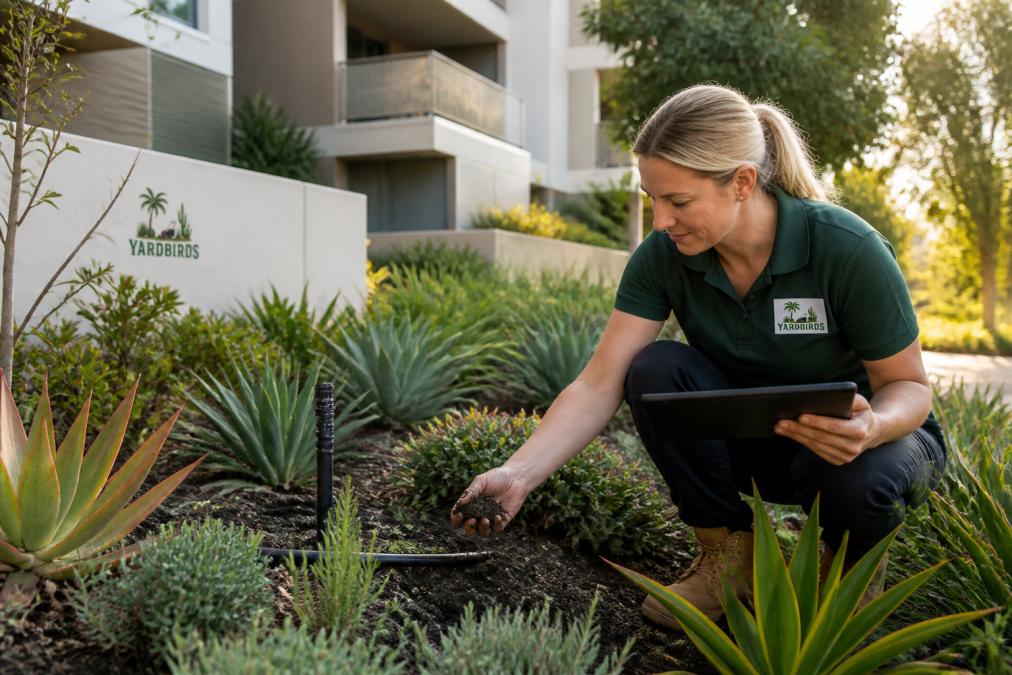
Walk the grounds and take notes on problem areas, seasonal challenges, and maintenance history. Note patchy lawns, weed-dominated beds, and water pooling issues. These observations shape what you need from a gardener.
Understanding irrigation and water management
Irrigation is often where strata properties struggle most, with aging systems that leak or have misaligned sprinklers. A gardener who understands water management identifies problems and flags them for repair.
Ask how potential gardeners handle irrigation seasonally. The best strata gardeners adjust schedules and catch leaks before they become expensive problems.
Identifying native plantings and seasonal requirements
If your property features native plants, your gardener must understand their specific needs. Native species often require less water than exotic plants but need different seasonal care.
Ask whether contractors have experience with native plantings specific to your region and understand pruning requirements for native shrubs.
Step 2: Verify Public Liability Insurance for Strata Contractors
Every gardener working on your strata property must carry public liability insurance to protect your owners corporation if someone is injured or property is damaged during maintenance work.
Request a current Certificate of Currency before signing any contract. Verify the coverage amount matches your strata's requirements.
Insurance verification checklist for strata gardeners
Use this checklist when vetting potential contractors:
Public Liability Insurance:
- Request a current Certificate of Currency
- Confirm coverage amount meets your strata's requirements
- Verify the policy covers all work types: mowing, edging, pruning, herbicide application, tree lopping, and equipment operation
- Check the expiry date extends beyond your contract period
- Confirm the insurer is licensed by APRA or listed on ASIC register
Workers Compensation Insurance:
- If the contractor employs staff, they must hold current workers compensation insurance registered with their state's regulator
- If they're a sole trader, confirm they're registered with the appropriate scheme or hold a current exemption certificate
What to do if a contractor cannot provide proof:
If a gardener cannot produce a current Certificate of Currency, do not hire them. This suggests they're not operating professionally and leaves your strata exposed to liability claims.
If a contractor claims to be insured but can't produce documentation, ask for a certificate within 48 hours. If they make excuses, move to the next candidate.
Liability coverage and what it actually protects
Public liability insurance covers injury to residents or damage to property during maintenance (trips, mower damage, herbicide drift, tree falls, equipment injury). It does NOT cover poor workmanship, contractual disputes, theft, or injury to the gardener themselves.
If a gardener damages your irrigation system through negligence, public liability might not cover the repair cost, that's a contractual issue.
Professional indemnity for landscape designers
If hiring a contractor who provides design services, ask whether they hold professional indemnity insurance, which covers financial loss if their design advice causes problems.
Step 3: Review Strata Gardening Contract Requirements
A proper contract protects both your strata and the gardener. It removes ambiguity about what's included, when work happens, and what happens if standards aren't met.
Contract transparency and hidden fees
A contract should itemise every service. Specify exactly what's included: lawn mowing frequency and grass height, edging and path maintenance, weed control methods and frequency, pruning schedule, leaf blowing and debris removal, seasonal clean-ups, and irrigation system checks.
Scope of work and routine maintenance inclusions
Define what "routine" means for your property. For most strata gardens, routine maintenance includes fortnightly or monthly lawn mowing, weekly or fortnightly leaf blowing and path clearing, monthly weed control, quarterly pruning, seasonal mulching, and regular irrigation inspection.
Step 4: Check Compliance with Strata Garden Maintenance Compliance Checklist
A professional gardener understands strata bylaws governing common areas. Before hiring, confirm the contractor knows the relevant compliance requirements.
Strata bylaws and common area landscaping responsibility
Strata bylaws often include rules about plant selection, landscaping approval, noise restrictions, chemical use policies, water usage restrictions, and waste disposal.
Step 5: Evaluate Reliability and Scheduling Consistency
Reliability is where many strata gardeners fail, especially when weather disrupts schedules or they're busy with other clients.
Step 6: Assess Professional Certification and Expertise
Ask whether potential gardeners hold relevant qualifications, which indicate commitment to standards and ongoing learning.
Resolving Conflicts and Managing Expectations
Conflicts sometimes arise in shared spaces: one resident loves native plantings; another wants formal hedges. One owner is concerned about water usage; another wants lush lawns. These tensions are inevitable but manageable.
Common strata gardening conflicts and how to prevent them
Conflict: Residents disagree on plant choices or garden style
Prevention: Before hiring, ask the strata committee to document a garden vision statement (e.g., "Our garden prioritises native plantings for sustainability and low maintenance"). Provide this to the gardener in writing so they can refer to the documented standard when conflicts arise.
Conflict: Water usage disputes during dry periods
Conflict: Work quality disputes
Conflict: Unexpected costs and scope creep
Dispute resolution protocol
Include this clause in your gardening contract:
Step 1: Informal resolution (Week 1) If a resident or the strata committee has a concern, they notify the gardener in writing (email is acceptable). The gardener responds within 48 hours with an explanation or corrective action plan. Most disputes resolve here.
Communication protocols to prevent conflicts
Establish clear communication channels in your contract:
- Monthly reports: The gardener provides a written summary of work completed, any issues identified, and recommendations for upcoming months. Include photos of problem areas.
- Scheduled committee updates: The gardener attends strata committee meetings quarterly (or as needed) to discuss seasonal plans, budget, and resident feedback.
- Emergency contact: Define how urgent issues (storm damage, irrigation failure, pest outbreaks) are reported and who makes decisions outside business hours.
- Resident communication: Decide whether the gardener communicates directly with residents or only through the property manager. Direct communication can build goodwill but may also create conflicting expectations. Many strata prefer a single point of contact (the property manager) to avoid confusion.
Documentation as conflict prevention
Keep records of:
- All work completed (dates, tasks, time spent)
- Photos of the garden at regular intervals (monthly or seasonal)
- Resident complaints and how they were addressed
- Changes to the scope of work or schedule
- Quotes for additional work and approval records
- Weather events that affected scheduling
This documentation protects both the gardener and the strata. If a dispute arises months later, you have evidence of what was done and why. It also helps when transitioning to a new gardener, the incoming contractor can see the history of the property and understand what's been maintained.
When to involve your insurance broker or legal advisor
Most conflicts resolve through the protocol above. However, involve your strata's insurance broker or legal advisor if:
- The gardener causes significant property damage (e.g., a tree they pruned falls and damages a roof)
- A resident is injured and claims the gardener was negligent
- The gardener refuses to comply with the contract or strata bylaws
- Costs escalate dramatically and you suspect the gardener is overcharging
Frequently Asked Questions
What insurance requirements must strata gardeners meet?
Strata gardeners must carry public liability insurance to protect against property damage or personal injury claims. Workers compensation insurance is also essential if they employ staff. When choosing strata gardeners, always request proof of current insurance certificates before signing a contract. Verify the coverage limits are adequate for your property's size and complexity. Your owners corporation or strata manager can advise on minimum coverage requirements based on your building's bylaws and risk profile.
What should be included in a strata gardening contract?
A comprehensive strata gardening contract must specify the scope of work, including routine maintenance, irrigation management, and seasonal services. It should detail scheduled visit frequency, itemised service lists, and any additional costs for specialised work. The contract should address liability, insurance requirements, conflict resolution protocols, and how changes are requested and approved. Include clauses covering weather interruptions, access to common areas, and notice periods for termination. Transparency about fees and hidden costs protects both your owners corporation and the service provider.
How do you ensure strata garden maintenance complies with bylaws?
Review your strata bylaws before selecting a gardener, they often specify rules about native plantings, chemical usage, and garden aesthetics. Provide your chosen contractor with a copy of relevant bylaws and any design guidelines the strata committee has approved. Establish a compliance checklist covering weed control methods, fertilisation schedules, and waste removal protocols. Ensure the contractor understands any sustainability requirements or restrictions on pesticides. Regular site assessments and scheduled visits help maintain compliance and catch issues early.
How often should strata common areas be professionally maintained?
Frequency depends on your property's plant types, climate, and bylaws. Most strata properties benefit from fortnightly or monthly visits during growing seasons, with reduced frequency in winter. High-traffic common areas may need weekly attention, while low-maintenance native gardens might require only monthly service. Discuss seasonal variations with potential contractors, summer often demands more frequent visits for weed control and irrigation checks, while winter may allow longer intervals. Your strata committee and property manager should determine the schedule based on site-specific requirements and budget.
Choosing the right strata gardener requires careful evaluation of insurance, compliance, reliability, and communication. The process takes time, but it protects your strata from costly mistakes and owner disputes. YardBirds Sydney understands strata properties across Sydney's Inner West and delivers the consistency, transparency, and expertise that strata committees rely on. Get a Free Quote to see how professional strata gardening care can transform your common areas.