 how-to
Grass Cutting Guide: Mowing Height, Timing & Tips
Table of Contents
- Grass Cutting Basics: What Every Homeowner Should Know
- Lawn Mowing Height: The Golden Rule for a Healthy Lawn
- Best Time to Mow Lawn: Seasonal and Daily Timing
- How to Cut Long Grass Without Damaging Your Lawn
- Lawn Mower Types: Choosing the Right Equipment
- Safe Mowing Practices and Equipment Setup
- Troubleshooting Common Grass Cutting Problems
- Conclusion
- Frequently Asked Questions
Last Updated: October 8, 2026
Grass Cutting Basics: What Every Homeowner Should Know
Grass cutting is the single most repeated task in any garden, and it's the one most people get wrong. Cut too short and you stress the lawn. Cut too long and you invite weeds. Get it right, and your grass thickens, crowds out weeds and survives a hard summer. (Source: the Australian Bureau of Meteorology's climate data)
This guide from YardBirds Sydney walks through mowing height, timing, equipment and the fixes for common problems. We've spent 12 years maintaining lawns across the Inner West, and the mistakes we see are almost always the same handful.
Here's the core idea: grass cutting is a growth tool, not a tidy-up chore. Every cut tells the plant how to respond. The turf maintenance guidance from the Royal Horticultural Society makes the same point: regular cutting at the right height builds a denser lawn.
Below, we'll show you exactly how to set your mower, when to run it, and what to do when the lawn gets away from you.
Lawn Mowing Height: The Golden Rule for a Healthy Lawn
Never remove more than one third of the leaf blade in a single cut. That is the golden rule of lawn mowing height, and it matters more than any fertiliser you'll buy.
Why one third? Grass stores energy in its blades. Strip too much and the plant has to rebuild from the roots, which drains reserves and leaves it open to weeds and disease.
A few practical rules:
- Set the mower one notch higher than you think you need
- Raise the deck again in summer heat
- Never scalp the lawn to "reset" it
Mowing Height by Grass Type
Different grasses want different heights, and warm-season types dominate in this climate.
Warm-season grasses (Couch, Kikuyu, Buffalo, Zoysia) are the standard here. They spread by runners and handle heat well.
- Couch and Kikuyu: 20-30 mm
- Buffalo: 40-60 mm
- Zoysia: 25-40 mm
Cool-season grasses such as Ryegrass, Fescue and Bentgrass are often oversown for winter colour. They prefer a taller cut.
- Ryegrass and Fescue: 40-60 mm
- Bentgrass: 10-20 mm (only for fine turf)
| Grass Type | Season | Ideal Height |
|---|---|---|
| Couch | Warm | 20-30 mm |
| Kikuyu | Warm | 20-30 mm |
| Buffalo | Warm | 40-60 mm |
| Zoysia | Warm | 25-40 mm |
| Ryegrass | Cool | 40-60 mm |
| Fescue | Cool | 40-60 mm |
Not sure what you've got? Pull a single blade and look at the base. Runners and a thick, rounded leaf usually mean a warm-season type.
Best Time to Mow Lawn: Seasonal and Daily Timing
The best time to mow the lawn is late afternoon on a dry day, when the grass is actively growing but the heat has passed.
Timing splits into two questions: which day, and which hour.
By season:
- Spring: weekly, as growth takes off
- Summer: every 7-10 days, deck raised
- Autumn: every 10-14 days, gradually lower
- Winter: every 3-4 weeks, or as needed
By day: avoid mowing wet grass. It clumps, clogs the deck and spreads disease.
Morning vs Evening: When to Cut
Evening wins for most lawns. The grass is dry, the sun is off it, and the cut surface has all night to recover before the heat arrives.
Morning works too, but only once the dew has lifted. Mowing wet grass in the cool of the day is the fastest way to spread fungus.
Midday is the one to avoid. Cutting in full sun stresses the plant and burns the fresh tips.
How to Cut Long Grass Without Damaging Your Lawn
Cut long grass in stages, never in one pass. Drop the mower one notch at a time, waiting a few days between cuts.
The one-third rule still applies. If the lawn is 150 mm tall and you want it at 50 mm, that's three cuts, not one.
Here's the sequence we use:
- Set the deck to the highest setting and cut the top off
- Wait 3-4 days for the grass to recover
- Drop one notch and cut again
- Repeat until you reach your target height
- Collect the clippings on the first pass, mulch on later ones
For really overgrown patches, a brushcutter gets the first pass done faster than a mower. Once it's down to a manageable height, switch back.
A common mistake is cutting an overgrown lawn short "to catch up". That scalps the crown, exposes bare soil and gives weeds a clear run. Slow is faster here.
Lawn Mower Types: Choosing the Right Equipment
Pick your mower by lawn size, grass type and how much effort you want to put in. The wrong choice means either struggling with a machine that can't handle the job or paying for capacity you'll never use.
Push reel mowers suit small, flat blocks under about 200 m². They're cheap, quiet and give a clean scissor cut, but they struggle with long or wet grass and need more passes.
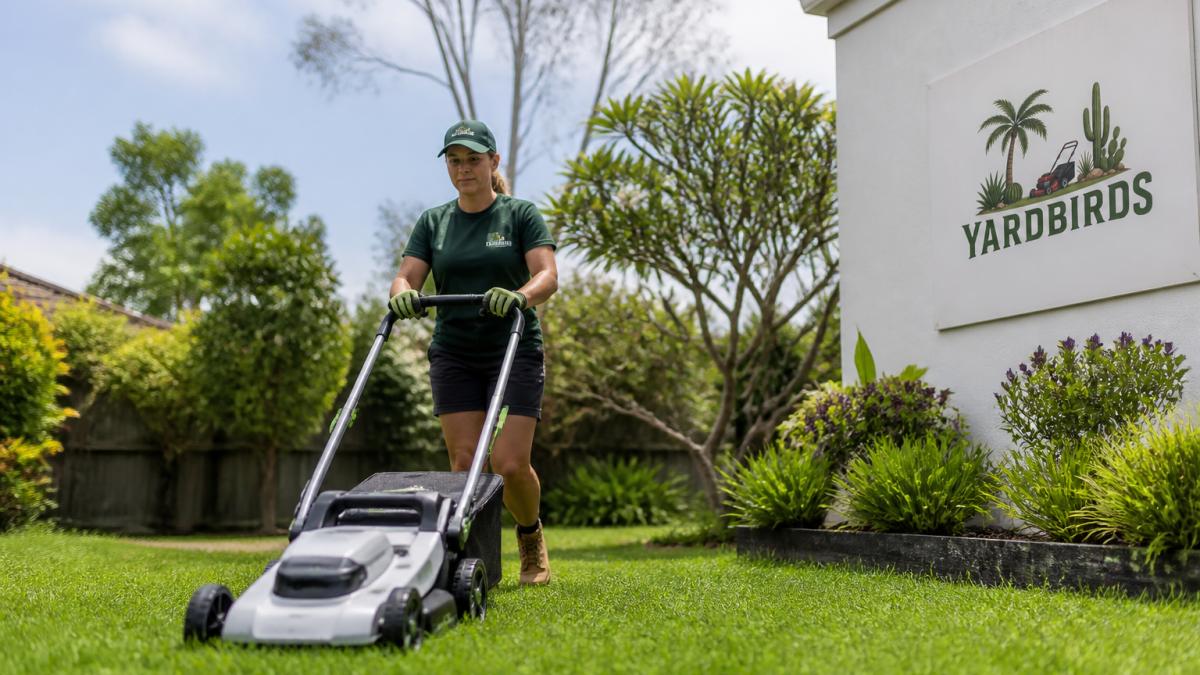
Electric mowers handle most suburban lawns. Corded models are light and cheap but the cord limits your reach and becomes a trip hazard on slopes. Battery models now cut a full standard block on one charge, and modern 18V or 36V systems run for 30-45 minutes under load. (Source: the Australian Competition and Consumer Commission's guidance on product safety)
Petrol mowers still win on large or rough ground over 800 m², but they're louder, heavier, need fuel and oil changes, and produce emissions. Four-stroke engines are cleaner and quieter than two-stroke.
Brushcutters are for edges, slopes and long grass a mower can't reach. A straight-shaft brushcutter with a harness handles heavy growth; a curved-shaft model is lighter for trimming.
Robotic mowers suit simple, open lawns where you want daily cutting without effort. They need a boundary wire or GPS mapping, a power source, and a lawn free of complex obstacles.
| Mower Type | Best For | Watch Out For |
|---|---|---|
| Push reel | Small flat lawns under 200 m² | Struggles with long grass |
| Electric (corded) | Small to mid yards | Cord limits reach, trip hazard |
| Battery electric | Most suburban blocks | Battery run time, replacement cost |
| Petrol | Large or rough ground over 800 m² | Noise, servicing, emissions |
| Brushcutter | Edges, slopes, long grass | Needs steady hands, safety gear |
| Robotic | Simple open lawns | Boundary wire, high upfront cost |
For most suburban blocks, a battery electric mower plus a brushcutter covers everything. That setup handles thick summer growth without the noise or fumes, and the lower maintenance outweighs the higher upfront cost for most homeowners.
Before buying, check the mower's cutting height range against your grass type. Many budget models don't go low enough for couch or high enough for buffalo.
Safe Mowing Practices and Equipment Setup
Safe grass cutting starts before you pull the starter cord. Clear the area, check the machine and wear the right gear.
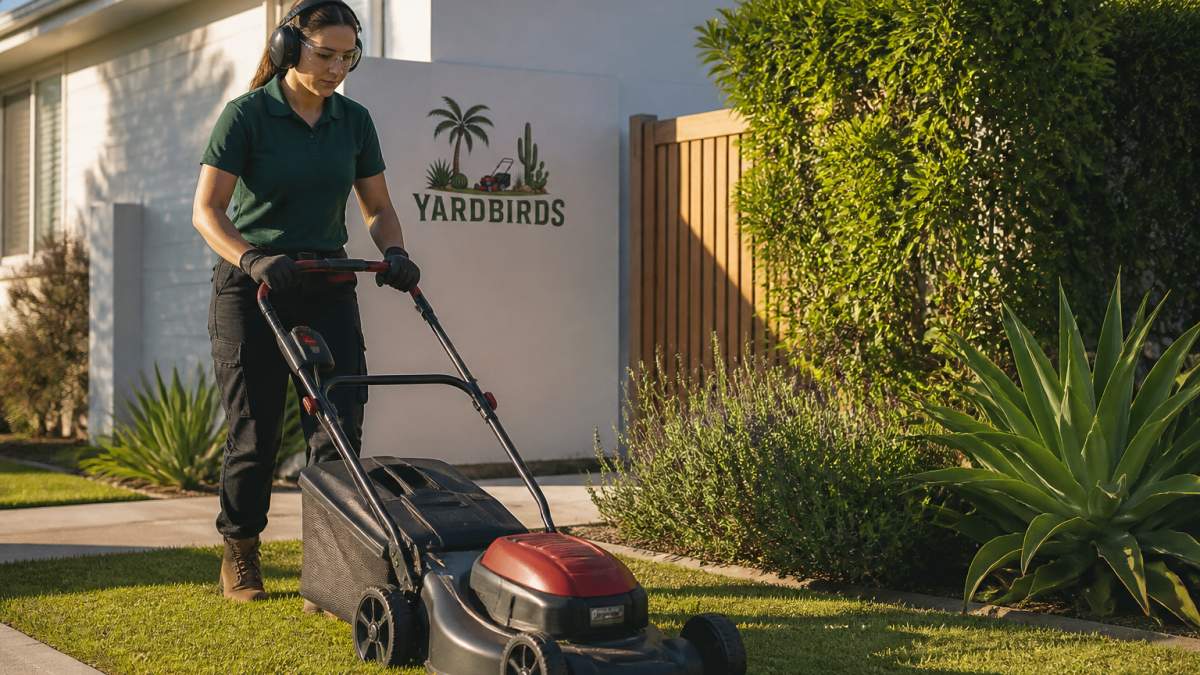
Before every cut:
- Pick up sticks, stones and toys from the lawn
- Check the blade is sharp and secure
- Clear pets and children from the area
- Check the cord or battery for damage
While you mow:
- Wear closed shoes, not thongs
- Wear eye and ear protection
- Mow across slopes, never up and down
- Never reach under a running mower
After you finish:
- Let the blade stop fully before emptying the catcher
- Disconnect the battery or lead before cleaning
- Store fuel well away from the house
Mower injuries are almost always preventable, and they usually happen during blade cleaning or when someone slips on a wet slope.
Troubleshooting Common Grass Cutting Problems
Most lawn problems after mowing trace back to one of five causes. Here's how to read the signs, fix the cause and help the lawn recover.
Brown tips after cutting. A blunt blade tears grass instead of slicing it. The frayed tips lose water and brown off within days. Fix: sharpen or replace the blade. Recovery: the next cut removes the damaged tips if you follow the one-third rule.
Yellow patches in stripes. Scalping where the ground is uneven. The mower deck dips into high spots and strips the crown. Fix: raise the deck and roll or top-dress the uneven areas.
Thin, patchy lawn. Cutting too short, too often. The grass exhausts its root reserves and stops tillering. Fix: lift the height by one notch and space cuts to at least weekly in growing season.
Weeds moving in. Bare patches from scalping or disease give weed seeds a clear run. Fix: thicken the lawn with the right height and frequency, and remove weeds before they seed. Recovery: a dense lawn crowds out most weeds within a season.
Clippings clumping. Grass was wet, or you cut too much at once. Clumps smother the lawn and create fungal conditions. Fix: mow dry grass and take long grass down in stages. Recovery: spread clumps with a rake or collect them.
Uneven cut. A bent blade, a worn deck wheel or a blocked discharge chute. Fix: check the blade balance and replace worn parts. Recovery: a single pass at the correct height evens the surface.
Scalping on slopes. Mowing up and down a slope causes the deck to dig in at the bottom. Fix: mow across the slope, not up and down. Recovery: raise the deck on the lower side and avoid cutting wet slopes.
What about the clippings? Leave them on the lawn as mulch if you cut often and remove little. They return nutrients and save water. Collect them if the lawn is long, wet or diseased, and compost the rest rather than binning it.
A common pattern is that homeowners blame heat or disease for problems that trace back to blade condition or cutting height. Check the simple causes first.
Conclusion
Keeping a lawn healthy through a hard summer takes the right height, the right timing and a sharp blade. Most people get one of those wrong, and the lawn shows it within a fortnight.
If you'd rather hand it over, YardBirds Sydney can help. We're fully insured, use all-electric equipment, and shape lawns for the local climate. Our team handles everything from regular mowing to hedge trimming, weeding and garden cleanup, with a 97% satisfaction rate across 500+ customers. We also work with strata managers on shared garden areas where owners want different things.
Get a Free Quote from YardBirds Sydney and keep your grass cutting on schedule.
Frequently Asked Questions
How often should you cut grass?
Mowing frequency depends on the season and growth rate. During peak growing seasons, aim to mow every 7-10 days. In cooler months, extend to every 3-4 weeks. The key is to never remove more than one-third of the blade height at once. Following this rule keeps grass healthy and reduces stress on your lawn.
Can you cut long grass in one go?
No, cutting long grass in one go can shock the grass and leave behind clumps of clippings that smother growth. Instead, use the 'one-third rule': set your mower to its highest setting for the first pass, then gradually lower it over subsequent mowings. This step-by-step approach helps the grass recover and keeps your lawn looking tidy.
What is the best time to mow lawn?
The best time to mow lawn is mid-morning or late afternoon when the grass is dry and temperatures are moderate. Avoid mowing during the hottest part of the day to reduce stress on the grass and yourself. Mowing in the evening can also work, but ensure there is enough daylight to see clearly and avoid wet grass from dew.
Is it better to cut grass when it is wet or dry?
Always cut grass when it is dry. Wet grass clumps together, clogs mower blades, and can lead to an uneven cut. It also increases the risk of slipping and damaging your lawn. If you must mow after rain, wait until the grass is dry to the touch, usually a few hours after the sun comes up.